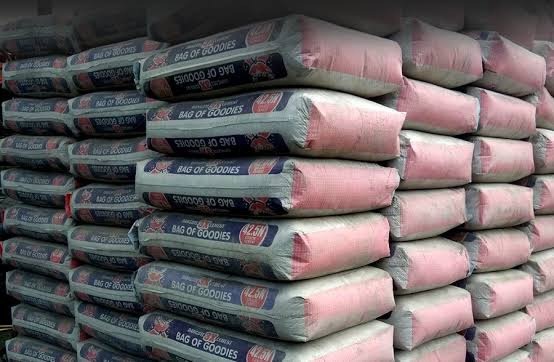
Cement Becomes ‘Gold’ in Nigeria as FCCPC Probes Possible Price Manipulation

Cement is becoming increasingly expensive in Nigeria, raising fresh concerns about the forces driving prices of one of the country’s most important construction materials.
The Federal Competition and Consumer Protection Commission (FCCPC) has opened an investigation into the cement industry following preliminary findings suggesting that the sharp increase in prices may not be fully explained by production costs and prevailing market conditions.
The investigation comes amid widespread complaints from consumers, builders and businesses over the cost of cement, even as Nigeria boasts substantial limestone deposits and an installed production capacity estimated at between 60 million and 65 million metric tonnes annually.
The commission’s three-month cross-border assessment compared Nigeria’s cement market with those of Kenya, Tanzania, South Africa, Egypt, Morocco, Algeria and Togo.
Its preliminary findings suggest a striking disparity: cement is significantly more expensive in Nigeria than in several African countries, including some with considerably smaller production capacities and, in Togo’s case, no significant limestone deposits.
According to the FCCPC, a 50kg bag of cement that sold for between N9,300 and N9,700 in Nigeria in January 2026 had risen to between N10,500 and N13,000 by mid-year. By July, prices of between N13,000 and N15,000 were reported in some parts of the country.
The commission said the figures raised questions about why Nigeria’s abundant raw materials and excess production capacity had not translated into lower prices for consumers.
In Kenya, where cement demand was estimated at about 9.3 million metric tonnes in 2025, a 50kg bag reportedly sold for the equivalent of about N7,344. In Tanzania, the price was about N6,528, while cement in Togo sold for roughly N9,180 per bag.
The disparity has prompted the FCCPC to examine whether the Nigerian market is operating as competitively as it should.
Why is cement so expensive?
The FCCPC said manufacturers and other industry players had cited several factors, including rising energy costs, the depreciation of the naira and its effect on imported machinery and spare parts, as well as transportation and logistics expenses.
But the commission said it was testing those explanations against verified information on production costs, capacity utilisation, pricing and other market conditions.
Nigeria consumes an estimated 25 million to 30 million metric tonnes of cement annually, meaning installed production capacity substantially exceeds domestic demand.
Ordinarily, such excess capacity should create competition among producers and put downward pressure on prices.
That is precisely what the FCCPC says it is trying to establish.
The commission’s investigation will examine whether prevailing prices are the legitimate outcome of production and distribution costs or whether other practices are influencing the market.
Possible areas of concern include coordinated pricing, abuse of market power, restriction of domestic supply and anti-competitive distribution arrangements.
The FCCPC has consequently issued notices of commencement of investigation and summonses requiring major industry players to provide information on their pricing methods, production levels, capacity utilisation, exports and commercial relationships.
Industry says the problem is more complicated
Business leaders and economists, however, say the factors behind Nigeria’s cement prices are more complicated than simply blaming manufacturers.
Chairman of the Lagos Chamber of Commerce and Industry Construction Group, Soji Adeniji, said his experience on a recent project reinforced concerns about the high cost of Nigerian cement.
He recalled how an acquaintance working on a construction project in Canada considered importing cement from Nigeria, only to discover that sourcing the product from Turkey and some other markets was more economical.
According to Adeniji, the experience raises a fundamental question: if Nigeria has the raw materials and production capacity, why is its cement still relatively expensive?
He acknowledged that the market has experienced supply constraints but questioned some of the explanations being offered for the shortages.
Among the factors requiring closer examination, he said, are the entire production chain, from limestone extraction and transportation to manufacturing, distribution and taxation.
Adeniji also pointed to the possibility of high logistics costs, unfavourable tax arrangements and other operational challenges affecting the industry.
He argued that examining only the manufacturer’s factory gate price would not provide the complete picture because the cost accumulates along the supply chain before the product reaches consumers.
Demand and supply under pressure
Professor of Economics and Public Policy at the University of Uyo, Akpan Ekpo, offered another explanation, suggesting that supply constraints could be contributing to the high prices.
He said government should examine the sector carefully and determine whether production is keeping pace with demand.
Ekpo also called for improved access to finance for businesses interested in entering or expanding within the cement industry, arguing that increasing the number of viable players could help address supply constraints.
Other experts have urged the government to support research into alternative materials that could be used alongside or instead of cement in concrete production.
Such alternatives, they argue, could reduce pressure on cement demand while encouraging innovation in the construction sector.
FCCPC: Investigation is not an attack on business
The FCCPC has stressed that its investigation should not be interpreted as an attempt to control legitimate business profits.
Its Executive Vice Chairman and Chief Executive Officer, Tunji Bello, said cement was too important to the Nigerian economy for concerns about its pricing to be ignored.
He noted that the price of cement affects the cost of housing, commercial developments, public infrastructure and, ultimately, the cost of doing business.
Bello said companies were entitled to make legitimate commercial decisions and earn reasonable returns on their investments. However, competition law, he explained, exists to ensure that market outcomes are driven by genuine competition rather than practices that unlawfully restrict it.
The investigation therefore seeks to establish the facts.
If the evidence shows that high prices are genuinely driven by energy, foreign exchange, transportation, taxation and other legitimate costs, the findings could help policymakers identify where interventions are required.
If, however, the investigation establishes evidence of anti-competitive conduct, the commission could take regulatory action.
A bigger problem for housing
Whatever the final outcome of the investigation, the impact of expensive cement extends far beyond the price of a 50kg bag.
Cement is a fundamental component of housing and infrastructure construction. When its price rises sharply, the additional cost is eventually passed down to developers, contractors, landlords and homebuyers.
For millions of Nigerians already struggling with housing affordability, rising cement prices can make home ownership even more difficult.
The issue also affects government infrastructure projects, private investment and the broader construction industry.
Nigeria therefore faces a paradox: a country with abundant limestone, significant installed cement capacity and the ability to export cement to neighbouring markets is simultaneously dealing with domestic prices that consumers consider prohibitively high.
The FCCPC investigation may ultimately determine whether this is primarily a problem of production costs, supply and logistics, or whether something deeper is happening within the market.
Will it fare better in the coming days?


