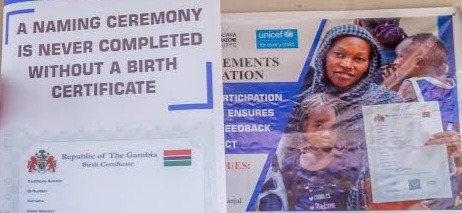
UNICEF: Unregistered Children Risk Losing Access to Education, Healthcare, Social Protection

The United Nations Children’s Fund (UNICEF) has warned that children without birth registration risk being excluded from essential public services and social protection programmes, stressing that legal identity is a foundation for exercising basic rights throughout life.
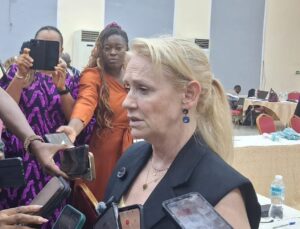
The Chief of UNICEF Lagos Field Office, Celine Lafoucriere, gave the warning during a 2-day birth registration media dialogue organised by the National Population Commission (NPC) in collaboration with UNICEF to strengthen advocacy for the registration of children under one year.
The dialogue brought together journalists from across the South-West to examine the importance of civil registration and explore how the media can help persuade parents and caregivers to register their children from birth.
Lafoucriere described birth registration as a fundamental right, warning that the absence of a legal identity can create barriers to education, healthcare, social protection and other essential rights as children grow into adulthood.
“Birth registration, civil registration is the child’s identity and it is the foundational right of every child’s rights. Without that right, nothing else can happen,” she said.
She explained that children without proof of legal identity could encounter difficulties enrolling in school or accessing healthcare and may later face challenges in exercising other rights, including voting and inheritance.
Beyond individual rights, Lafoucriere said birth registration is also critical to effective government planning.
She noted that children who are not formally registered are often absent from government databases and social protection systems, making it difficult for authorities to accurately identify and plan for their needs.
“If your child doesn’t have an identity, he does not exist. He or she does not exist on the social register,” she said.
According to her, reliable registration data is also important for government budgeting because social protection interventions and other public programmes are designed and funded according to the population expected to benefit from them.
UNICEF Tasks Media With Changing the Narrative
Lafoucriere urged journalists to take the birth registration message directly to communities, particularly vulnerable and hard-to-reach families who may be unaware of where and how to register their children.
She noted that registration is increasingly being decentralised, with primary healthcare centres and community facilities equipped with digital tools to make the process more accessible.
“You are the closest to the families. You are the ones who tell the stories the way they are,” she told the journalists, urging them to use real-life experiences of children and mothers to demonstrate why legal identity matters.
The UNICEF official said sustained media engagement would be essential to achieving significant improvements in birth registration, noting that the organisation could not achieve the desired results without journalists and other stakeholders.
NPC Calls for Stronger Public Awareness
Under the other hand, the State Director of the National Population Commission in Lagos, Abiola Kekere-Ekun, also called for increased media support to strengthen public awareness and amplify the commission’s efforts to improve birth registration.
She said parents and caregivers needed clearer information about the importance of registering their children and the registration points available to them.
A UNICEF Child Protection Specialist, Dennis Onoise, identified several challenges affecting Nigeria’s birth registration system, including gaps in legal frameworks, limited access to registration services, inadequate data systems and insufficient community awareness.
He said legal reform, digitisation, decentralisation, stronger data systems and sustained community mobilisation would be critical to improving the system.
Onoise said moving from predominantly manual registration processes to digital systems could improve efficiency, reduce delays and make registration more accessible to families.
He also called for stronger collaboration between the NPC and primary healthcare facilities, noting that health centres are strategically positioned to support birth registration because they interact with families during pregnancy, childbirth and early childhood.
According to Onoise, taking registration services closer to communities would reduce the burden on families and officials who may currently have to travel long distances to access registration services.
He also identified community mobilisation as an area where journalists could make an immediate impact by continuously educating families about the benefits of birth registration.
Rather than treating birth registration as a one-off campaign, he urged the media to make it a recurring issue in their reporting so that registration becomes an integral part of the culture surrounding childbirth.
The dialogue also examined ongoing efforts by UNICEF and its partners to strengthen Nigeria’s civil registration and legal identity system through improved coordination among institutions responsible for registration, identity management, healthcare and technology.
The initiative focuses on decentralising registration services, improving interoperability between data systems and increasing participation at the grassroots.
Onoise said stronger institutional collaboration would make the registration process more efficient and accessible while encouraging greater community involvement.
He also highlighted the potential of technology and unique identification numbers to make birth registration more useful to families while enabling government institutions to better track, plan for and provide services to children.
In a country with over 244 million citizens and millions of kids still without formal birth registration, UNICEF and the NPC are calling on government agencies, healthcare workers, community leaders, parents and the media to make legal identity a priority from the moment a child is born.


