
A little water in the wine may change everything. Please come with me.
Something happened when I was twelve years old. One fateful day, I returned home to find no one there. That was not unusual at the time; the house would remain empty until everyone began returning, one after another.
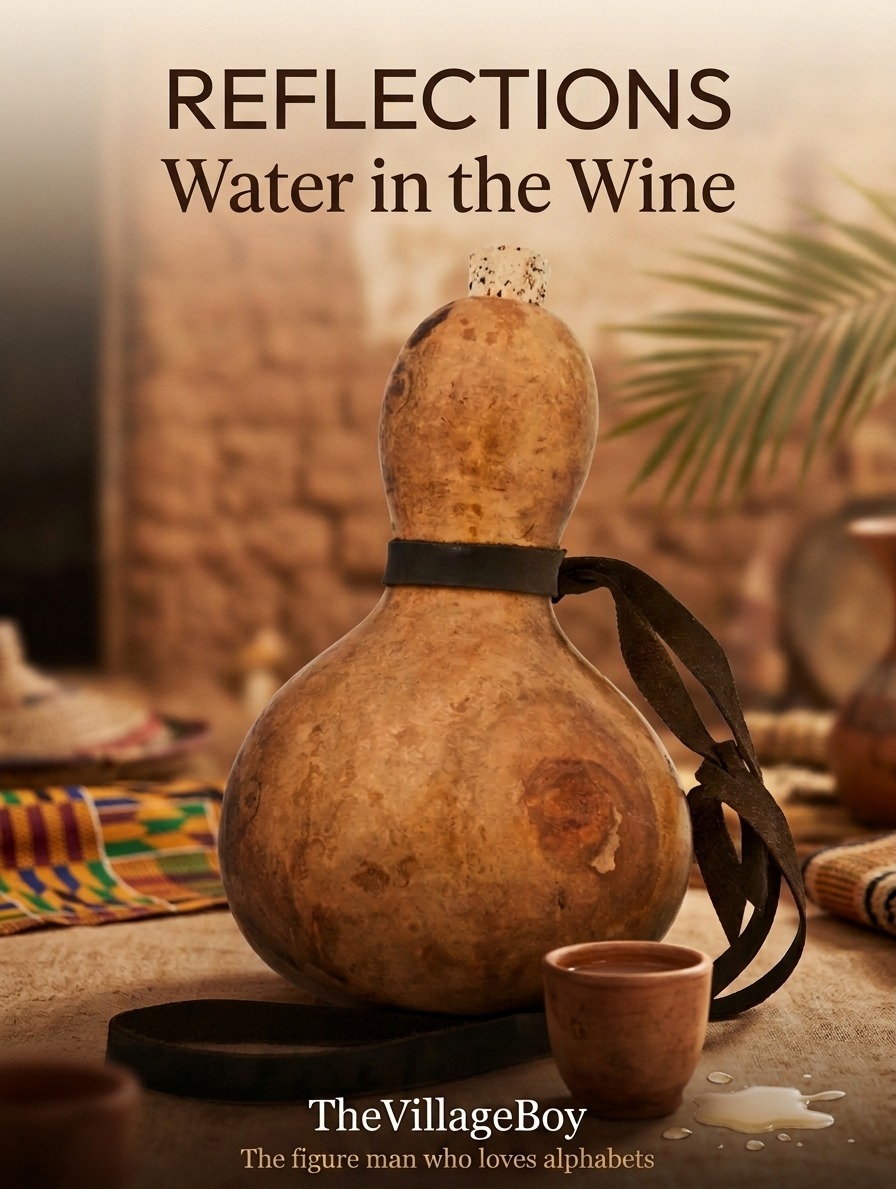
That was how I encountered a gourd of palm wine in the passage. The wine was foaming so vigorously that it had spilled all over the surrounding floor. I wondered what I could do to stop the continuous overflow. Then I reached for a cup and drew half a cupful.
As I drank the palm wine – gracious Lord! – I discovered that it was grade one: undiluted and refreshing.
Before you ask how a twelve-year-old knew the quality of palm wine, let me explain.
From the age of six, I had served palm wine to the elders whenever they gathered in our home. The golden rule for every server, regardless of age, was to take the first drink before serving anyone else. So I grew up serving palm wine and always drinking the first cup. Technically, I had become a mini “Ajọ̀gọ̀rọ̀ tegbò tegbò” – please ask an Ekiti friend for the interpretation.
One day, I asked my father the reason for this practice. He explained that it was meant to prevent anyone serving the drink from poisoning the gathering.
Back to the main story.
As soon as I finished that first half cup, my upbringing reminded me that what I had done was stealing. Unfortunately, Mr Longer Throat countered that I was merely helping to clean the environment. I listened to Mr Longer Throat and drew another half cup.
By the time I finished drinking, the palm wine had become as still as water.
I knew I had crossed the line. I quickly considered what to do. Without delay, I drew a full cup of water from the drinking pot and poured it into the gourd to replace what I had taken. Then I cleaned the floor to remove all signs of the spillage and wiped the outside of the gourd.
Something within me warned that there would be consequences.
The owner of the palm wine arrived later. He shook his head, picked up the gourd and left. As God would have it, my father attended the meeting where the wine was served. While drinking it, as my father later told me, the men wondered what had happened to the palm wine. After the meeting, the owner called my father aside and explained the situation.
At about 7:30 p.m., my father returned home and found me reading in his room.
He immediately asked what had happened to the palm wine that our uncle had left in the house earlier that day. Unfortunately for me, my father and I had a golden rule: neither of us should lie to the other. He had taught me that it was better to die telling the truth than to live after telling a lie.
So I explained everything that had happened.
As I finished my confession, I reached under the bed, brought out the cane customized for me, handed it to him and stretched out my hands, one after the other. He gave me four strokes. I had expected six.
My hand was still outstretched when he dropped the cane and motioned for me to sit. He then explained how adding water to palm wine alters its taste and diminishes its original character.
I asked why people added water to palm wine left overnight in the farm hut. He explained that it was done to prevent the wine from spilling. Because the wine remained there for a longer period, the water would blend with it properly by the following day.
Years later, during an accounting class, I fully understood the broader significance of my actions when we discussed teeming and lading. Teeming and lading is a fraudulent practice in which money received from one customer is stolen, and later receipts are used to conceal the shortage. Like the water I poured into the gourd, one dishonest act creates the need for another act to hide it.
When water is added to wine, however little, the character of the wine may change forever.
Think about the things to which you have added foreign elements and how they turned out in the end. To preserve something in its natural state, we must avoid unnecessary additions, even when those additions appear harmless or similar to the original. Sometimes, admittedly, we may act “innocently,” but innocence does not erase the consequences of our actions.
A little mistrust may alter a relationship forever. A little stealing here and there from an organisation may pave the way for its eventual collapse or bankruptcy. Even the Bible warns that “a little leaven leavens the whole lump.”
Whenever a little water is added to the wine, the wine rarely retains its former character.
What are your thoughts?
©TheVillageBoy.
(The figure man who loves alphabets)


