
Shalom Sam writes…
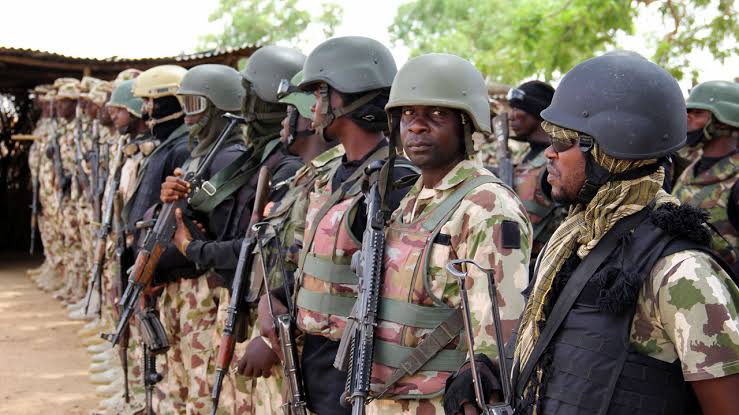
The allegations of misconduct involving newly passed-out personnel of the Depot Nigerian Army, Osogbo, have understandably generated widespread concern and public condemnation. Reports alleging that soldiers invaded student hostels near Osun State University (UNIOSUN), harassed students, confiscated personal belongings, and committed acts of sexual assault, if substantiated, represent a grave departure from military ethics, human rights, and the professional standards expected of members of the Nigerian Army.
Such allegations deserve to be treated with utmost seriousness. Soldiers are entrusted with protecting lives and property, not violating the rights and dignity of the very citizens they have sworn to defend. Any individual found culpable must be held fully accountable in accordance with the Armed Forces Act and other applicable laws. Accountability remains indispensable to preserving public confidence in the military institution.
However, the pursuit of justice must equally be guided by the principles of fairness, objectivity, and due process. Allegations, no matter how serious, must ultimately be supported by credible evidence. While several claims and purported evidence have circulated on social media, it is noteworthy that, despite repeated appeals by the Nigerian Army, many individuals claiming to possess evidence have yet to formally submit it to the appropriate investigative authorities. This is unfortunate because credible investigations rely not on speculation or public sentiment but on verifiable facts.
Anyone in possession of medical reports, photographs, video recordings, electronic communications, or eyewitness testimony should present such evidence to the Board of Inquiry or through the university authorities for onward transmission to the military investigators. Equally important is the assurance that victims and witnesses will be protected from intimidation and that their identities, where necessary, will remain confidential. Without credible evidence, even genuine allegations become more difficult to establish, potentially denying justice to victims and weakening the integrity of the investigative process.
It is equally worthy to acknowledge the responsible and commendable actions taken by the various stakeholders. The Vice-Chancellor of Osun State University, Professor Odunayo Clement Adebooye, acted swiftly in condemning the alleged misconduct and reassuring students that their welfare remains paramount. Likewise, the National Association of Nigerian Students (NANS), Osun Axis, deserves recognition for responsibly advocating for the interests of students and demanding accountability through lawful means.
The Nigerian Army has also demonstrated a commendable institutional response. The Depot Commandant immediately engaged with the university management and student representatives and constituted a Board of Inquiry to investigate the allegations swiftly.
The Depot Nigerian Army, Osogbo, has further demonstrated transparency by publicly condemning the alleged actions and inviting any individual with legitimate claims of damaged or lost property to come forward for verification and compensation. Such an approach reflects institutional responsibility and a willingness to remedy any proven harm suffered by members of the public.
Beyond the current allegations, it is pertinent to place the incident within its broader institutional context. Depot Nigerian Army, Osogbo, has trained nearly 8,000 soldiers within the past twelve months. The overwhelming majority of these personnel have consistently exhibited professionalism, discipline, and exemplary conduct during and after their training. It would therefore be both unfair and inaccurate to judge thousands of disciplined soldiers or the reputation of an entire institution solely on the basis of the alleged misconduct of a very small number of individuals. Professional institutions should be assessed by their values, systems of accountability, and willingness to address misconduct whenever it occurs.
The Depot has also maintained a longstanding record of positive civil-military relations with neighbouring communities. Through regular security patrols around the Osun State University environment and adjoining communities, it has contributed significantly to improving security and reducing criminal activities in the area. The Depot has equally organised free medical outreach programmes for residents, demonstrating its commitment to community welfare beyond its primary military responsibilities. In addition, it has distributed fertilisers to farmers in neighbouring communities as part of its efforts to support local agricultural productivity and strengthen community relations. These initiatives reflect the Nigerian Army’s broader commitment to serving the public beyond its constitutional security mandate.
Ultimately, the Nigerian Army exists to protect the sovereignty of Nigeria and safeguard the lives and property of its citizens. Its legitimacy rests on the trust and confidence of the Nigerian people, whose taxes fund its training, operations, and welfare. It is therefore neither in the institutional interest nor consistent with its professional values to engage in conduct that undermines public confidence. Indeed, the Army’s swift condemnation of the alleged misconduct and its ongoing disciplinary process reinforce its determination to preserve that trust.
This unfortunate incident should therefore neither be ignored nor sensationalised. If the allegations are substantiated through credible evidence, those responsible must face the full weight of military and civil justice. Equally, fairness demands that individual misconduct should not define an institution that has served Nigeria with distinction and continues to contribute meaningfully to national security and community development.
In the final analysis, this episode presents an opportunity to reinforce the principles that underpin democratic governance and healthy civil-military relations: accountability, transparency, professionalism, and respect for the rule of law. Justice for victims, fairness for the accused, institutional accountability, and the preservation of public trust are not competing objectives; they are mutually reinforcing pillars of a strong, professional military.
By ensuring that investigations are impartial, evidence-driven, and transparent, the Nigerian Army can emerge from this episode with its integrity strengthened and its enduring commitment to the Nigerian people reaffirmed.
Shalom Sam is a Criminologist & Conflict Consultant