
Jannik Sinner: How a Red-Haired Boy from the Dolomites Became Tennis’ New Standard

Before he conquered Centre Court and rose to world number one, Jannik Sinner was a shy, red-haired boy gliding down the snow-covered slopes of Italy’s Dolomite mountains, chasing ski medals rather than Grand Slam titles.
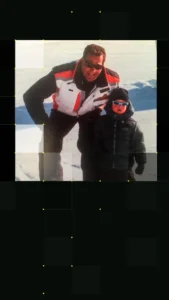
Long before the tennis world learned to fear his thunderous forehand and ice-cold composure, Sinner was already displaying the qualities that would define his career, discipline, relentless work ethic and an unusual calm under pressure.
Growing up in the tiny Alpine village of Sexten, near Italy’s border with Austria, sport was simply a way of life. Nestled among towering peaks where German dialects are spoken as often as Italian, the region produced a child gifted enough to excel at almost everything he touched.
Skiing was his first love. By the age of 12, Sinner had finished runner-up in Italy’s junior national giant slalom championships and appeared destined for a future on the slopes. He was equally talented with a football at his feet, able to play naturally with either foot. Yet it was on a modest tennis court tucked beneath the mountains that another destiny quietly began to unfold.
His first coach, Andreas Schönegger, remembers a slight youngster whose appearance often deceived opponents.
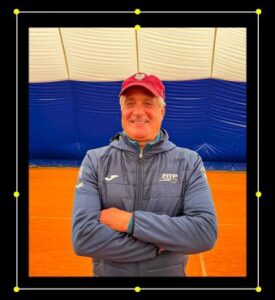
“Everybody thought beating him would be easy because he was so small,” Schönegger recalled. “But he had incredible technique from the beginning.”
His long red hair even caused confusion during his earliest tournaments.
“I remember people asking me, ‘Why is a girl playing today?’ I told them, ‘That isn’t a girl. That’s a very, very strong boy.'”
Unlike many future champions who dominate junior circuits from an early age, Sinner’s development was gradual. He played tennis only a few times each week while balancing skiing and football. That changed dramatically at age 13 when he made the life-altering decision to leave home for the renowned Piatti Tennis Centre in Bordighera, more than 600 kilometres away on Italy’s Mediterranean coast.
The move demanded enormous sacrifice. He barely spoke Italian fluently, knew little English and suddenly found himself immersed in full-time professional training.
“I never went to the gym before,” Sinner later admitted. “Everything changed. I struggled to get used to the new conditions for my body. But it made me grow as a person.”
Living with a Croatian host family far from his parents, Sinner slowly transformed from a mountain boy into an elite athlete. Coaches remember an ordinary teenager who loved football, kart racing and ice cream, yet possessed extraordinary focus whenever he stepped onto a tennis court.
His former physiotherapist, Claudio Zimaglia, recalled how physically fragile Sinner initially appeared.
“He was incredibly skinny. When he started working in the gym, it was really difficult because his body simply wasn’t ready.”
Years of painstaking physical development gradually changed everything. The once-slender teenager developed one of the most explosive forehands in tennis, a devastating first serve and movement around the court frequently compared to Novak Djokovic’s.
Progress arrived quickly. At just 16, Sinner played his first professional tournament in Egypt, earning only $258. Barely two years later, he had reached the semi-finals of an ATP Tour event in Antwerp before capturing the prestigious Next Gen ATP Finals title at only 18, announcing himself as one of tennis’ brightest young stars.

Yet behind every milestone stood the quiet sacrifices of his family. His father, Hanspeter, often completed exhausting 14-hour shifts as a chef before joining his son on court to practise. His mother ensured the difficult decision to leave home never felt like abandonment but an investment in a dream.
Schönegger remembers one characteristic above all others.
“When the other children finished training and went home, Jannik stayed behind. He always wanted to practise one more drill, one more footwork exercise, one more forehand.”
That relentless pursuit of improvement has since carried him to the summit of world tennis. His calm temperament, surgical precision and remarkable consistency have earned admiration across the sport, while his rise has inspired a new generation of young players who now see greatness emerging not only from glamorous tennis academies but from quiet mountain villages.

Sinner’s story is ultimately not one of overnight success but of deliberate choices, sacrifice and patience. The boy who once raced down snowy slopes chose the uncertainty of tennis over the familiarity of home, enduring years of physical hardship and personal sacrifice before the rewards arrived.
Today, every title, every milestone and every victory serves as a reminder that legends are rarely born under bright lights. More often, they are quietly forged in places where few are looking, through discipline, resilience and an unwavering belief that extraordinary dreams can begin in the most ordinary corners of the world.