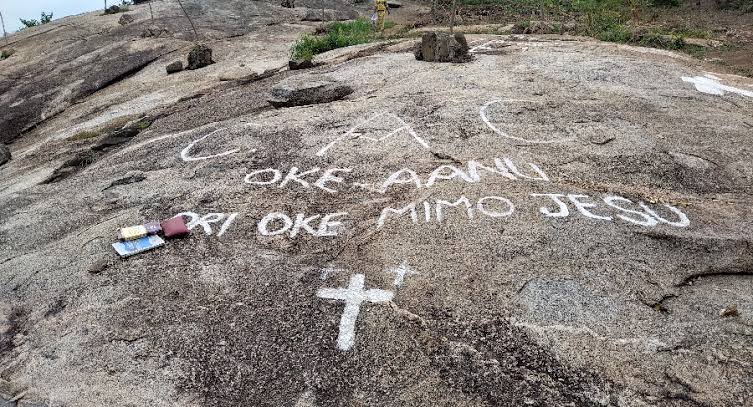

For decades, Nigeria’s prayer mountains have stood as symbols of hope, healing and unwavering faith. Say hello to Insecurity…
Perched on lonely hills, hidden within forests or tucked away from bustling cities, these sacred grounds have attracted millions seeking divine intervention for illness, unemployment, infertility, financial hardship and family challenges. They were places where believers escaped the distractions of everyday life to encounter God in silence and solitude.
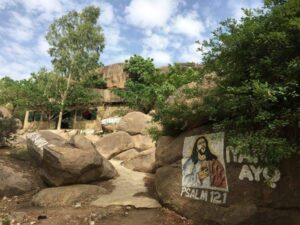
Today, however, those sanctuaries are being overtaken by a different reality. Instead of finding peace, many worshippers now fear they may never return home.
Across Nigeria, kidnappings, violent attacks and killings have transformed several prayer mountains from centres of spiritual renewal into potential crime scenes. Places once regarded as refuges from life’s troubles are increasingly viewed as easy targets for armed gangs who exploit their remote locations and limited security presence. As insecurity spreads into forests and rural communities, even faith is no longer immune.
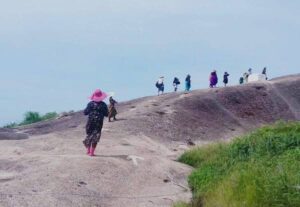
The consequences are becoming increasingly visible. Attendance at many prayer grounds has plummeted. Overnight vigils that once drew thousands have either been cancelled, shortened or subjected to stricter security arrangements. Many worshippers now choose to pray from the safety of their homes rather than risk becoming victims of kidnapping.
The growing anxiety was reflected last month when the Mountain of Fire and Miracles Ministries (MFM), one of Nigeria’s largest Pentecostal churches with over 300 branches nationwide, suspended overnight vigils and directed that church programmes across the country should end by 8 p.m, a decision widely interpreted as a response to the worsening security situation.
Nowhere is the impact more evident than at Oluwawamiri Prayer Mountain in Adekanbi Community, Egbeda Local Government Area of Oyo State. A narrow road winds through the quiet settlement before opening onto the hilltop sanctuary surrounded by thick vegetation and towering trees. The environment remains peaceful, but beneath that calm lies unmistakable apprehension.
During a recent visit by a local newspaper, the silence was striking. Empty prayer spots stretched across the mountain, while buildings that once overflowed with worshippers sat almost deserted. Only three workers, including a minister, were present.
“This mountain has had a lot of positive impact on the lives of people. But the issue of kidnapping and killing is the reason people no longer come as they used to. Before, there used to be a lot of crowd,” Apostle David Obakorede said, gazing across the largely empty grounds.
For Prophetess Regina Ademola, who has overseen the prayer mountain for more than two decades, the transformation has been heartbreaking. She remembers when the mountain echoed with testimonies of miraculous healings, restored marriages, employment breakthroughs and women previously diagnosed with infertility returning to dedicate children.
Today, she told The Punch, fear has replaced faith for many visitors.
“People are scared, so they stopped coming. Even those who still come, and the staff members, we don’t allow them to stay for long because of the insecurity, and we also get security for special programmes,” she explained.
A similar story unfolds at Ori-Oke Babalola Prayer Mountain in Odo-Owa, Kwara State, one of Nigeria’s best-known Christian pilgrimage destinations. Resident pastor Joseph Olaleye says attendance has collapsed as insecurity continues to discourage pilgrims.
“The insecurity challenge is glaring and has affected this place negatively. Where we were seeing 100 people before, we now see less than 10. The situation has really made many people afraid. Fear can kill faster than anything,” he lamented.
For many worshippers, those fears are deeply personal. Forty-three-year-old Bola Olaire recalls travelling monthly from Ilorin to the mountain to pray for her family. She credits one such visit with her son’s breakthrough after university when he secured employment shortly after she prayed with his certificate and photograph.
Despite those testimonies, she no longer dares to return.
“If not for these security issues, I used to visit the mountain every month-end from Ilorin to pray for my children. But now I can’t go there again. My lastborn always tells me that we don’t have N30 million to pay as ransom,” she said.
Her fears are far from unfounded. In May 2026, gunmen stormed the Ori-Oke Ajaiye Prayer Mountain in Ikerin-Opin, Kwara State, during an overnight vigil, killing three people, including a security guard, and abducting several worshippers. The attackers reportedly demanded a staggering N1 billion ransom for their release.
Similar attacks have occurred along the Agbaja Road axis of Lokoja in Kogi State, where armed criminals have repeatedly targeted worshippers attending night vigils on remote prayer mountains.
The assault on sacred spaces is not limited to prayer mountains. In June 2022, Nigeria witnessed one of its darkest moments when armed attackers invaded St. Francis Xavier Catholic Church in Owo, Ondo State, during Sunday Mass, killing dozens of worshippers and leaving many others injured. The tragedy shattered the long-held belief that churches and places of worship were beyond the reach of violence.
Yet, despite the growing insecurity, faith continues to endure. Across Nigeria, many believers still make the journey to prayer mountains, convinced that divine protection outweighs earthly danger. At Oju Olorunkole Prayer Mountain in Akinyele, Ibadan, hundreds recently gathered for a multi-day spiritual programme that extended into the night. Similar scenes have played out at Ori-Oke Bethel City in Ogun State and several other prayer grounds where night vigils remain part of religious life.
For these worshippers, abandoning the mountains would mean surrendering a cherished spiritual tradition. Many believe that prayer remains their strongest weapon in uncertain times.
Security experts, however, urge caution. Retired Major General Henry Ayoola argues that while faith is essential, wisdom must also guide worship.
“In a situation where there are security challenges like ours, people can avoid going to those mountains for now. It does not mean that you cannot access open heavens in your house,” he advised.
His warning places emphasis on a difficult reality confronting millions of Nigerians. The country’s security challenges have reached a point where even sacred spaces, once regarded as sanctuaries beyond the reach of violence, now require risk assessments.
Ultimately, the crisis extends beyond religion. It is a reflection of how insecurity is steadily shrinking public spaces, altering traditions and forcing citizens to rethink how they live, travel and worship. Until safety is restored, Nigeria’s prayer mountains may continue to echo with fewer songs of praise and more whispers of fear, a painful reminder that when insecurity spreads unchecked, even the holiest places are not spared.