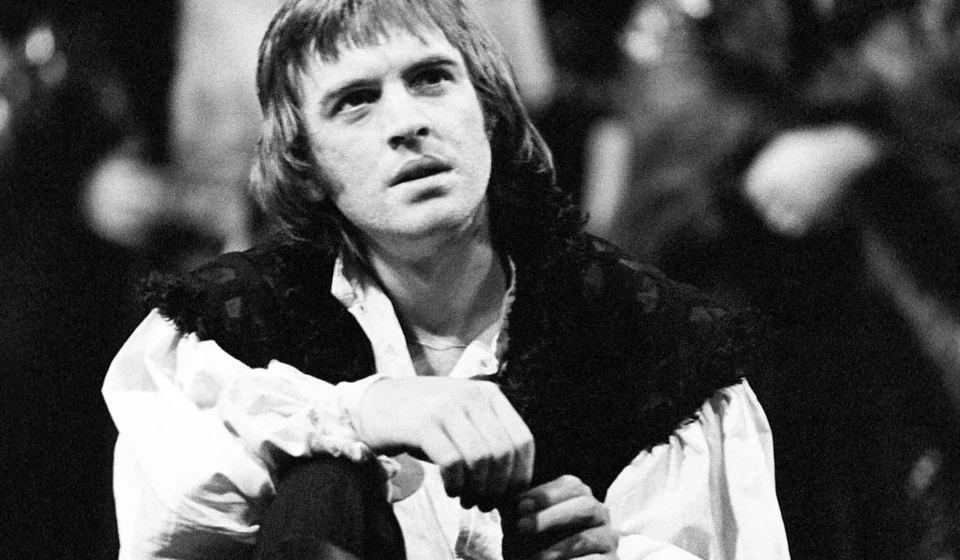

When Scottish actor Ian Charleson stepped onto the stage of London’s National Theatre in October 1989 to play Hamlet, he was battling a terminal illness that had already begun to weaken his body. At just 40, Charleson was living with AIDS, but he remained determined to take on one of the most demanding roles in theatre history.
His extraordinary final performance, delivered while his health was rapidly deteriorating, has become one of the most remarkable stories of courage and commitment in British theatre.
The story is now being revisited in Elsinore, a biographical film centred on Charleson’s final acting achievement, with Scottish actor Andrew Scott portraying the late performer.
Charleson was already an established name in international cinema. He gained widespread recognition for playing Eric Liddell, the devout Christian Olympic athlete who refused to compete on Sundays, in the 1981 Oscar-winning film Chariots of Fire. He also appeared in Richard Attenborough’s Gandhi, which won multiple Academy Awards the following year.
However, by 1989, the actor was increasingly dissatisfied with the direction of his career. The opportunity to play Hamlet at the National Theatre offered what he considered a defining moment, and he was determined not to let his illness take that opportunity away.
Charleson was not originally cast as Hamlet in the National Theatre production. The role had first gone to Daniel Day-Lewis, who famously abandoned the production during the opening week in September 1989, leaving the stage during a scene involving the ghost of Hamlet’s murdered father.
Over the years, the incident attracted considerable speculation, including claims that Day-Lewis had seen the ghost of his own father, poet Cecil Day-Lewis. The actor later clarified that his remarks about the experience had been metaphorical.
Charleson had, however, already been approached by director Richard Eyre earlier that year as a potential replacement. The two had previously worked together on the 1982 production of Guys and Dolls, and Eyre had developed considerable confidence in the actor’s abilities.
It was also not Charleson’s first encounter with Hamlet. He had previously explored the character in Tom Stoppard’s Rosencrantz and Guildenstern Are Dead at London’s Young Vic and performed Shakespeare’s original play in a touring production in 1974. He had remained dissatisfied with his earlier interpretation and saw the National Theatre opportunity as a chance to finally get it right.
Unknown to most of the public, Charleson had tested positive for HIV in 1986 and had subsequently developed AIDS.
His close friend Sean Mathias was among the few people aware of the seriousness of his condition. Mathias initially worried that the physical and emotional demands of the production could accelerate the actor’s decline.
He described Hamlet as arguably the biggest role a male actor could undertake, requiring extraordinary mental concentration, emotional depth and physical endurance. With performances lasting several hours and demanding lengthy monologues, he feared the commitment might place too much strain on Charleson.
Charleson’s medical care was overseen by Margaret Johnson, a young respiratory physician at London’s Royal Free Hospital, where an HIV service was being established.
Johnson initially had little knowledge of the actor’s public profile. Her priority was to provide medical care and understand how her patient was coping with the illness.
She later recalled asking him about his financial circumstances, only to discover that he was relatively comfortable because of an arrangement that gave him a share of the profits from Chariots of Fire.
Unlike the fictionalised portrayal of her character in Elsinore, Johnson did not attempt to discourage Charleson from taking the role.
She believed that patients should not be prevented from pursuing meaningful activities simply because they were seriously ill. Rather than telling him to abandon Hamlet, she encouraged him to continue living his life while hoping that his condition might improve.
As rehearsals progressed, Charleson’s deteriorating health became increasingly difficult to conceal. Initially, the explanation circulated among members of the company was that he was recovering from a sinus operation.
Eventually, however, he chose to tell his fellow actors the truth about his condition. The announcement, also recreated in the film, was met with support and solidarity from the theatre company.
Paul Jesson, who played Horatio, recalled that many colleagues already knew about Charleson’s illness before the announcement. He said the actors responded with understanding and encouragement.
Charleson made his first appearance as Hamlet on October 9, 1989. By then, the effects of AIDS were becoming increasingly visible, with swelling in his face and a growing physical weakness.
Despite his condition, he delivered a performance that attracted widespread critical acclaim. Jesson, who shared the stage with him, later explained that Charleson’s physical strength was severely limited. During performances, he sometimes had to provide physical support, and by the conclusion of a show, the actor struggled to lift his sword during the final duel.
His doctor also occasionally had to intervene when Charleson felt too unwell to communicate directly with director Richard Eyre. Yet the actor continued.
The performance was particularly striking because of the themes at the centre of Hamlet, a character consumed by questions of mortality, suffering, existence and the meaning of life.
For audiences and critics, Charleson’s personal battle with a terminal illness appeared to give his interpretation an extraordinary emotional intensity.
Johnson described his performance as remarkable, noting that many people regarded it as one of the finest portrayals of Hamlet they had witnessed.
Theatre critic John Peter, writing in The Sunday Times, praised Charleson’s ability to transform a production, describing his Hamlet as forceful, intelligent and commanding.
Andrew Scott, who portrays Charleson in Elsinore, has also received praise for his interpretation of the actor’s final chapter.
Jesson, however, has pointed out that the physical weakness Charleson experienced was even more pronounced than the film’s portrayal suggests.
Charleson completed 24 performances, with his final appearance taking place on November 13, 1989. The audience responded with a prolonged standing ovation.
Eyre later reflected in his diary that watching Charleson perform was like witnessing someone who had spent an entire lifetime preparing for the role. In his assessment, the actor had gone beyond playing Hamlet and had become the character.
Among those in the audience was celebrated British actor Ian McKellen. When McKellen received the Evening Standard Theatre Award for Best Actor the following evening, he publicly suggested that Charleson was more deserving of the recognition.