Scientists Uncover Hidden Tiger Cat Species in Bolivia, Raising Fresh Conservation Concerns

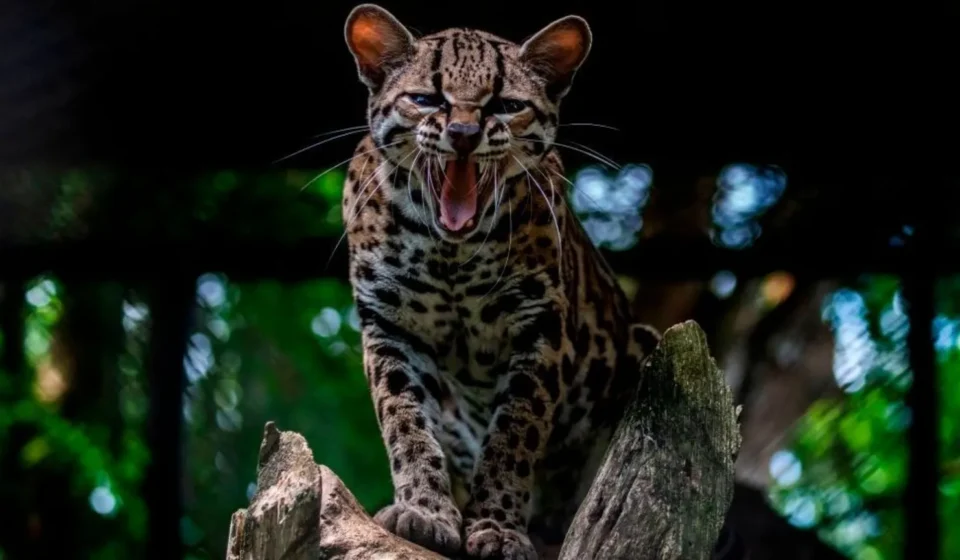
For years, a small wild cat roaming the forests of Bolivia escaped scientific attention, partly because it looked almost indistinguishable from several other spotted and striped cats found across South and Central America.
Now, genetic evidence has revealed that the animal belongs to a distinct species, giving scientists a rare glimpse into biodiversity that has remained largely undocumented.
Researchers have named the newly described animal the Tilcaya cat, or Leopardus tilcayo. The discovery was made possible after scientists analysed DNA from a 10-year-old cat living at a rescue sanctuary in Bolivia, alongside genetic material obtained from other living tiger cats and museum specimens.
The findings, published in Current Biology, also challenge the existing understanding of the tiger cat group. Rather than the three species previously recognised by scientists, the research indicates that there may be five distinct tiger cat species.
For conservationists, however, the discovery comes with an immediate concern: the newly identified cat may already be at risk before scientists have properly established how widespread its population is.
The story began with a single animal known as Tigrino, a small cat living in a Bolivian rescue sanctuary.
Paola Nogales-Ascarrunz, a Bolivian scientist with the Universidad Mayor de San Andrés in La Paz, encountered the animal while volunteering at the sanctuary. Something about the cat immediately caught her attention.
Tigrino had originally been discovered in the forest by a local resident who assumed he had found a domestic kitten. But as the animal grew, its behaviour and appearance increasingly suggested that it was a wild cat.
The animal’s coat, marked by spots and stripes, made identification particularly difficult. Its appearance closely resembled that of other tiger cats, including the oncilla, also known as the northern tiger cat.
Nogales-Ascarrunz had also come across reports of similar small cats in Bolivia’s Yungas region, an area known for its dense forests and rich biodiversity. Yet many of those reports had never been followed up with systematic scientific investigation.
That uncertainty prompted her to collaborate with researchers from several countries to investigate where Tigrino fitted within the tiger cat family.
The answer was unexpected.
“It’s an amazing result that we have a new species for the world, which is the Leopardus tilcayo, ” Nogales-Ascarrunz said.
She noted that the discovery demonstrated that scientists do not necessarily need to explore some remote or inaccessible part of the planet to find an unknown species.
Traditional identification methods had made tiger cats particularly difficult to classify. The animals are relatively small, with body sizes comparable to domestic cats, and many possess similar coats covered in combinations of spots, stripes and rosettes. Their physical similarities have made it difficult even for specialists to determine where one species ends and another begins.
Genetics provided a different route. Researchers compared DNA obtained from living tiger cats with genetic material from specimens held in museums. The analysis revealed evolutionary differences that could not easily be detected simply by examining the animals’ appearance.
Eduardo Eizirik, a conservation geneticist at the Pontifical Catholic University of Rio Grande do Sul in Brazil and one of the researchers, said the animals had remained hidden partly because so little material existed for scientists to study.
“There are so few records or pictures, no individual in a museum, so it was hiding because nobody was looking,” he said.
According to The BBC, the research therefore does more than add another name to the list of the world’s cats. It suggests that scientists may have underestimated the diversity within an entire group of South American wild cats.
Scientists now face a difficult question: Where are the other Tilcaya cats?
At present, Tigrino is the only confirmed individual of the newly identified species known to researchers. Scientists believe other members of the species are likely to exist, but their numbers, distribution and population status remain uncertain.
That uncertainty is particularly significant because tiger cats are already under pressure across their range.
The animals inhabit forests stretching across parts of Central and South America, with populations affected by deforestation, destruction and fragmentation of habitat, and illegal hunting.
The newly described Tilcaya cat was not included in earlier conservation assessments because scientists did not know that it existed as a separate species.
Caroline Sartor, a co-researcher from the Wildlife Conservation Research Unit at the University of Oxford, said identifying a species is fundamental to protecting it.
“You can’t protect a species if you don’t know what it is or where it lives,” she said.
The discovery, she added, demonstrates how much biodiversity remains undocumented, even among mammals that might appear familiar.
The fact that the animal is roughly the size of a domestic cat makes the finding particularly striking. While scientists have discovered new insects, plants, amphibians and other organisms in remote environments in recent years, finding an apparently distinct mammal within a well-studied family is considerably less common.