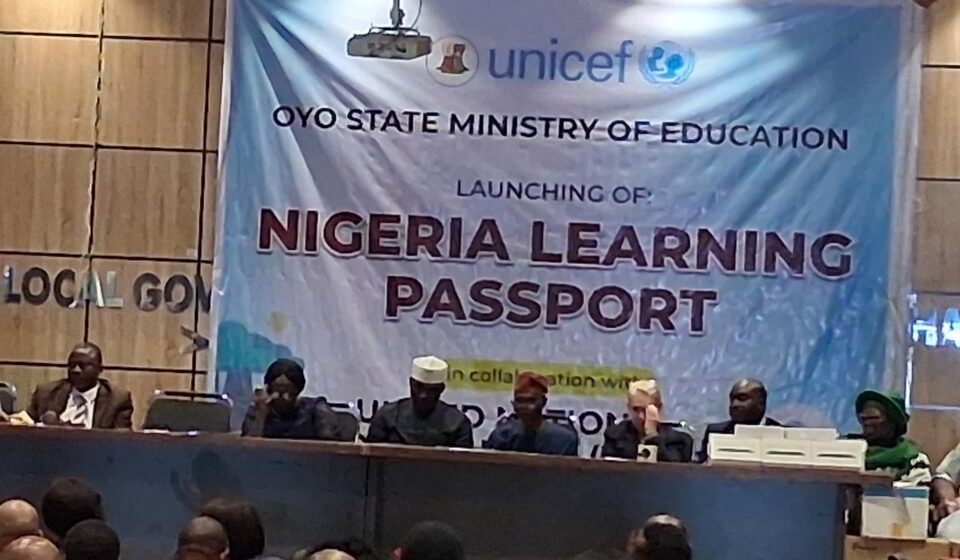

The United Nations Children’s Fund (UNICEF) has reaffirmed its support for improving access to digital learning platforms for students and teachers across Nigeria with the launch of the Nigeria Learning Passport (NLP) in Oyo State.
The launch, held on Wednesday at the Local Government Hall, Secretariat, Ibadan, brings Oyo State into the growing number of states that have adopted the digital learning platform designed to enable students and their teachers to access educational materials through mobile phones and tablets, both with and without internet connection.
Speaking at the launch, UNICEF Lagos Chief of Field Office Celine Lafoucriere highlighted key priorities that will help ensure the platform delivers lasting results in the state, as she charged parents and teachers to pay attention to their wards’ usage of the platform.
The NLP, which was developed in response to the learning disruption caused by COVID-19, has since gained support from the Federal Government and other committed partners, which Lafoucriere noted have continued to play significant roles in expanding the platform.
Speaking on behalf of the state government, the Commissioner for Education, Science and Technology, Oyo State, Segun Olayiwola, reaffirmed support for the initiative as he urged teachers and school administrators in the state to take advantage of technology and use it responsibly.
The Nigeria Learning Passport is expected to transform education delivery across Oyo State, in alignment with the state government’s commitment to improving learning outcomes, strengthening education systems and ensuring no child is left out.
The platform is the result of a strong collaboration between UNICEF, the Federal Government of Nigeria and several committed partners. Microsoft developed the technology platform, the Global Partnership for Education provided financial support, IHS Towers supported connectivity infrastructure, TECNO provided devices, and Airtel covers data costs for users.
According to UNICEF, the platform exists because many partners shared a common vision and committed resources to making quality learning accessible to every child.