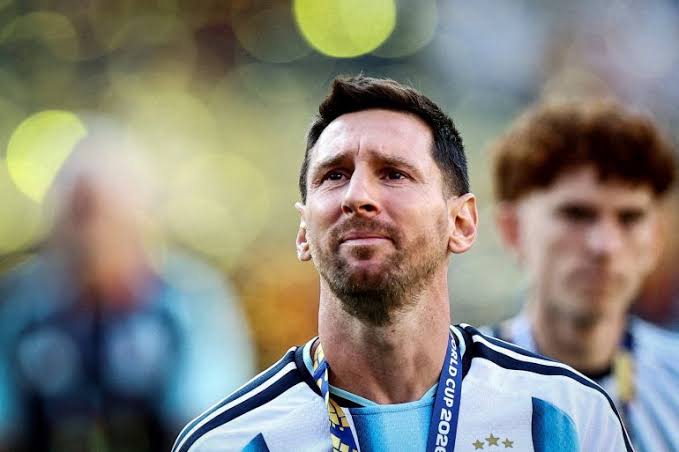

After nearly three decades of football, Lionel Messi has given the game, and Argentina, almost everything he had.
Now, at 39, the man who turned football into an art form says it is time to step away from the international stage, take a breath, and watch the game from the other side of the professional dawn.
Argentina captain and football legend Lionel Messi has announced his retirement from international football, admitting that the decision “hurts” but acknowledging that “the time has come.”
Messi leaves the national team as Argentina’s all-time leading scorer and most-capped player, with 125 goals in 207 appearances.
In a statement shared on Instagram, Messi said he had given everything to the national team and now had “nothing left to give.”
“Time is running short, chapters come to a close, and this is one that hurts me deeply,” Messi wrote.
“I love, have loved, and will always love being part of the national team. I’ve given it my all, I have nothing left to give, and besides, there are some really great young players coming through behind me who deserve their chance.”
For more than 20 years, Messi wore the blue and white of Argentina through triumph, disappointment, criticism and redemption.
There were years when the national team seemed to be the one mountain he could not climb. He lost major finals. He endured questions about his commitment and whether his genius at club level could ever translate into international glory.
Then came the transformation. Messi finally led Argentina to World Cup glory in Qatar in 2022, lifting the one trophy that had eluded him for so long. He also played a central role in Argentina’s Copa América triumphs, cementing his place among the most decorated players in international football.
The boy from Rosario had become the man who delivered football’s greatest prize to Argentina. But Messi’s relationship with the national team was never simply about trophies.
He said he always fought for the shirt because he wanted to give his country happiness and pride.
“I swear to you that I always gave it my all not just in these last few years when we won everything, but before that too,” he said.
“Thank you for all the affection over these past 20 years. I will miss hearing you from the pitch so much. Now I’ll be just one of you, cheering and supporting from the outside.”
There is something almost poetic about those words. The player who spent much of his career carrying Argentina’s expectations on his shoulders is finally allowing himself to put the weight down.
Messi also thanked his family, coaches, teammates and officials who accompanied him throughout his international journey.
He said he was leaving with “peace of mind and pride,” having experienced moments with Argentina that he and his teammates once only dreamed of.
His retirement marks the end of an extraordinary international career that began more than two decades ago.
From the teenage prodigy who first stepped onto the international stage to the captain who finally lifted the World Cup, Messi’s journey with Argentina has contained almost every emotion football can produce.
Joy. Anguish. Failure. Redemption. Glory. And, finally, acceptance.
The man who once seemed incapable of growing old in football has reached the dusk of his professional journey.
But perhaps that is the beauty of it.
Legends do not disappear when they leave the pitch. They simply move from being part of the game to becoming part of its history.
Lionel Messi came as a boy. He stayed long enough to become a captain. He left as a champion.
The man. The myth. The Messi.


