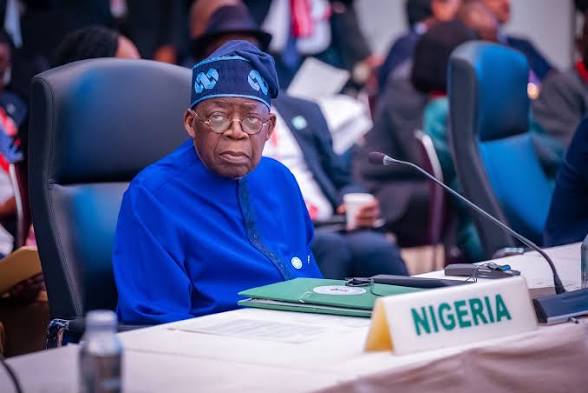

Nigeria’s leader, President Bola Tinubu has called for a major overhaul of the United Nations Security Council, demanding at least two permanent seats for Africa with veto powers.
He made the demand while addressing the General Debate of the 81st Session of the United Nations General Assembly in New York recently.
The address was delivered on his behalf by Vice President Kashim Shettima. The President also called for Africa to have five non-permanent seats on the Security Council, arguing that the current structure of the global body no longer reflects the realities of the modern world.
According to Tinubu, meaningful reform of the United Nations must begin with changes to the composition of the Security Council, particularly to give Africa permanent representation in the body responsible for maintaining international peace and security.
He said Africa could no longer continue to participate in the Council’s activities and bear the consequences of its decisions without having a permanent voice in its highest decision-making structure.
“The reform of this institution must begin with the reconstitution of the Security Council, for the world of 2026 cannot remain captive to the distribution of power in 1945,” Tinubu said.
He said Nigeria’s demand was consistent with the Ezulwini Consensus and the Sirte Declaration, which have shaped Africa’s position on reform of the Security Council.
“Nigeria demands, in accordance with the Ezulwini Consensus and the Sirte Declaration, at least two permanent seats for Africa, with all the rights and responsibilities of permanent membership, including the veto for as long as it exists, and five non-permanent seats in total,” he said.
Tinubu also said Nigeria was prepared to assume greater responsibilities in promoting international peace and security.
He also cited the country’s long-standing role in peacekeeping and conflict-resolution efforts across the continent, including interventions in Liberia, Sierra Leone, Darfur, Mali and The Gambia.
The President said Nigeria was also contributing to efforts to promote mediation, democratic governance, counter-terrorism and maritime security through regional and continental platforms, including the Economic Community of West African States, the African Union and partnerships in the Gulf of Guinea.
Shettima also used the address to call for reforms to the international financial system, arguing that the cost of servicing debt was diverting resources that developing countries needed to fund education, healthcare and infrastructure.
“Nigeria, therefore, calls for reform of the international financial architecture, wider access to concessional financing, and debt sustainability frameworks that recognize developmental needs,” he said.
The Vice President also identified the African Continental Free Trade Area as an important opportunity for the continent to strengthen regional value chains, increase intra-African trade, promote industrialisation and attract investment.
He said African countries must move beyond their traditional dependence on exporting raw materials by placing greater emphasis on value addition, manufacturing, technological innovation and knowledge-based economic growth.
On security, Shettima said the spread of terrorism, organised crime, cyberattacks and illicit financial flows had shown the limitations of countries tackling such threats in isolation.
He pointed to Nigeria’s experience confronting Boko Haram, ISWAP and other armed groups, saying military successes needed to be reinforced by investment in education, economic opportunities, accountable governance and the protection of vulnerable communities.
“Development cannot take root while violence repeatedly uproots livelihoods, and peace cannot endure while injustice and exclusion replenish the ranks of those who threaten it,” he said.
Shettima further called for urgent diplomatic efforts to resolve conflicts in Sudan and other parts of the world affected by war.
He stressed the need to protect civilians, guarantee humanitarian access and ensure that negotiated settlements respect national sovereignty and territorial integrity.
According to him, all parties to armed conflicts must also comply with international humanitarian and human rights law.
He urged the United Nations to commit greater resources to peacebuilding, mediation, institution-building and sustainable development, arguing that greater emphasis should be placed on preventing conflicts before they escalate.