How Shell’s Spillage Contaminated a Thriving Niger Delta Community

For decades, the creeks and mangroves of Nigeria’s Niger Delta have carried a burden far heavier than water. They have carried crude oil, leaked promises, broken livelihoods and now, renewed questions about corporate accountability.
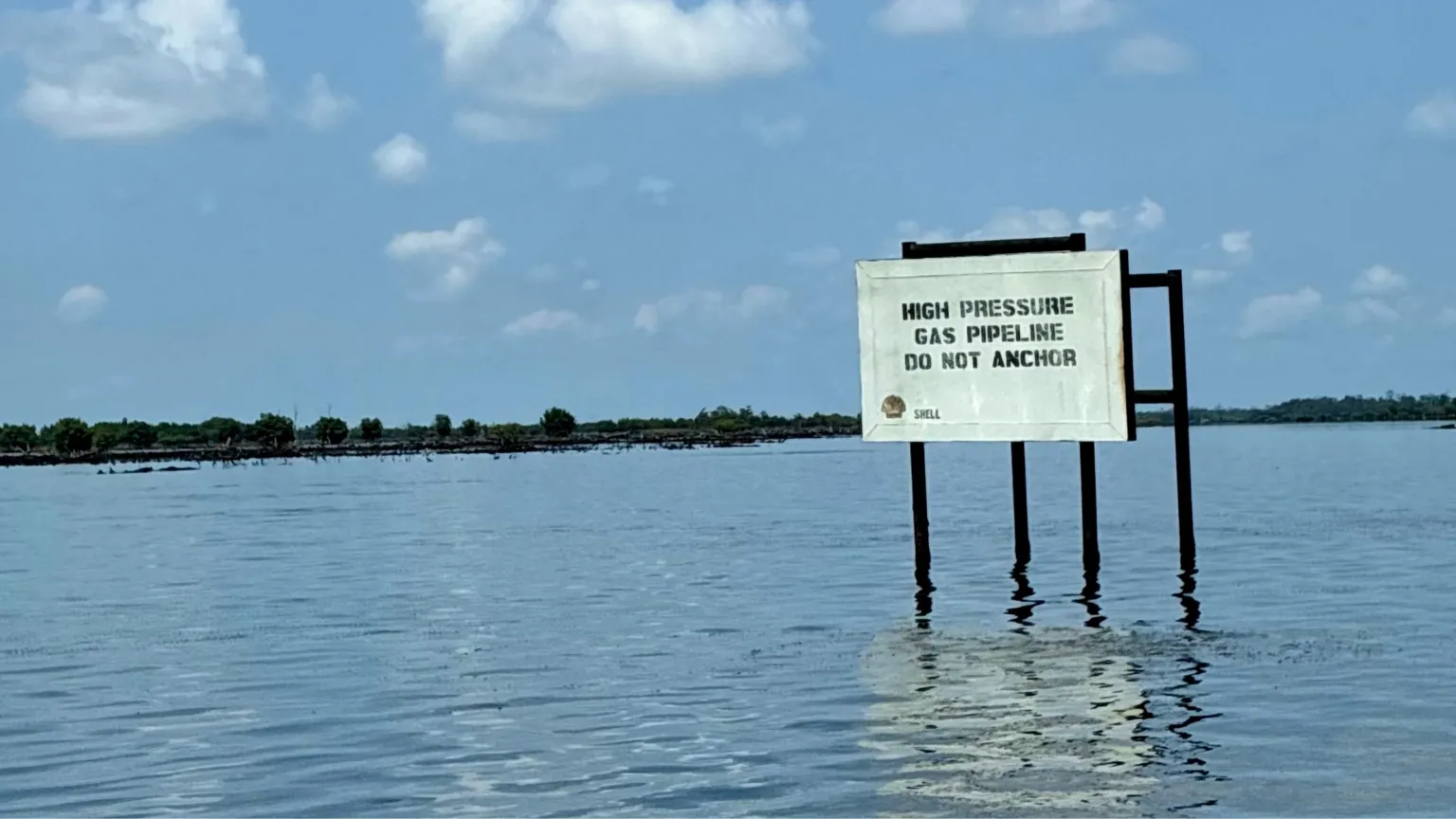
Fresh revelations suggest that British multinational Shell continued operating a major oil pipeline in Nigeria for years despite internal awareness that it was contributing to widespread environmental pollution.
The claims emerge from internal documents obtained by the BBC, which were disclosed during ongoing legal proceedings in the United Kingdom involving communities from the Niger Delta. The communities allege that Shell should be held responsible for extensive environmental damage linked to more than 100 oil leaks recorded between 2011 and 2013.
These spills, according to the claimants, devastated local ecosystems, undermined fishing economies and exposed residents to long-term health and livelihood risks.
The case currently unfolding in UK courts has become one of the most closely watched environmental lawsuits involving an oil multinational and affected communities in Africa.
The plaintiffs are seeking approximately $1 billion in damages, including $250 million in direct compensation and an additional $750 million earmarked for environmental cleanup and restoration.
Shell, however, has maintained in court filings that the majority of pollution in the region stems from “large-scale oil theft, sabotage” and illegal refining activities, which it says are widespread across the Niger Delta. The company also argues that its Nigerian subsidiary invested significantly over the years in spill prevention and response measures.
For residents living near the affected waterways, the debate over legal responsibility is secondary to lived reality.
One claimant, identified as Bruce in court proceedings, described a once-thriving fishing environment now severely depleted. Fish species such as sardines, catfish, tilapia and oysters that once supported entire communities are now scarce or deformed when found.
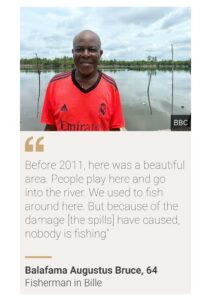
“We used to fish around here,” he said. “But because of the damage [the spills] have caused, nobody is fishing here again.”
The collapse of fishing activity has also meant a collapse of income. For many families, the Niger Delta’s waterways, once a source of food and economic stability have become unreliable and polluted.
“I’ve become poor. I eat from hand to mouth,” he added.
The environmental toll of oil extraction in the Niger Delta is not new.
According to United Nations estimates, since oil exports began in Nigeria in 1958, at least 13 million barrels of crude oil roughly 1.5 million tonnes have been spilled across more than 7,000 recorded incidents.
These repeated leaks have left vast stretches of wetlands coated in oil residue, contaminated sediment and declining biodiversity. Mangroves, which serve as critical breeding grounds for fish and protection against coastal erosion, have been particularly affected.
Over time, pollution has become not just an environmental issue but a socio-economic crisis, eroding traditional livelihoods and increasing poverty in affected communities.
The struggle over oil pollution in the Niger Delta has long been intertwined with activism and resistance.
One of its most prominent voices was the late writer and environmental activist Ken Saro-Wiwa, who led campaigns against environmental degradation in Ogoniland. His execution in 1995 by Nigeria’s then military government remains one of the most controversial episodes in the country’s political history and a defining moment in global discussions on environmental justice.
The newly disclosed documents reportedly include internal emails and presentations suggesting that senior Shell executives were aware, as early as 2008, of risks associated with continuing to operate pipelines exposed to persistent theft and infrastructure failures.
The concern, according to the materials cited, was that large volumes of crude oil were being transported through systems vulnerable to disruption and uncontrolled extraction, a situation that could significantly increase spill risks.
While the company’s internal deliberations remain part of ongoing legal scrutiny, the revelations have intensified public debate about the balance between energy production, security challenges and environmental responsibility in one of Africa’s most important oil-producing regions.
Across the southern Niger Delta, the scars of oil extraction remain visible in blackened waterways, degraded farmland and communities still struggling to rebuild lost livelihoods.
For many residents, the issue is not only about past spills but about what comes next, whether remediation will be meaningful, whether compensation will reach affected communities, and whether future operations can avoid repeating historical patterns.