
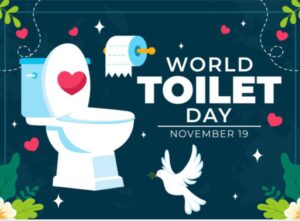
Every year, on November 19, the world unites to highlight a pressing issue that impacts billions of lives: access to proper sanitation.
World Toilet Day (WTD) serves as a call to action to address the global sanitation crisis, a challenge that remains severe despite advances in technology and public health. This year’s observance centered on a powerful theme – the urgent need to eliminate open defecation and promote hygienic practices.
Alarming statistics underline the gravity of the issue. The World Health Organization (WHO) reports that 4.2 billion people worldwide lack “safely managed sanitation,” while approximately 673 million still practice open defecation.
This practice, often driven by poverty and lack of infrastructure, poses severe risks to public health and the environment, contributing to the spread of diseases such as cholera, diarrhea, and typhoid.
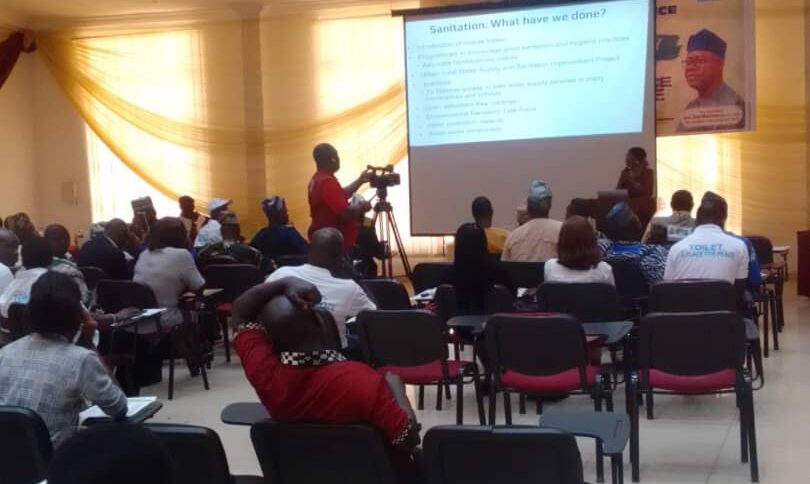
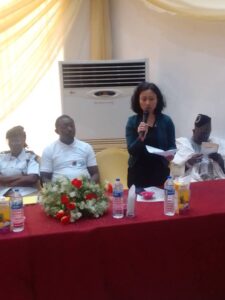
In Nigeria, where open defecation remains a significant challenge, the collaboration between the Oyo State Rural Water Supply and Sanitation Agency (OYORUWASSA) and UNICEF Nigeria have stretched out the plan for progress. During the World Toilet Day celebration held at the Ibadan Business School, the two organizations reaffirmed their commitment to making Oyo State open defecation-free.
The chairman of OYORUWASSA, Alhaji Babalola Afobaje informed that 2 local government are being captured and it has successfully made 6 wards in Ona Ara and 2 wards in Egbeda Local Government Area Open Defecation free.
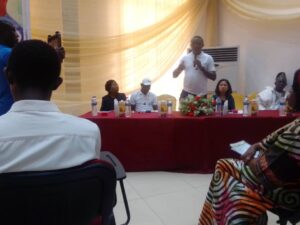
Also, Oyo State commissioner for environment, Architect Abdulmojeed Mogbonjubola at the event stressed the multidimensional importance of toilets.
“A toilet shouldn’t just be a necessity; it should be a place of peace, health, safety, and respect,” he said.
His remarks brings to mind how proper sanitation contributes to human dignity and well-being, far beyond its functional role.
Unfortunately, poor sanitation has devastating consequences for communities. Research shows that for every dollar invested in sanitation, there is a return of $5.50 in reduced healthcare costs and increased productivity. Yet, many communities continue to suffer due to inadequate facilities. Diseases spread through human waste contaminate water supplies, food, and living environments, perpetuating cycles of poverty and illness.
“Waste mismanagement impacts our food, water, and environment, creating pathways for diseases to spread”
The advocacy for basic amenities such as clean water, proper toilets, and effective drainage systems resonated with the audience, many of whom live in vulnerable conditions.
Earlier, UNICEF’s WASH Manager, Joly Ann Maulit called for collective action. “We must stop relying solely on the government and take personal responsibility for ensuring clean sanitation facilities,” she urged. She also explained the role of individuals and communities in maintaining clean environments and adopting sustainable practices to combat the sanitation crisis.
A significant portion of the discussion focused on gender inequality in sanitation access. Women and girls, especially in rural areas, face unique challenges, from lack of privacy to risks of harassment during open defecation. Maulit envisioned a future where every girl child in Oyo and across Nigeria enjoys the right to clean water and dignified sanitation. “Our involvement, advocacy, and action can make this happen,” she said.
The event also featured testimonials from community leaders in Oyo State, who shared inspiring stories of transformation. Some communities, once plagued by open defecation, now boast clean, functional toilets thanks to coordinated efforts between local governments and international organizations. These success stories serve as proof that change is possible with sustained commitment.
Despite progress, the road ahead remains long. UNICEF estimates that Nigeria loses $3 billion annually due to poor sanitation. Achieving an open defecation-free society will require scaling up investments, strengthening policies, and fostering a culture of responsibility among citizens. Initiatives like the ones in Oyo State provide a blueprint for other regions to emulate.
World Toilet Day 2024 serves as a reminder that sanitation is not just about infrastructure—it is about human dignity, health, and equality. The collaboration between OYORUWASSA and UNICEF reflects a shared vision for a healthier and more equitable society, where no one is left behind.