
When it comes to longevity, Singapore is rewriting the playbook. In just six decades, the island city-state has gone from modest life expectancy rates to one of the highest in the world.
A child born in Singapore in 1960 could only expect to live to about 65. Today, that number has soared to over 86, according to recent estimates. Even more striking, the number of centenarians doubled between 2010 and 2020.
This remarkable leap didn’t happen by chance. It is the product of deliberate government policy, cultural adaptation, and a strong public commitment to both health and quality of life. The transformation was so profound that in August 2023, Singapore was officially named the world’s sixth “Blue Zone” – regions where people statistically live longer, healthier lives. But unlike traditional Blue Zones in places like Ikaria, Greece, or Nicoya, Costa Rica, Singapore’s longevity stems less from age-old traditions and more from forward-thinking governance and social design.
Policy Shapes Choices
Singapore has invested heavily in public health measures that affect its citizens daily. From mandatory nutritional labelling to reducing sugar content in beverages, the government has made healthy choices the easier choices. Even in a country known for its rich dishes with coconut milk and salt, residents now find themselves nudged toward balance.
Cigarettes and alcohol, meanwhile, are heavily taxed, and smoking is restricted in most public areas. The result isn’t just healthier lungs but cleaner streets and more welcoming public spaces.
“No more second-hand smoke,” remarked resident Firdaus Syazwani, who has witnessed the country’s transformation in health consciousness firsthand.
Singapore’s Healthcare System Works
International observers consistently praise Singapore’s healthcare model, which blends universal coverage with private options and compulsory health savings accounts. The 2023 Legatum Prosperity Index ranked it the best in the world for healthcare accessibility and outcomes, a rare feat for a system that also manages to keep costs in check.
However, beyond medicine and policy, Singapore’s urban design encourages longevity. The country is a self-styled “garden city,” where green spaces are not afterthoughts but central to planning. Parks, nature reserves, and fitness corners are seamlessly integrated into the landscape, encouraging walking, cycling, and outdoor exercise for all ages.
For Charu Kokate, a senior partner at Safdie Architects who has lived in Singapore for 15 years, the meticulous urban planning remains a marvel. “The focus on sustainability, efficient land use, and green integration is remarkable,” she said. The Singapore Botanic Gardens, a UNESCO World Heritage Site, epitomises this vision—offering beauty, conservation, and community in the heart of the city.
Longevity isn’t just about diet and exercise. Researchers agree that community bonds play a vital role.
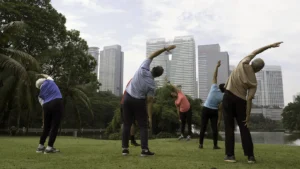
Singapore fosters this through its public spaces, cultural diversity, and emphasis on cohesion. Whether it’s families picnicking at East Coast Park, seniors joining tai chi classes in the morning, or young people cycling along the city’s green corridors, the sense of belonging is woven into daily life.
Yet, living longer in Singapore comes at a price—literally. The city consistently ranks among the most expensive in the world, second only to Hong Kong in Mercer’s 2024 survey. Strict laws govern everything from littering to jaywalking, which some outsiders view as heavy-handed. For many residents, though, these rules underpin the safety, order, and cleanliness that make Singapore a uniquely liveable place.
Singapore’s success story challenges assumptions about longevity. Unlike other Blue Zones rooted in tradition, it shows how modern policy, healthcare, and urban planning can extend lives and improve their quality.
Nigeria, how far?