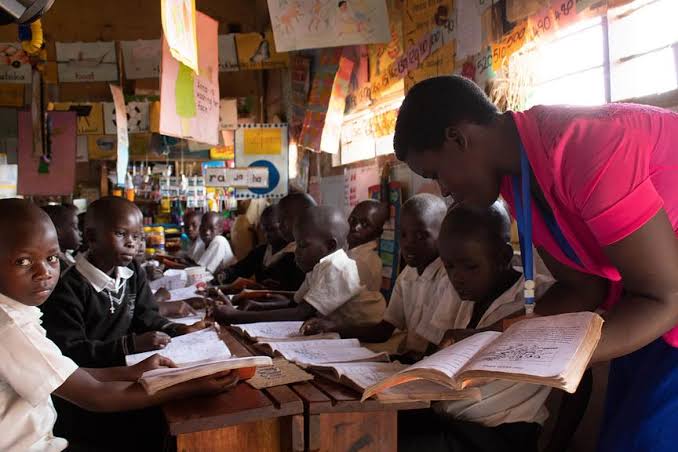

Language is more than a means of communication, it is the foundation of how children think, learn and understand the world. Countries with long-term educational ambitions recognise this reality, placing native languages at the heart of early childhood education. In Nigeria, however, learning in indigenous languages is often viewed as inferior, unsophisticated or incapable of preparing children for global success, despite overwhelming evidence to the contrary.

Mother tongue education refers to teaching children in the language they know best, usually the language spoken at home. Contrary to popular belief, the “mother tongue” is not necessarily the language spoken by a child’s mother. Many children grow up multilingual, speaking different languages with parents, grandparents and members of their communities. What matters is that learning begins in a language children already understand.
For decades, education experts have maintained that children learn best when taught in familiar languages. Yet millions of children worldwide begin school in languages they barely understand, often the legacy of colonial education systems. In countries such as Nigeria, this usually means English, despite the fact that many children encounter the language for the first time only after enrolling in school.

The consequences are profound. According to UNICEF, classrooms can become intimidating spaces where language itself becomes a barrier to learning. Instead of nurturing curiosity and confidence, unfamiliar instruction often leaves children struggling to understand basic concepts, diminishing both their academic performance and self-esteem.
“When a child learns in their familiar language, the world opens up,” UNICEF notes. “Concepts transform from abstract notions into relatable experiences, igniting a spark of understanding and a sense of ‘I can do this!'”
Nigeria officially recognised the importance of indigenous language instruction as far back as the 1977 National Policy on Education, recommending that children be taught in the language of their immediate environment during their early years of schooling. The revised 2013 National Policy on Education reaffirmed this position, mandating that indigenous languages serve as the medium of instruction for the first three years of primary education, while English is introduced as a subject.
Yet implementation has remained largely ineffective. Studies suggest that only about 16 per cent of early primary school pupils receive instruction in an indigenous language despite decades of official policy. In a nation with between 150 and more than 500 languages, depending on classification, translating policy into classroom practice has proved immensely challenging.
The consequences are evident in learning outcomes. According to research cited by Thelma Ebube Obiakor, a Postdoctoral Fellow at the University of Cambridge specialising in Economics and Education, only 17 per cent of Nigerian pupils meet expected literacy standards, while 31 per cent achieve numeracy competency.
Drawing on research by Adeniran and colleagues, Obiakor argues that one of the most effective ways to reverse Nigeria’s learning crisis is to ensure children begin their education in languages they already understand.
“One widely proposed solution to Nigeria’s low learning levels is to ensure that every child begins learning in their mother tongue,” she notes, adding that decades of international research consistently demonstrate the effectiveness of mother-tongue instruction across different educational systems.
Despite this evidence, Nigeria recently reversed course.
In 2025, the Federal Government scrapped its policy promoting indigenous languages in the early years of education, announcing that English would become the sole language of instruction from pre-primary through tertiary education.
Education Minister Tunji Alausa defended the decision, arguing that the previous policy had failed to deliver meaningful improvements.
Ironically, the policy being discarded had been introduced only three years earlier by former Education Minister Adamu Adamu, who maintained that children grasp concepts more effectively when taught in their native languages, a position strongly supported by UNESCO, UNICEF and numerous global education studies.
The policy reversal has spilled criticism among education stakeholders.
Founder and Chief Executive Officer of Izesan Limited, Anthony Osekhuemen Otaigbe, described the decision as a setback capable of undermining years of educational progress.
According to him, adopting English as the exclusive language of instruction contradicts both Nigeria’s National Policy on Education and extensive international evidence supporting multilingual education.
He argued that the move weakens efforts to improve foundational learning while overlooking research demonstrating that early instruction in familiar languages strengthens literacy, critical thinking and eventual proficiency in second languages, including English itself.
The debate goes beyond language; it is ultimately about equity.
For generations, children in many countries have been punished for speaking their home languages in school, sometimes through corporal punishment, public humiliation or other disciplinary measures. Such practices, rooted in colonial education systems, reinforced the notion that indigenous languages represented backwardness while European languages symbolised intelligence and social mobility.
That perception continues to influence many parents today, who often believe abandoning their children’s native language will improve academic performance and future opportunities.
Yet education experts increasingly argue the opposite.
The belief that mother tongue education limits ambition ignores one of the greatest strengths of modern societies: multilingualism. Research consistently shows that children who build strong literacy skills in their first language often acquire additional languages more effectively than those forced to learn unfamiliar concepts in unfamiliar languages from the outset.
For Nigeria, the challenge has never been deciding whether mother tongue education works. The evidence has existed for decades.