
In a recent landmark ruling, the question of “What is a woman?” has once again taken center stage, challenging traditional notions and sparking important conversations about gender identity.
The case in question revolves around “Giggle for Girls,” an app designed as a safe haven for women to connect and share experiences. Marketed as an exclusive space where men were not allowed, the app quickly became a point of contention when Roxanne Tickle, a transgender woman from Australia, found herself barred from the platform. Feeling misrepresented and excluded, Tickle sued the app and its CEO, Sall Grover, for damages amounting to A$200,000, citing “persistent misgendering.”

The Federal Court’s ruling on this case has become a milestone in the ongoing debate surrounding gender identity. Although the court did not find Tickle to be directly discriminated against, it did recognize her as a victim of indirect discrimination. This form of discrimination occurs when a seemingly neutral decision disproportionately affects individuals with certain attributes—in this case, gender identity. Subsequently, the court ordered the app to pay Tickle A$10,000 ($6,700; £5,100) plus costs.
Justice Robert Bromwich, in his decision, acknowledged that sex is “changeable and not necessarily binary,” reinforcing the growing recognition of gender fluidity. Tickle celebrated the ruling, noting that it “shows that all women are protected from discrimination” and expressing hope that the case would offer “healing for trans and gender-diverse people.”
This decision will likely have far-reaching implications, especially in the 189 countries that have ratified the Convention on the Elimination of All Forms of Discrimination Against Women (CEDAW). As national courts often look to international precedents when interpreting treaties, Australia’s stance on this matter could influence legal interpretations across the globe—from Brazil to India to South Africa.
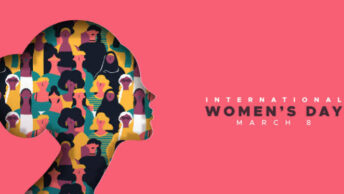
The ruling invites a deeper reflection on the evolving understanding of womanhood, highlighting the need for inclusive definitions that respect and protect the identities of all women, regardless of their gender history.
In a world where gender identity is increasingly recognized as complex and diverse, this case serves as a reminder that the conversation around “What is a woman?” is far from settled.