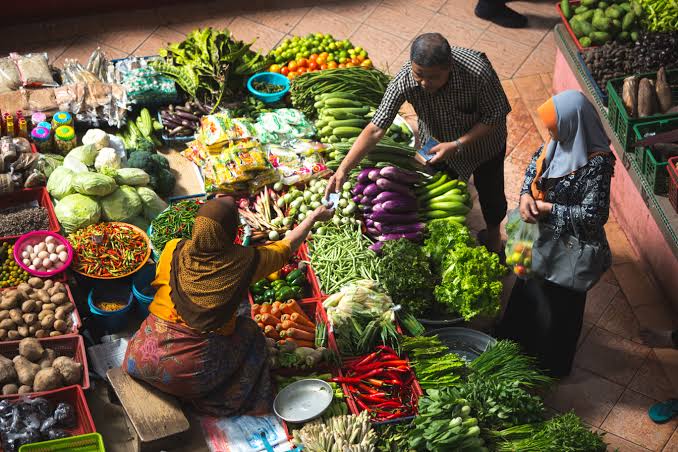

As climate change continues to erode harvests and disrupt supply chains, global hunger is on the rise.
The United Nations gave this warning at the opening of the United Nations Food Systems Summit Stocktake (UNFSS+4) in Addis Ababa, Ethiopia.
UN Secretary-General António Guterres stressed the urgent need for a global rethink of food systems, warning that hunger is no longer a crisis confined to isolated regions, it’s a global affliction that needs collective action.
Guterres, in a prerecorded message, stated that food systems are not just about food, they are linked to health, livelihoods, climate, and economic stability. His remarks set the tone for the summit, which focuses on building sustainable, inclusive, and resilient food systems, building on the momentum of the 2021 Food Systems Summit and the 2023 stocktake.
Echoing this sentiment, Nigeria’s Vice-President Kashim Shettima delivered a compelling address, highlighting how Africa’s most populous country is leveraging modern technology, including artificial intelligence (AI), to strengthen its food system in the face of climate-related shocks.
“Food insecurity is no longer a shadow lurking in distant lands. It is a shared affliction,” Shettima said.
He explained that Nigeria is integrating AI, geospatial analytics, and satellite-driven climate intelligence into its agricultural planning and operations. These tools are being used to monitor crop production, improve transparency, link producers to markets, and reduce food waste across the entire value chain.
“This Fourth Industrial Revolution has not only disrupted the old order but gifted us instruments that were once confined to imagination,” he said.
The vice-president noted that food and nutrition have been prioritized in the National Development Plan 2021–2025 and Nigeria’s long-term Agenda 2050. In line with these frameworks, the federal government is investing in special agro-industrial processing zones in partnership with the African Development Bank and the International Fund for Agricultural Development (IFAD).
He also highlighted the Nutrition 774 initiative, which places local governments at the heart of nutrition delivery across Nigeria’s 774 local government areas. “These hubs are engines of transformation,” Shettima said. “They create jobs, attract private capital and link rural producers to national and global markets.”
In addition, Nigeria is scaling up school feeding programmes, nutrition-sensitive agriculture, and community-driven nutrition education to ensure a comprehensive approach to tackling food insecurity and malnutrition.
To institutionalize these efforts, Shettima said the federal executive council has approved a new national multi-sectoral plan of action for food and nutrition, including the creation of nutrition departments in key ministries. He emphasized that Nigeria is ready to “listen, learn, and lead” in advancing global food security.
“The scars of conflict, the uncertainties of climate, the distortions of markets, and the missteps in policy are all calling us to renew our commitment to multilateralism,” he said.
Ethiopian Prime Minister Abiy Ahmed, who also spoke at the summit, reinforced the need for targeted investments in agriculture and rural infrastructure. He called for predictable concessional financing to drive rural transformation and ensure long-term resilience in food systems. Ahmed also stressed that climate finance must be aligned with food systems, noting that hunger and environmental degradation are deeply interconnected.
The UNFSS+4 summit gathered global leaders, development partners, and food systems experts to track progress and accelerate action on transforming food systems.