Tinubu’s October 1 Cheap Transport Deadline at Risk as CNG Queues, N1m Conversion Costs Stall Rollout

President Bola Tinubu’s ambitious plan to deliver measurable cuts in transport costs from October 1 is running into a hard reality: in Lagos, commercial drivers are queuing for hours to refuel; in Jigawa and Zamfara, operators say there is nowhere to refuel at all.
The uneven rollout of the Compressed Natural Gas initiative across Nigeria’s 36 states has raised serious questions about whether the Federal Government can deliver cheaper fares nationwide within the timeline set by the President with some states already operating subsidised bus services while others remain entirely without CNG infrastructure.
Tinubu, after meeting the 36 state governors on August 27, announced an implementation committee for the National Affordable CNG Transit Programme under the Nigeria Governors’ Forum, chaired by Governor AbdulRahman AbdulRazaq of Kwara State.
In an update over the weekend, the President urged states to work with transport unions and commercial operators, support vehicle conversion and fleet deployment, and ensure savings from cheaper energy were passed on to commuters through lower fares.
The Presidency said more than 120,000 vehicles had been converted, with over 400 certified conversion centres and more than 90 CNG refuelling stations nationwide.
But operators on the ground tell a different story. At the NIPCO facility at Ibafo along the Lagos-Ibadan Expressway, buses, cars and trucks were still queuing for CNG at 9:30 pm, with the line stretching toward the highway.
Commercial driver Saheed said he had been waiting since 7:30 pm:
“My bus is just getting close to the pump. The reason for this queue is because we have a few CNG stations along this axis,” he said. “Some have left to go and buy petrol, but N1,400 is too much for a commercial driver. That’s why you see my buses here.”
The delays are also driving passengers away. One commuter said the queues were discouraging travellers from boarding CNG-powered buses. “Aside from asking to disembark from the bus, they will also delay your journey by staying in the queue,” the commuter said.
Similar queues have been reported around Mowe and Ibafo, as well as at NNPC Ilasamaja and NIPCO Mobil on Ajegunle Road.
For many operators, the problem is not only finding CNG, it is paying to convert their vehicles in the first place.
Commercial driver Musa Kazeem said he abandoned plans to convert after being quoted between N800,000 and N1m, depending on cylinder size.
“Where will I get that?” he asked. “Another issue is, after doing the conversion, I will have to stay in a long queue for hours to buy the product. It now looks as if the CNG stations inherited the petrol queues we used to have before the Dangote refinery became operational.”
The National Association of Road Transport Owners (NARTO) said the queues were costing operators dearly.
“The queues in CNG stations are really costing us time, because time is money. And this is because of the non-availability of refilling stations,” NARTO National President Yusuf Othman said. “The stations are not many; therefore, because of those long queues, we lose a lot of time and money.”
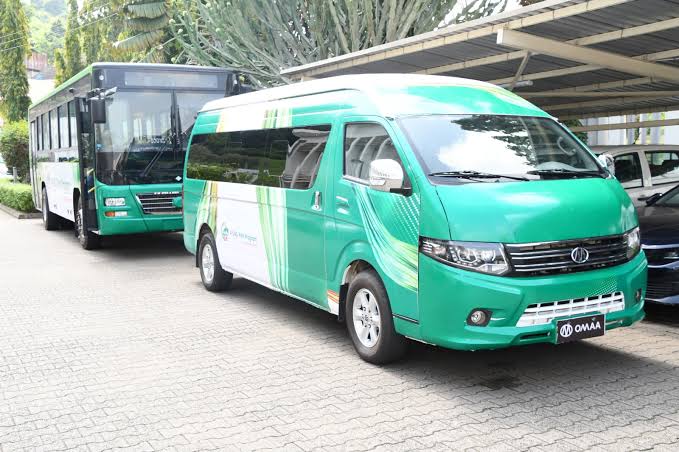
The picture is sharply different in Kaduna State, where the CNG programme has been folded into the mass transit system. The state government said its free CNG bus service has operated since July 2025, following the inauguration of 100 CNG buses.
Commissioner for Information and Culture Malam Ahmad Mayaki said the buses run on eight routes with about 200 bus stops and the service will continue indefinitely.
“Kaduna is the only state offering free services in the whole of Nigeria,” he said. “Other states offer different forms of subsidised costs; some offer 50 per cent, while others offer certain percentages.”
But in Gombe State, operators say the infrastructure remains inadequate, especially for long-distance travel.
“If you want to travel to Abuja and return the following morning, you could spend six, seven or even eight hours in a queue waiting to refuel,” one operator said. “So, up to now, we need more infrastructure before CNG becomes more feasible.”
He also questioned how ordinary northerners could afford conversion. “You know the economic situation in Northern Nigeria. How many people can afford between N750,000 and N800,000 to convert their vehicles to CNG?”
Dr Sani Sabo, Managing Director of Gombe State Transport Service, agreed the policy could cut costs but said expansion would take time. “It will take time for the infrastructure to cover the necessary locations,” he said.
‘Where Is the Gas?’
In Jigawa State, operators were blunter.
“The government is just making promises in Abuja. Where are the CNG stations in Jigawa? Where do you want us to get gas? This policy cannot work without stations and conversion centres,” said Muhd Mudi of the National Association of Transport Owners.
He also questioned how fares could fall when operators still face high costs for fuel, spare parts and maintenance.
In Zamfara State, commercial driver Aminu Suleiman said motorists were still waiting to see their first CNG station. “I hope it is not a fake promise because we have been hearing about the CNG but we, the people of Zamfara State, have never seen it,” he said.
The Zamfara State Government said plans were underway to establish CNG facilities in Gusau and other parts of the state.
In Kwara State, uptake remains low. Abdulrasheed Onikijipa, chairman of the Road Transport Employers Association of Nigeria in the state, said only about 100 commercial vehicles belonging to union members had been converted.
“The reason is that the vehicle owners are running from it because they don’t have belief in it,” he said. “Most of them complain that it damages their vehicles. That is why they don’t key into it as expected.”
Beyond cost and queues, some Nigerians remain uneasy about safety. Oladeinde Lekan, a middle-aged commuter, said he was still worried about the possibility of CNG-related accidents despite government assurances.
Road to October 1
With less than a month to the October 1 target, the gap between Abuja’s promises and the experience of drivers in Lagos, Gombe, Jigawa, Zamfara and Kwara is widening. While Kaduna offers a glimpse of what a functioning CNG transit system could look like, millions of commuters elsewhere are still waiting and paying full petrol prices in the meantime.
Whether the President’s deadline delivers cheaper fares or becomes another unmet promise may depend on how quickly the stations, conversion centres and above all the gas itself reach the roads where Nigerians actually travel.