
A world wonder and an evolving mystery, this is.
Far out in the North Atlantic, east of Florida and west of the Azores, lies a peculiar body of water unlike any other on Earth — the Sargasso Sea.
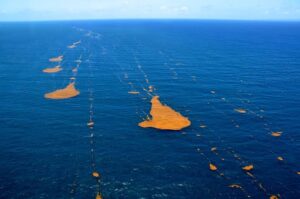
It is the only sea in the world without a coastline, bordered not by land but by powerful ocean currents. Calm and deceptively serene, this blue expanse is home to a floating forest of golden-brown seaweed known as Sargassum. Beneath its still surface pulses a world brimming with life, mystery, and now, mounting threats.
Centuries ago, sailors like Christopher Columbus wrote of these tranquil waters where ships seemed to stall, ensnared by tangled mats of seaweed.
Today, scientists know that what those early explorers encountered was no maritime trap, but a vital marine ecosystem. Stretching more than 800 miles across, the Sargasso Sea serves as a critical nursery for countless species, including shrimp, eels, young sea turtles, and even migratory whales.
This vast blue sanctuary is not merely scenic; it’s functional. The Sargassum mats offer shelter and food to over 100 species of invertebrates. Juvenile loggerhead turtles, after hatching along the Atlantic coast, make their way here to hide and grow. Beneath the floating canopy, porbeagle sharks patrol the shadows while rare Bermuda storm-petrels skim the surface in search of prey.
But beyond its rich biodiversity, the Sargasso Sea plays a pivotal role in Earth’s climate engine. It absorbs carbon dioxide from the atmosphere and regulates ocean temperatures across the Atlantic. Its seasonal temperature shifts — from 64°F in winter to 86°F in summer — trigger vertical mixing that redistributes heat, salt, and nutrients, stabilizing weather systems on both sides of the ocean.
Yet, this balance is under threat.
Years of scientific observation, particularly from the Bermuda Institute of Ocean Sciences, have revealed troubling signs. Since the 1980s, ocean temperatures in the Sargasso have risen by about 1°C. That slight increase is disrupting the sea’s natural layering, limiting oxygen exchange and starving deeper waters of nutrients. The implications reach far beyond the sea’s invisible borders.
The Sargasso Sea is also becoming a magnet for human waste. Its unique geography, encircled by four major currents, funnels in plastic debris, fishing gear, and trash from the wider Atlantic. One survey found more than half a million pieces of plastic per square mile, a grim testament to our throwaway culture.
Cargo ships now routinely slice through the mats, their propellers shredding the seaweed and releasing toxic metal flakes from their hulls. The roar of marine traffic drowns out the low-frequency calls of sperm whales. Floating nets entangle young turtles that once sought safety in these very waters.
Despite these threats, legal protection for the Sargasso remains elusive. As no single country owns it, enforcing conservation measures on the high seas is both diplomatically and financially challenging. However, there are glimmers of hope. The Sargasso Sea Commission, established in 2014, continues to lobby for international cooperation. Scientists and policymakers are urging for simple but effective interventions: rerouting tanker lanes, limiting fishing during turtle seasons, and expanding no-take zones.
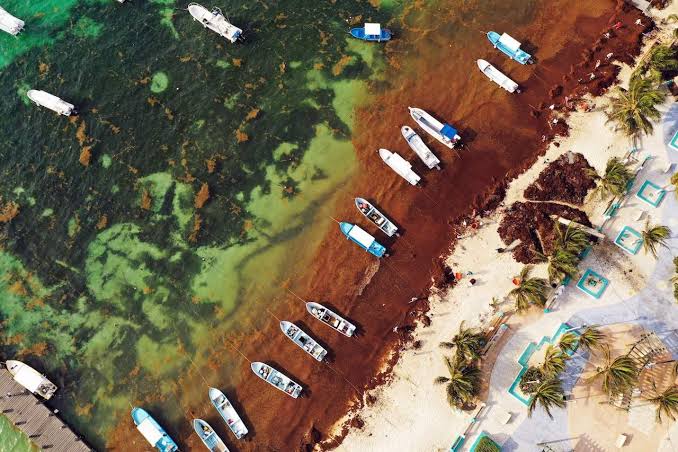
Meanwhile, the effects of climate change continue to accelerate. The same Sargassum that nurtures life at sea is now overwhelming coastlines in the Caribbean, growing so abundantly that beach resorts hire bulldozers to clear rotting masses. What was once a carbon sink risks becoming a source of greenhouse gas emissions.
Still, efforts are underway. Some shipping firms are experimenting with quieter, more eco-friendly designs. Governments are exploring treaties to curb ocean plastic discharge. Conservationists push for smarter fishing practices and habitat protection strategies. These may not restore the Sargasso Sea overnight, but they offer a lifeline to a region too critical to lose.
If the Sargasso were to vanish, buried under plastic, warmed beyond repair — the ripple effects would span continents. Eels from American rivers would lose their ancient spawning grounds. Humpback whales would migrate through empty waters. Storm patterns across Europe could shift, and Earth’s oceanic heat balance would tip further into uncertainty.