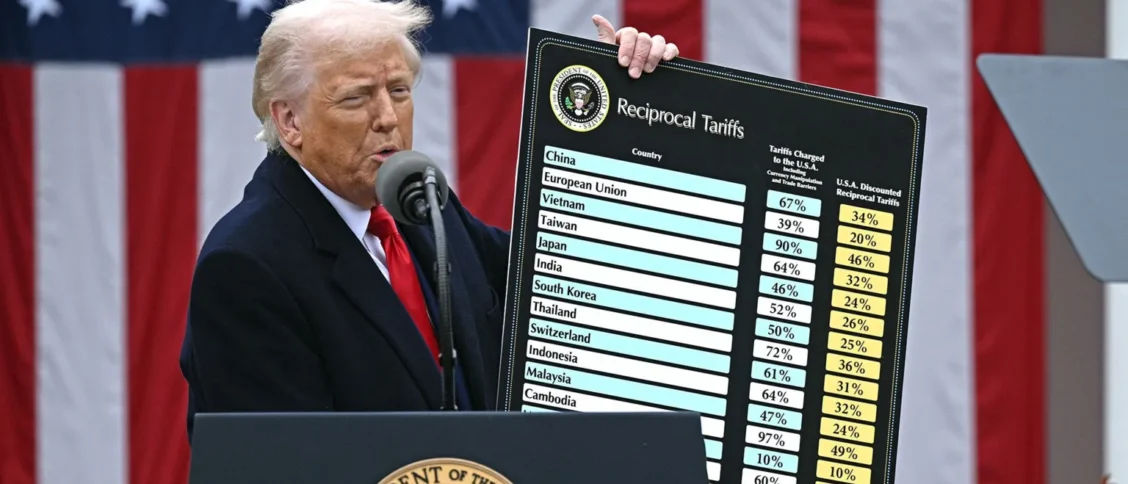

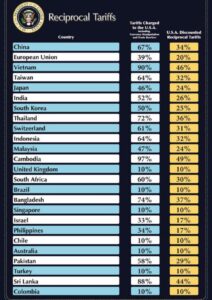
President Donald Trump’s multifarious tariffs on some 50 countries of the world is not a leisure walk. There are deep and far reaching implications as the day rolls by.
The United States’ latest tariffs, the most extensive in nearly a century, could send shockwaves across global markets, altering trade flows and consumer spending habits. While designed to reduce trade deficits, the measures may have unintended consequences that extend beyond American shores.
How Does it Impact U.S. Consumers and Their Businesses?
If these tariffs remain in place, American consumers—the world’s biggest shoppers—will face higher prices and fewer choices. Those willing to pay more will have less disposable income for other goods and services, potentially dampening overall economic activity. U.S. exporters, meanwhile, could suffer as trading partners retaliate, slowing global trade and economic growth.
In previous tariff hikes, countries like Vietnam and Malaysia capitalized on U.S. restrictions on Chinese goods by increasing their exports to America. However, with these new measures targeting an even broader range of countries, alternative markets will become crucial for affected nations.
Meanwhile, African countries, including South Africa, Nigeria, and Kenya, have long-standing trade relations with the U.S. But with the changing landscape, African economies may be compelled to strengthen their ties with other emerging markets.
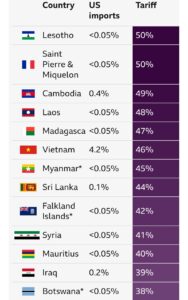
Annabel Bishop, chief economist at Investec, warns that the tariffs could be highly detrimental. However, she also sees a potential silver lining: an acceleration in Africa’s shift toward trade partnerships within the Global South. Countries in Asia and Latin America could become more attractive alternatives, reducing reliance on the U.S. market.
Broader Economic Ramifications
Professor Jonathan Portes of King’s College, London, argues that while the tariffs may shrink trade deficits with specific nations, they are unlikely to eliminate the U.S.’s overall trade imbalance. The American economy’s fundamental structure—where consumption and investment outpace earnings—means the country will likely continue to import more than it exports.
Moreover, these tariffs arrive at a time when many African nations are already grappling with U.S. foreign aid cuts. With funding for health and humanitarian programs slashed, the economic strain on developing economies could deepen.
The Bottom Line
Rather than stabilizing trade relations, the new U.S. tariffs could disrupt supply chains, alter consumer behavior, and force emerging economies to seek new trade allies.
While some nations may adapt by expanding within the Global South, the overall impact on global commerce remains uncertain, with businesses and consumers alike bearing the brunt of rising costs and economic instability.