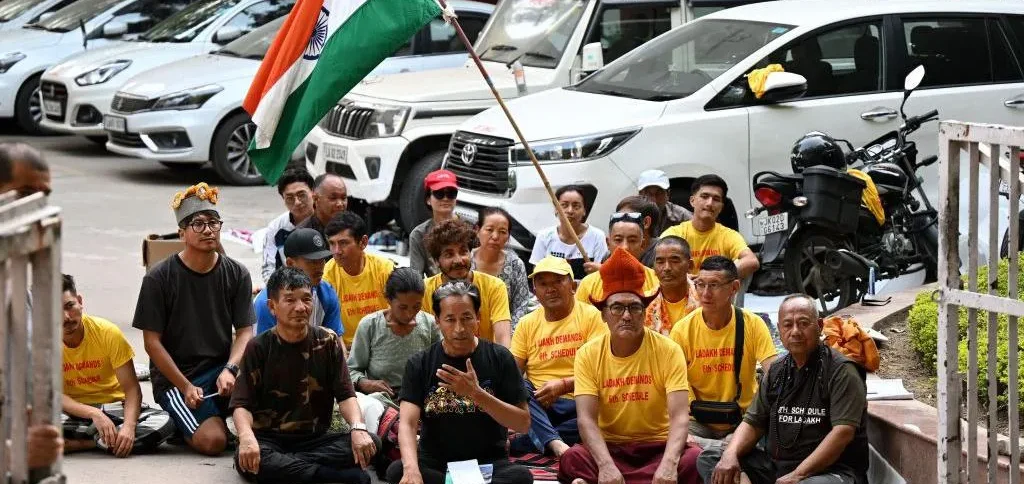

Sonam Wangchuk, a renowned Indian activist and innovator, recently completed a 16-day hunger strike, bringing global attention to his battle to preserve Ladakh’s fragile environment.
For Wangchuk, who has spent decades championing sustainable development in his icy desert home, the fight is far from over. His actions have reignited the call for autonomy and environmental protection in the region, a cause that resonates deeply with Ladakh’s people.

According to The BBC, Wangchuk’s activism is rooted in his love for his homeland. Ladakh, a cold desert nestled in the Himalayas, has a unique ecosystem that remains vulnerable to rapid, unchecked development. Following India’s revocation of the special status of Jammu and Kashmir in 2019, Ladakh was carved out as a separate federally governed territory. However, this political shift left Ladakh without legislative powers, sparking concerns over the region’s ecological future and local governance.
The recent elections in Jammu and Kashmir marked the restoration of legislative bodies there, but Ladakh remains devoid of the same political representation. This disparity has fueled local demands for autonomy under India’s Sixth Schedule, which grants special provisions to protect the culture, resources, and autonomy of tribal areas. Wangchuk, echoing these demands, believes that empowering Ladakhis to govern their land is vital for ensuring sustainable development that respects the region’s delicate environment.
Before his hunger strike, Wangchuk and his supporters marched hundreds of kilometers from Ladakh to Delhi. This arduous journey symbolized their determination to push for constitutional safeguards that would protect Ladakh’s resources from exploitation. The march followed months of unfruitful negotiations between Ladakhi leaders and the central government, driving Wangchuk to take a more radical approach to capture national attention.
At the heart of Wangchuk’s protests is a fear that Ladakh’s rapid development, largely driven by strategic infrastructure projects, is endangering its ecology. Located at the intersection of Indian, Chinese, and Pakistani borders, Ladakh has become a focal point for military and economic activities. While the government views these projects as essential for national security, Wangchuk warns that the ecological cost of such development could be devastating, especially without local input and oversight.
Sonam Wangchuk is no stranger to challenging the status quo. In the 1980s, he questioned the educational system imposed on Ladakhi children, advocating for a curriculum that reflected local culture rather than distant cities. This passion for innovative, local solutions led him to develop the “ice stupa,” an artificial glacier designed to conserve water for the summer months, and eco-friendly buildings that stay warm in freezing temperatures without external heating. His inventions underscore his belief in harmony between human needs and the environment.
Despite Wangchuk’s best efforts, the hunger strike was a last-ditch effort after other forms of advocacy failed. Thousands joined him, fasting and protesting to support the cause. They emphasized that Ladakh’s unique needs should not be overshadowed by national development plans. For them, sustainable growth is not just about infrastructure; it is about preserving a way of life that has existed for centuries.
After 16 days of fasting, Wangchuk ended his strike following a government assurance that discussions would resume. The announcement was a small victory, but Wangchuk remains cautious. He hopes for constructive dialogue that will not only address Ladakh’s autonomy but also safeguard its future. For him, the hunger strike was more than a protest—it was a message of resilience and the need for thoughtful stewardship of natural resources.
As talks progress, Wangchuk’s activism continues to remind the nation that development must be inclusive and sustainable. For Ladakh’s residents, the fight is not just about governance; it is about survival. The mountains, glaciers, and rivers that make their homeland so beautiful are also perilously fragile. In an era of climate change, Sonam Wangchuk’s battle is a timely call to protect these natural treasures, not just for today, but for generations to come.