The Climate Crisis is Now: Africa’s Agriculture at the Crossroads and the Impending Food Scarcity

Food is under threat. Under threat from the poor discernment of humans. Africa, a continent with a rich agricultural heritage, is standing at a precarious intersection.
Climate change, with its relentless march, is rapidly altering the landscape of food production across the region, leading to what could become one of the most severe food crises in history. As temperatures rise, rainfall patterns become erratic, and extreme weather events grow more frequent, the effects on agriculture—and by extension, on the lives and livelihoods of millions—are increasingly dire.
Changing Patterns
One of the most immediate impacts of climate change on African agriculture is the disruption of traditional growing seasons. Crops that once thrived in certain climates are now struggling to survive due to shifting weather patterns.
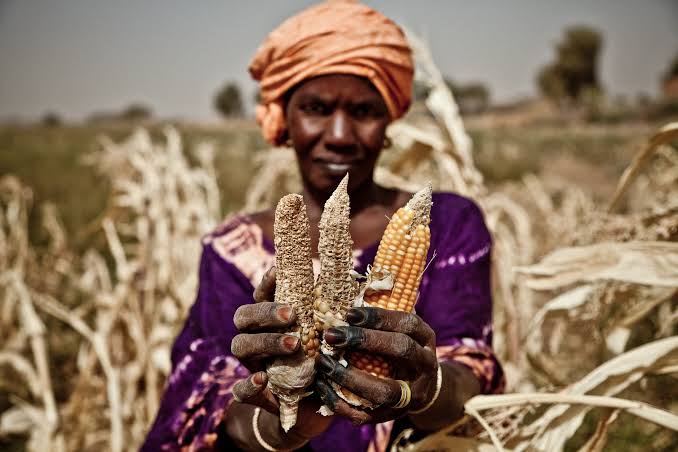
In East Africa, for instance, maize, a staple food for millions, is facing declining yields because of prolonged droughts. According to a study by the International Food Policy Research Institute (IFPRI), maize production could decrease by as much as 25% by 2050 if current trends continue. This decline not only threatens food security but also undermines the economic stability of farming communities that rely on maize as their primary income source.
In addition to drought, rising temperatures are another significant challenge. Many crops, including coffee, tea, and cocoa—key exports for countries like Ethiopia, Kenya, and Côte d’Ivoire—are highly sensitive to temperature fluctuations. As the mercury climbs, the suitability of traditional growing regions for these crops diminishes. This shift forces farmers to either relocate their operations, often to higher altitudes with cooler climates, or abandon them altogether. The result is not only a loss of income for these farmers but also a potential collapse of global supply chains for these essential commodities.
Water Scarcity
Water scarcity, exacerbated by climate change, is also emerging as a critical issue. The Nile River, which supports the livelihoods of millions in northeastern Africa, is experiencing reduced water flow due to changing rainfall patterns and increased evaporation rates. This situation puts enormous pressure on countries like Egypt, Sudan, and Ethiopia, which rely heavily on the Nile for irrigation. Without adequate water resources, agricultural productivity plummets, leading to food shortages and higher prices—a burden that disproportionately affects the poorest and most vulnerable populations.
The looming food crisis is further compounded by the rapid population growth in Africa. The continent’s population is expected to nearly double by 2050, reaching approximately 2.5 billion people. This surge will place unprecedented demands on the already strained agricultural sector, making it even more challenging to meet the nutritional needs of the population. The World Bank estimates that Africa will need to increase its food production by 60% by 2050 to feed its growing population, a target that seems increasingly unattainable under current climate conditions.
Innovation Responds
In response to these challenges, there is an urgent need for Africa to adapt its agricultural practices. Innovations in climate-smart agriculture, which include the development of drought-resistant crop varieties, improved irrigation techniques, and sustainable land management practices, are crucial. Organizations like the Alliance for a Green Revolution in Africa (AGRA) are working to promote these practices, but progress has been slow, and much more needs to be done. Governments, international organizations, and the private sector must collaborate to scale up these efforts, ensuring that farmers have the tools and resources they need to adapt to the changing climate.
Ultimately, the looming food crisis in Africa is not just an agricultural issue; it is a humanitarian one. The failure to address the impact of climate change on agriculture could result in widespread hunger, social unrest, and mass migration, with ripple effects felt far beyond the continent’s borders. The time to act is now.
It is important that we start taking bold steps to mitigate the effects of climate change, because Africa will not only avert a catastrophic food crisis through these steps but also pave the way for a more sustainable and prosperous future for all its people.