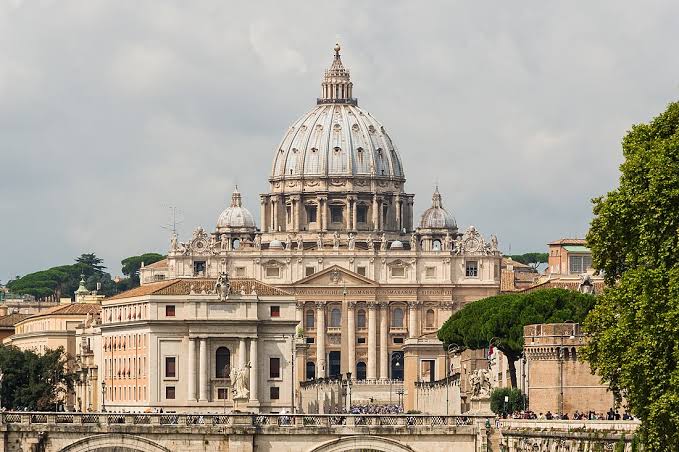

For centuries, people have reduced the Catholic Church to incense, hymns, and high altars. But behind the liturgy lies a long, layered history of academic obsession, scientific ambition, and intellectual heavy-lifting, one that continues to thrive in silence while the world watches in stereotypes.
Take Pope Leo XIV, for example. The world did a double take when they learned he holds a math degree, taught physics, and wrote a thesis on monastic leadership. But within Vatican walls, that’s hardly shocking.
Nearly every pope since the Renaissance has held a doctorate, and Pope Benedict XVI had five. Cardinals? They’re basically expected to have PhD-level scholarship before they even get a seat at the table.
Leo XIV isn’t a modern outlier. He’s walking a 2,000-year-old path where faith and reason are tightly interwoven. This is the same Church that produced the Big Bang theory (thank Jesuit priest Georges Lemaître) and the father of modern genetics, Gregor Mendel—the Augustinian friar who turned pea plants into scientific revelation. While the faithful knelt at the altar, their clergy were revolutionizing how we understand the cosmos and biology.
Even during the so-called Dark Ages, when Europe teetered on intellectual collapse, it was monks and nuns who safeguarded knowledge. Those candlelit monasteries weren’t just prayer hubs; they were centers of preservation and progress, translating ancient Greek texts, developing early math, and laying the groundwork for Western civilization. Fast-forward to today: the Vatican runs its own space telescope, tracks asteroids, and even collaborates with IBM on AI ethics.
Sure, the Church condemned Galileo centuries ago. But it’s also funding ethical stem-cell research and hosting quantum physics conferences. The contradiction? It’s the Church’s secret weapon. It holds onto doctrine tightly—yes, no women priests yet—but it’s equally relentless in chasing scientific truth, so long as it’s in dialogue with conscience.

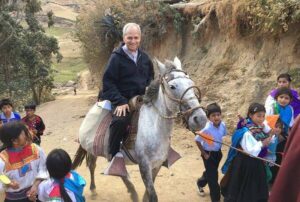
Look at the religious orders. The Jesuits basically invented the global university system, founding over 800 institutions. The Franciscans gave us Occam’s Razor, a logic tool still taught in science classes. The Dominicans produced Thomas Aquinas, the theologian who fused Aristotle with Christian thought. The Augustinians? That’s Pope Leo’s squad—community-focused thinkers who thrive on critical debate. Leo himself spent 20 years teaching science in the slums of Peru, a quiet polymath holding dual citizenship.
The Church’s paradox—deeply conservative yet quietly progressive—is what allows it to engage both tradition and tomorrow. Leo XIV is a Republican primary voter who publicly condemned Trump’s border policies. He tweets like a millennial and schools bishops on online behavior. He’s just as comfortable quoting Augustine as he is referencing climate data.
So next time you’re surprised that a pope talks quantum physics or tweets about migration, don’t be.
The Catholic Church isn’t stuck in the past, it’s been quietly outsmarting expectations for centuries. Faith, for this Church, isn’t scared of science. It fuels it.
Knock it off!