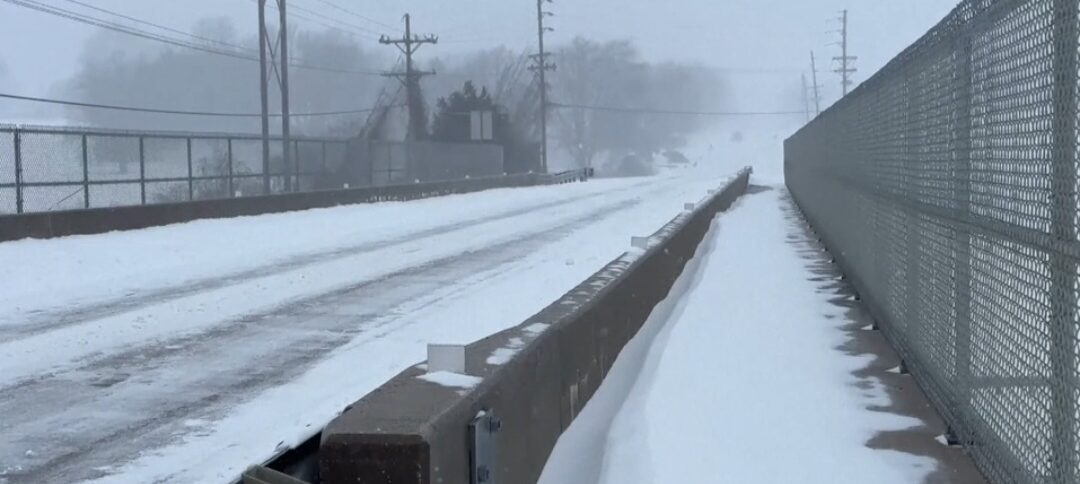

A ferocious winter storm, dubbed Storm Blair, has unleashed its icy grip across the United States and parts of Canada, bringing heavy snow, freezing temperatures, and widespread disruptions. Over 60 million Americans and a significant portion of Canadians remain under weather alerts, bracing for what forecasters predict will be one of the most severe winter storms in recent years.
The storm, driven by a polar vortex—a mass of cold air circulating the Arctic—has caused temperatures to plunge across the US. Kansas, in particular, faces some of the harshest conditions, while the Washington DC area prepares for an unusually heavy snowfall. Early Monday, temperatures in some regions dipped to 12-25°F below normal, a cold snap that could persist for a week, according to meteorologists.
According to The BBC, blizzard conditions have left a trail of havoc in their wwake. Early this week, more than 1,400 flights were canceled, with an additional 800 delayed, as per FlightAware.com. Roads across multiple states were rendered impassable, and hundreds of car accidents were reported over the weekend in Kansas, Indiana, Kentucky, and Virginia.
The storm prompted a state of emergency in Kansas, Missouri, Kentucky, Virginia, West Virginia, Arkansas, and parts of New Jersey. Schools in states like Virginia, Maryland, Indiana, and Kentucky remained closed on Monday as authorities grappled with the storm’s impact.
Kansas City, in particular, is experiencing its heaviest snowfall in 32 years, with over a foot of snow blanketing the area. Northern Missouri has also reported nearly 14 inches of snow and sleet, adding to the mounting challenges for residents and emergency responders alike.
The storm’s trajectory has now shifted toward the East Coast, where parts of Virginia, Maryland, Washington DC, and Delaware are expected to face the brunt. Washington DC, in particular, is preparing for heavy snow and biting cold on the same day Congress convenes to formally certify Donald Trump’s election as president.
Despite the weather, House Speaker Mike Johnson assured that lawmakers would carry out their duties, although federal offices in the capital were ordered to close.
The National Weather Service (NWS) has described this as potentially “the heaviest snowfall in at least a decade.” Meanwhile, AccuWeather forecaster Dan DePodwin warned that this could lead to the coldest January since 2011 for the US, with the possibility of temperatures plunging even further in the days ahead.
In Canada, the polar vortex has brought similar havoc. Much of the country is under extreme weather alerts, with snow squalls and freezing temperatures reported nationwide. In Manitoba, the wind chill has driven temperatures to a bone-chilling -40°C, while parts of Ontario brace for up to 15 inches of snow.
The storm’s intensity has led to warnings for drivers navigating snow and icy conditions. Emergency services have been overwhelmed with stranded motorists and accidents, emphasizing the need for caution and preparedness.
Meteorologist Matthew Cappucci highlighted the historic nature of the storm, noting that Kansas City’s snow accumulation is unprecedented in decades. Across the Midwest, snow depths ranging from 30 to 40 cm have been recorded, disrupting daily life and straining resources.
With temperatures and snowfalls expected to remain extreme in the coming days, communities across North America will need to stay vigilant and resilient as they navigate the aftermath of this historic winter storm.
Kisssinger!