South Africa Confronts a New HIV Reality as US Pulls the Plug on Lifeline Funding

For more than two decades, American funding helped underpin one of the world’s most ambitious responses to HIV and Aids. Now, that era is drawing to a close.
The United States government has announced that it will discontinue support for HIV and Aids programmes in South Africa, bringing an end to a partnership that has been central to combating a disease that still affects more than eight million South Africans, the largest population of people living with HIV anywhere in the world.
Until 2025, South Africa received about $400 million annually through the US President’s Emergency Plan for AIDS Relief (PEPFAR), the landmark programme launched in 2003 that transformed the global fight against HIV. The funding accounted for roughly one-fifth of the country’s HIV expenditure and supported prevention campaigns, community health services and treatment programmes that reached millions of vulnerable citizens.
But the decision to terminate support appears to have become entangled in a widening diplomatic rift between Washington and Pretoria. The US State Department suggested that South Africa’s alleged failure to protect members of the white Afrikaner minority had influenced the move, accusations the South African government has repeatedly rejected.

The White House went further, saying continued assistance could not be justified in light of what it described as “unjust and immoral practices.”
US President Donald Trump has repeatedly claimed that a “white genocide” is taking place in South Africa, allegations that have been widely dismissed by scholars, analysts and human rights organisations. Nevertheless, the claims have prompted the US administration to establish a refugee programme for Afrikaners, descendants of European settlers who first arrived in southern Africa in the 17th century.
While the geopolitical dispute has intensified, public health experts fear that millions of lives could become collateral damage.
South Africa’s health ministry said it had not yet received formal communication on the funding withdrawal but insisted that contingency plans had been in place for years. Officials stressed that although PEPFAR played a crucial role in supporting HIV programmes, the procurement and supply of antiretroviral medicines have largely been financed by the South African government itself.
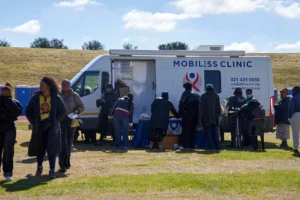
Authorities also pointed to a long-term “self-reliance plan” aimed at reducing dependence on international donors and ensuring continuity of treatment for millions of patients.
That confidence may provide some reassurance, but the end of American support marks a significant turning point. PEPFAR had received a temporary extension in October 2025 through a transitional arrangement known as the “bridge plan.” The latest decision, however, effectively closes the chapter on one of the most consequential international health partnerships ever established in Africa.
The implications extend far beyond South Africa. PEPFAR has long been regarded as one of the most successful global health initiatives in modern history, credited with saving millions of lives and helping to turn HIV from a death sentence into a manageable condition across much of the developing world.
For South Africa, where the scars of the HIV epidemic run deep, the challenge now is not simply replacing lost dollars but preserving decades of hard-won progress. The fear among activists and public health advocates is that reduced support for prevention, counselling and community outreach could undermine gains achieved over the last two decades.