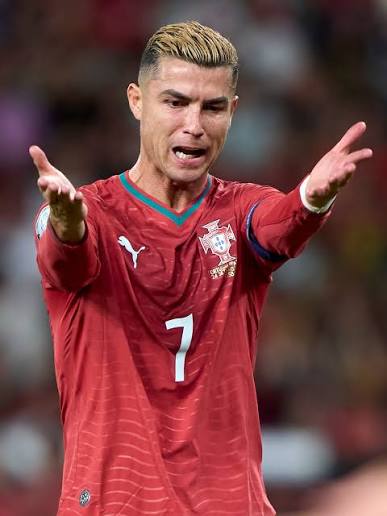

Portugal produced a convincing response to questions about life beyond Cristiano Ronaldo with a 4-2 Nations League victory over Denmark in Copenhagen.
Joao Cancelo and Goncalo Ramos twice put Portugal ahead, but Denmark fought back through Mikkel Damsgaard and Rasmus Hojlund to level the contest.
Hojlund, a former Manchester United striker, celebrated his goal with Ronaldo’s trademark “Siuuu” gesture, a celebration he has previously used against Portugal.
Portugal eventually regained control when Vitinha headed in from a Bruno Fernandes delivery before Joao Felix sealed the victory with a late fourth goal.
The match was Portugal’s first since Ronaldo, the leading scorer in men’s international football, left the squad after being left on the bench against Norway.
Ronaldo, 41, has been a central figure for Portugal for almost two decades, collecting 234 caps and scoring 146 international goals.
His absence has nevertheless intensified debate about the team’s future and whether Portugal can develop a new attacking identity as the veteran forward enters the final stage of his international career.
Portugal coach Jorge Jesus defended his decision-making after the victory, insisting that reputation would not exempt any player from competition for a place.
“I still think exactly the same way – there are players with status. That much is crystal clear,” Jesus said.
“But I’ll say it again – the rules are the same for everyone. That’s a method I’ve followed throughout my coaching career and I’ll continue to follow.”
The decision to leave Ronaldo out had already generated controversy, with his sister, Elma Aveiro, appearing to respond on social media with the message: “Betrayal is a dish best served cold.”
Ronaldo has been a near-permanent fixture in Portugal’s starting XI for years, but his advancing age and reduced mobility have prompted questions about how the national team should manage his role.
With Ronaldo’s international future increasingly uncertain, Portugal’s performance in Copenhagen offered an early indication of how the team could operate when its most recognisable player is no longer at the centre of the attack.