
Ibadan, a city steeped in history, has long been a hub for creativity in Nigeria. However, recent years have seen a decline in the maintenance of its cultural landmarks.
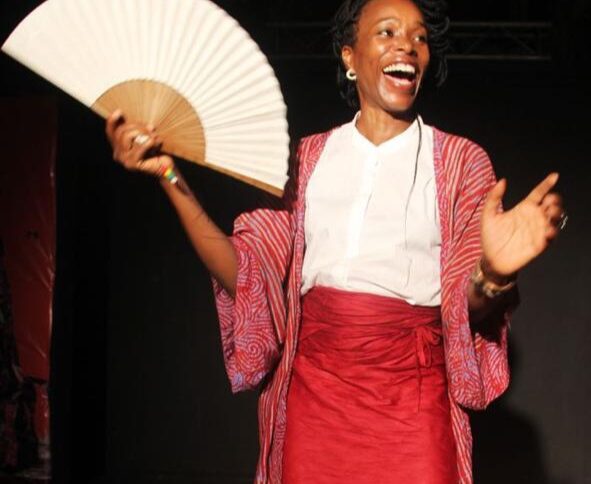
In a bid to reignite the city’s creative flame, Ese Brume, the executive director of the Ovie Brume Foundation, has taken on the ambitious task of reviving the artistic spirit of Ibadan by adapting Femi Osofisan’s classic play, “Women of Owu,” in a performance that took place at a historic amphitheater.
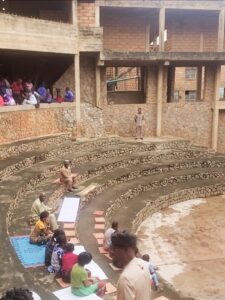
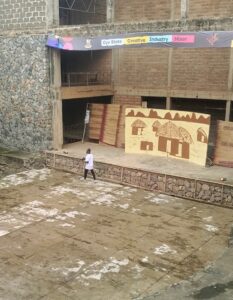
The amphitheater, located in Mokola, Ibadan, is an architectural gem built from natural clay and the very soil of the surrounding hills. Constructed in the 1960s by renowned academic and artist, Demas Nwoko, the structure has unfortunately fallen into disrepair over the years. Brume, who rediscovered the amphitheater in 2018 during a visit to the New Culture Studio, was immediately captivated by its beauty and potential. Despite its dilapidated state, she saw it as a masterpiece in need of preservation and decided to bring it back to life through the power of theater.
In a recent radio interview, Brume expressed her passion for the project and the creative industry in Oyo State.
“Ibadan has always held a special place in my heart,” she said, recalling childhood memories of spending holidays in the city. Her connection to the city deepened in 2018 when she encountered the amphitheater.
She added: “It’s a shame that such a unique structure is in disrepair, but I believe it still holds immense potential,”. She however advocated for its recognition as a UNESCO World Heritage Site.
The performance of “Women of Owu” marked a significant moment not just for the amphitheater but for the local community as well. The play, which peeks into the history and culture of Yoruba land, provided a platform for young people to engage with their heritage in a meaningful way. For the children involved, many of whom were performing in front of an audience for the first time, it was an opportunity to build confidence and learn about their cultural roots.
“Theater is a powerful tool for education and self-expression,”
Brume also emphasized the importance of such experiences in shaping the next generation.
The adaptation of “Women of Owu” is part of a broader effort by the Ovie Brume Foundation to use the arts as a means of empowerment. The foundation was in remembrance of her brother, Ovie who died aged 29. He was a lover of children and talents.

Since its inception in 2003, the foundation has focused on supporting underprivileged children through various programs, including the establishment of youth centers in Lagos and Delta State. Brume, who has a background in theater, has integrated her passion for the arts into the foundation’s activities, using drama and performance as tools for learning and personal development.
How Ese Brume Accesses Funding For The Foundation
Funding for the project came from a combination of personal contributions and partnerships with local organizations like the New Culture Studio, which provided the amphitheater space free of charge.
The Ovie Brume Foundation also relied on the support of its sponsors to make the event possible. Despite the challenges of securing funding in a sector often overshadowed by more immediate concerns, Brume remains committed to her vision of revitalizing Ibadan’s cultural scene.
The performance was not just a showcase of talent but a statement about the potential of Oyo State’s creative industry. As Brume continues her work, she hopes to inspire others to invest in preserving and promoting the rich cultural heritage of Ibadan. “There is so much more we can achieve if we prioritize the arts and creativity in our development plans,” she said, echoing the sentiments of many who believe that Nigeria’s future lies in its ability to harness the power of its creative industries.