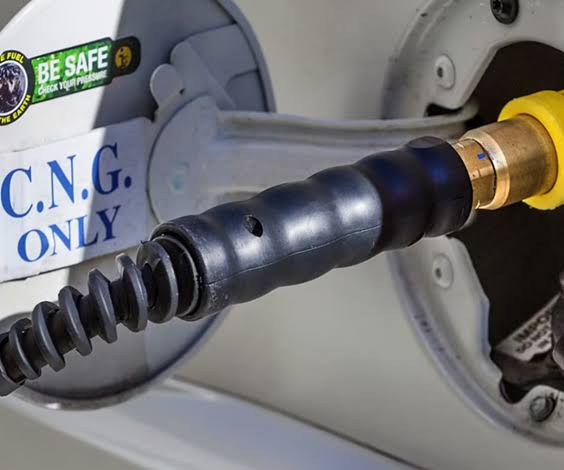

In just under a year, Nigeria’s Presidential Compressed Natural Gas Initiative (PCNGI) has sparked what experts are now calling a silent green revolution, creating tens of thousands of jobs, attracting nearly half a billion dollars in investment, and nudging the country toward cleaner, more affordable mobility.
Gradually, through a transformative directive, the country is shifting from petrol dependency to natural gas and electric-powered vehicles. What began as a response to the post-subsidy fuel crisis is fast becoming one of Nigeria’s most ambitious infrastructure and economic transition stories in recent years.
Programme Coordinator of The Presidential Compressed Natural Gas Initiative, Michael Oluwagbemi revealed on Monday that over $491 million in investments have been drawn into the AutoCNG space, resulting in 9,000 direct and 75,000 indirect jobs. The ripple effects are everywhere—from auto technicians in new conversion centers to engineers laying the foundation for Nigeria’s first nationwide CNG and EV refueling network.

According to him, from just seven conversion centers at launch, the country now boasts over 200, with a target of 10,000 by mid-year.
This rapid scaling is helping drive vehicle conversions, with over 30,000 units already modified—largely by private operators now emboldened by government incentives.
The government’s Conversion Incentive Programme (CIP), introduced in August 2024, added major momentum. With 22,000 kits procured and 3,000 new technicians trained, the programme aims to convert one million public and commercial vehicles for free or at subsidised rates.
In a surprising twist, this initiative is also emerging as a new form of social welfare. Over 400 CNG buses—part of a 655-vehicle procurement—have been deployed as palliatives tied to wage negotiations with labour unions. Public servants are now offered conversion discounts via Credit Corp support, making clean transport not just futuristic, but accessible.
Still, the road is not without potholes. Supply hasn’t kept pace with demand, causing temporary queues at CNG stations. But that’s changing too. More than 150 new refueling sites are coming online in the next 18 months, driven by partnerships with NNPC, NIPCO, Bovas, and other private players.
The PCNGI is also tightening safety measures following a rare cylinder incident in Benin. A digital monitoring system—the Nigeria Gas Vehicles Monitoring System—is on the way to ensure only certified vehicles can access CNG fuel.
What started as a response to a crisis is now becoming a cornerstone of Nigeria’s energy diversification strategy—and potentially, a regional model for low-emission transport in Africa.
As Oluwagbemi puts it, “We’re not just converting vehicles. We’re converting an economy.”