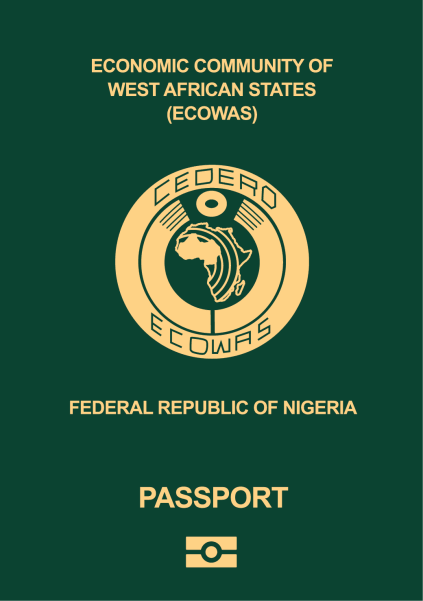

Nigeria has recorded a modest rise on the global passport ladder, moving up six places on the Henley Passport Index since the administration of Bola Tinubu began in May 2023.
According to the latest April 2026 edition of the index, the Nigerian passport now ranks 89th globally, up from 95th in January 2024. However, the improvement in ranking contrasts with a decline in actual travel freedom for Nigerian citizens.
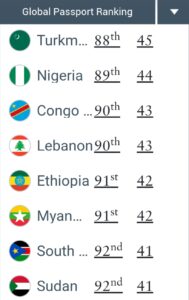
Data from the report shows that the number of visa-free destinations available to Nigerian passport holders has dropped from 46 in January 2025 to 44 in April 2026, indicating a shrinking range of accessible countries despite the improved ranking.
Several countries, including Ethiopia, Zambia, Zimbabwe, Lesotho, Mauritania, Somalia and São Tomé and Príncipe have in recent years moved Nigeria into stricter visa categories, requiring prior applications rather than offering visa-on-arrival or visa-free entry.
The report indicates that Nigeria’s improved ranking is partly due to shifts in the standings of other countries rather than a significant enhancement in its own passport strength.
Over the past two decades, the Nigerian passport has experienced a steady decline, falling from 62nd position in 2006 to its current 89th place.
A closer review on Henley Passport Index shows that while Nigeria gained access to nine new destinations between 2025 and 2026,.including Pacific island nations such as Fiji and Samoa, it also lost access to several countries.
Within Africa, Nigeria continues to trail behind several peers. Ghana ranks 67th globally with 67 visa-free destinations, while South Africa leads the continent at 46th with access to 100 destinations.
Globally, Singapore retains the top position with visa-free access to 192 destinations, while Afghanistan remains at the bottom of the ranking.
Experts say the decline in Nigeria’s visa-free access reflects broader internal and external factors. Charles Onunaiju of the Centre for China Studies noted that rising migration pressures and domestic challenges have contributed to stricter visa policies for Nigerians.
Officials from the Nigeria Immigration Service, however, maintain that passport strength is largely influenced by bilateral agreements and regional arrangements, adding that efforts are ongoing to upgrade Nigeria’s passport technology in line with international standards.