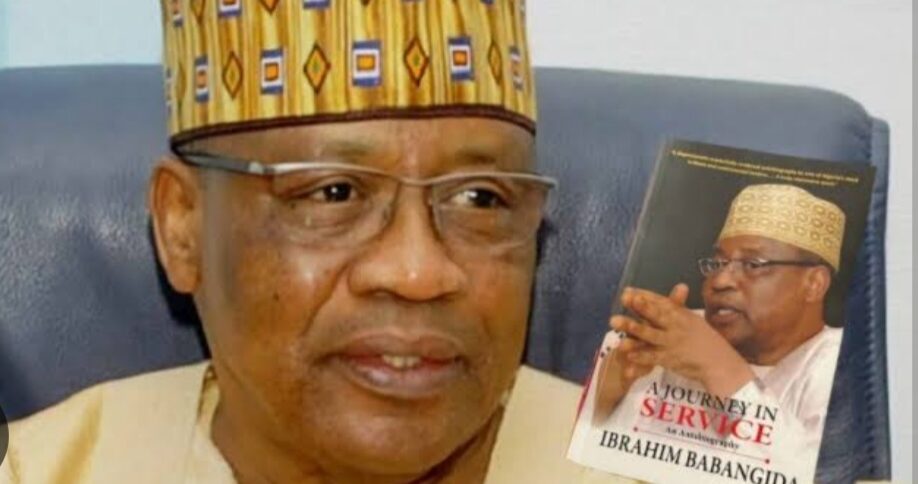

He won’t receive a pat on he back. It’s a book that brings back hurtful memories.
A former military Head of State in Nigeria, Ibrahim Babangida, has publicly expressed regret over the annulment of the June 12, 1993, presidential election, admitting for the first time in his autobiography that Moshood Kashimawo Olawale (MKO) Abiola won the historic vote.
However, his admission has triggered a wave of backlash from pro-democracy groups and political figures.
Babangida’s remarks appear in the final section of A Journey In Service, his newly launched memoir. He described the controversial annulment as an “accident of history,” a characterization that has drawn sharp criticism from various quarters. What accident, a lot Nigerians beg to ask?
Some prominent voices including Afenifere, the Coalition of Northern Groups, former Ogun State governor Segun Osoba, and legal expert Mike Ozekhome (SAN), have dismissed Babangida’s expression of regret as too little, too late. Many argue that the damage inflicted by the annulment, ranging from political instability to the derailment of Nigeria’s democratic process cannot simply be brushed aside as an unfortunate historical misstep.
Interestingly, the Abiola family has remained silent on Babangida’s admission. Calls placed to his children, including Hafsat Abiola, went unanswered, suggesting either disinterest or a refusal to engage with the former leader’s revisionist stance.
The June 12 election is widely regarded as Nigeria’s freest and fairest, with Abiola’s Social Democratic Party (SDP) securing a decisive victory. However, Babangida, citing national security concerns, nullified the results, igniting nationwide protests and political upheaval.
Recall that his decision ultimately led to his resignation and set Nigeria on a turbulent path toward civilian rule, which was only restored in 1999.
Nonetheless, according to The Guardian, the book has rake in well over 16 billion Naira since its launch on February 20, 2025.
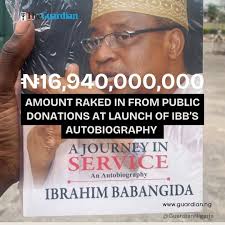
For many Nigerians, Babangida’s acknowledgment does little to erase the scars of June 12. Critics argue that had the election results been upheld, Nigeria’s democratic evolution might have taken a different course, sparing the country years of political uncertainty and military interference.
While Babangida’s memoir sheds light on his perspective, it does little to quell the lingering resentment over what remains one of Nigeria’s most contentious political betrayals.