
Donald Trump has once again unsettled the American political establishment with an extraordinary proposition: cash payments to millions of Americans at a time when his Republican Party is preparing for a difficult midterm election.
The proposal raises an uncomfortable question for American democracy: is this an economic promise worth applauding, or an electoral tactic that deserves a slap on the wrist?
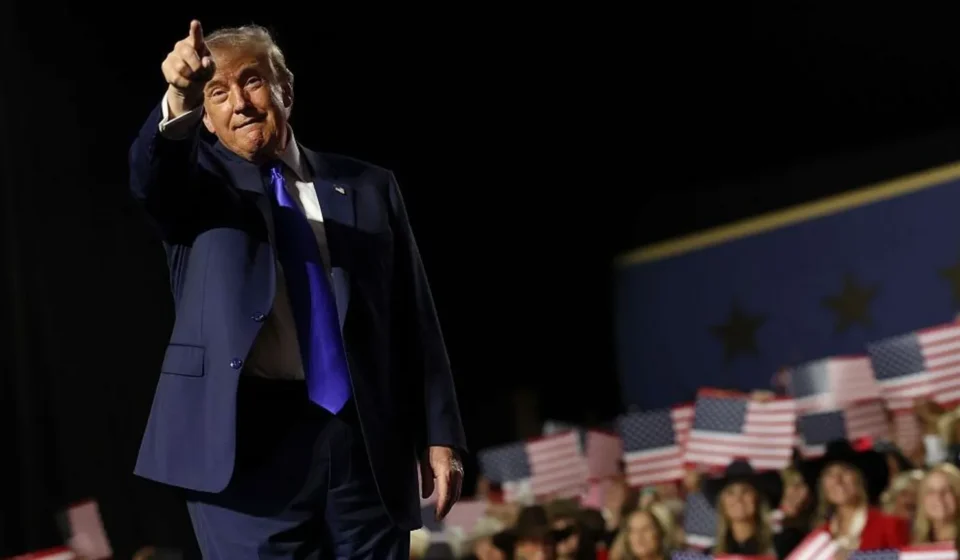
The enormous pledge was not the headline of Trump’s keynote address at the opening night of the Republican midterm convention in Dallas, Texas, on Wednesday.
About an hour into his lengthy speech, when the audience’s attention appeared to be fading, the President introduced the proposal almost casually.
The promise was anything but casual. Trump has suggested payments that could cost more than $1 trillion, yet he offered no detailed explanation of how the money would be raised, who would qualify or how the payments would be administered.
The White House, when asked for clarification, said the announcement demonstrated that Trump delivers for Americans despite what it called the doubts of “experts”. It provided no further details on the financing or implementation of the proposal.
Inside the convention arena, the announcement was met with enthusiastic applause. Outside the room, however, the reaction among Republicans was considerably more complicated.
Republicans defending vulnerable seats in November, particularly those trying to attract moderate Republicans and independent voters, largely kept their distance from the convention.
Some members of the party welcomed Trump’s proposal, while others who have been critical of his presidency quickly questioned it.
That division matters because the proposal arrives at a particularly sensitive moment. Although Trump himself is not on the ballot, midterm elections in the United States frequently become a referendum on the president and the party controlling the White House. Historically, the party in power often loses ground during midterms.
Trump’s political position also comes under pressure from weak approval ratings, economic concerns and growing dissatisfaction over his foreign policy.
His conflict with Iran has become increasingly unpopular, while its economic consequences have been felt by Americans at petrol stations. Affordability remains a major concern, and although inflation has fallen from its post-pandemic peak under Joe Biden, prices remain a source of frustration for many households.
Against that background, a promise of direct cash to voters is politically powerful.
It is also politically dangerous. The central democratic concern is not that politicians should never promise financial relief. Governments routinely introduce tax cuts, rebates, subsidies and social programmes during election periods.
The concern is whether voters are being offered a policy or effectively being encouraged to exchange political support for personal financial benefit.
Trump has made financial promises to voters before. Americans are still waiting for the $2,000 payments he previously said would come from revenue generated by his tariffs. A separate $5,000 payment proposed by Elon Musk, which was to be funded by savings from his Department of Government Efficiency initiative, never materialised.
Trump, however, has also fulfilled some financial promises. His administration established Trump savings accounts with a $1,000 government contribution for eligible children born during his presidency, while US military personnel received $1,776 payments to mark America’s 250th anniversary.
The latest proposal therefore sits somewhere between campaign rhetoric and government policy.
There is also a constitutional and institutional question. Legal experts have questioned whether the President could authorise such a massive expenditure through executive action alone. Trump appeared to suggest otherwise when asked about the issue by CBS, saying he did not believe congressional approval would necessarily be required, although he added that Congress would approve it if necessary.
That position could set up another confrontation over the limits of presidential power.
For Democrats, the proposal is already being dismissed as an “empty promise”.
For Trump’s supporters, it may represent exactly what they want from a president who has built his political brand around disrupting Washington and delivering tangible benefits to ordinary Americans.
But democracy requires something more than enthusiastic applause. It requires voters to be able to distinguish between a genuine public policy and an election-season inducement.
If the money is economically justified, legally authorised, transparently funded and available to citizens regardless of how they vote, then it can be debated as a legitimate government programme.
However, if the promise is primarily designed to influence voters with money that may never materialise, then it raises a much more troubling question about the health of American democratic politics.
Trump may have found a powerful campaign message but the real test will be whether American voters see it as economic relief, political theatre, or something dangerously close to buying loyalty at the ballot box.