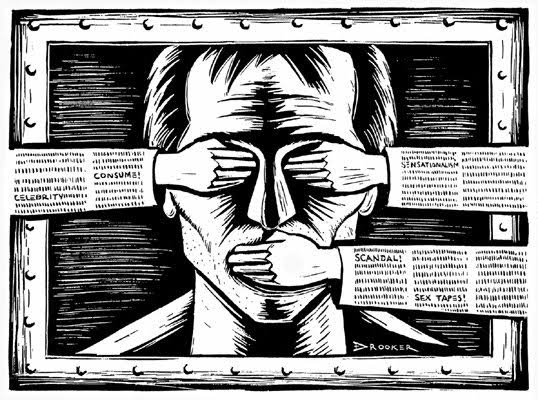

If you like to investigate in posturing the truth, think again. It hurts to tell to truth but if you plan telling it in Nigeria, it is a lot worse.

The unravelling in media circles recently has been nightmarish.
In Nigeria, the environment for investigative journalism has grown increasingly perilous, with reporters frequently facing threats to their lives, freedom, and safety. This hostile climate stems from their relentless pursuit of truth, often exposing corruption, human rights abuses, and other malpractices that powerful individuals would rather keep hidden. The result is a growing number of journalists who find themselves targeted, harassed, and, in the worst cases, forced to flee the country for their survival.
One such journalist is David Hundeyin, a figure who has become synonymous with fearless reporting in Nigeria. Hundeyin’s investigative work has brought to light some of the country’s most sensitive and controversial issues, ranging from government corruption to the clandestine activities of influential figures. However, his dedication to unearthing the truth has not come without a price. After publishing a series of explosive reports, Hundeyin received numerous threats to his life, eventually forcing him to seek refuge abroad to escape potential harm.
Hundeyin’s experience is far from unique. Many other journalists in Nigeria are increasingly finding themselves under similar pressure. The Nigerian government, alongside other powerful entities, frequently views investigative journalists as adversaries, leading to an environment where freedom of the press is continually under threat. The absence of robust legal protections for journalists exacerbates this issue, leaving them vulnerable to retaliation from those they expose.
A particularly disturbing example of the dangers faced by journalists is the recent PIDOMNigeria incident. In an exclusive report by the Foundation for Investigative Journalism (FIJ), it was revealed that the Nigerian Police Force (NPF), the National Cybercrime Center (NCCC), and the Force Criminal Investigation Department (FCID) tracked and abducted the administrator of PIDOMNigeria, a popular Twitter account known for exposing corruption and illegal activities within the country. The account had published sensitive information, including the names and pictures of police officers allegedly involved in criminal activities.
The tracking and abduction of the PIDOMNigeria administrator tells it widely the lengths to which some state actors are willing to go to silence dissent and suppress the truth. This incident is a chilling reminder of the constant surveillance and threats that investigative journalists face. It also highlights the use of state machinery to target those who dare to challenge the status quo.
In Nigeria, the crackdown on investigative journalists reflects a dangerous trend. The risks these journalists face are not just hypothetical; they are immediate and tangible, forcing many to choose between their safety and their commitment to the truth.
The Nigerian government’s increasing hostility towards the press, combined with the willingness of state agencies to use their resources to silence journalists, creates a perilous environment for those who seek to report on the country’s most pressing issues. The story of David Hundeyin, the PIDOMNigeria incident, and the broader threats to investigative journalism in Nigeria serve as sobering reminders of the challenges faced by the media in the country. Without stronger protections for journalists and a renewed commitment to press freedom, more journalists may find themselves forced into exile or silence, stifling the flow of critical information that is essential for any democracy.