
In Christopher Nolan’s Interstellar, the laws of physics aren’t just background details, they shape the entire story.
Gravity bends time, black holes stretch reality, and quantum mechanics plays a role in mankind’s survival. What seems like science fiction in the film is, in many ways, rooted in real-world physics. A century ago, quantum mechanics was merely a collection of strange ideas. Today, it powers our technology, challenges our understanding of reality, and continues to push the boundaries of what is possible.
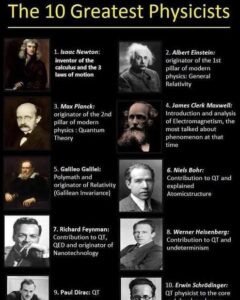
The quantum revolution began in 1925 when scientists like Niels Bohr, Werner Heisenberg, and Erwin Schrödinger started unraveling the bizarre behavior of subatomic particles. They discovered that particles could exist in multiple states at once, that their properties could change simply by being observed, and that two particles could remain mysteriously connected across vast distances. These ideas defied classical physics and seemed almost mystical at the time. But as strange as they were, they turned out to be real and incredibly useful.
Without quantum mechanics, modern technology would not exist. The transistors and microchips that power our smartphones, laptops, and virtually every electronic device rely on the principles of quantum physics. Lasers, LED screens, and even MRI scanners, all of which have transformed medicine, communication, and entertainment, owe their existence to quantum theory. The very foundation of modern computing was built on the realization that electrons do not behave as simple particles but follow quantum rules.
Uncertain? Stuck With the Principles!
Beyond technology, quantum mechanics has reshaped our understanding of the universe. Heisenberg’s Uncertainty Principle revealed that nature itself is unpredictable at the smallest scales. Schrödinger’s famous cat experiment illustrated the paradoxical nature of quantum superposition, where something can exist in two states until observed. And Einstein’s so-called “spooky action at a distance” has led to groundbreaking work in quantum cryptography and computing, offering a future where information can be transmitted securely and computers can solve problems beyond the reach of classical machines.
The future of quantum physics is even more exciting. Scientists are exploring quantum teleportation, developing revolutionary AI technologies, and delving deeper into the fundamental nature of reality.
Just as Interstellar imagined a world where physics determined humanity’s fate, the real-world quantum revolution is shaping the world we live in and the one we will inhabit tomorrow. A century after it first emerged, quantum mechanics is still proving that reality is far stranger, and more fascinating, than we ever imagined.
.