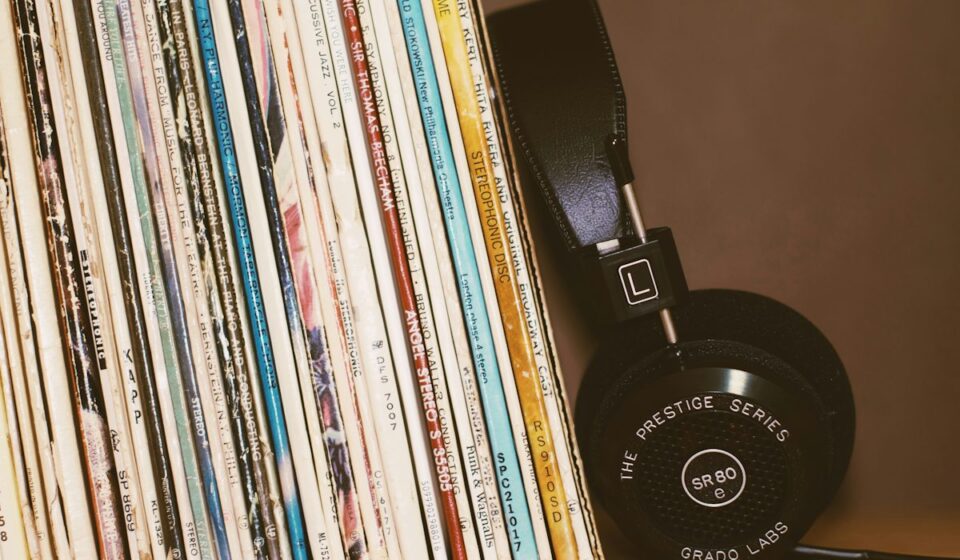

Why do you still carry songs from 10 or 15 years ago? Trapped in the old culture or a lasting culture?
Fortunately, more music is being created than at any other time in human history. Every day, more than 100,000 songs are submitted to streaming services, and even though Spotify says it has removed 75 million “spammy tracks” from its catalogue, real music still makes up most of what we hear. Deezer says AI accounts for just 0.5% of streams on its platform. The problem for the artists making all that new music is not that nobody is listening to music. It is that we are increasingly listening to the past.
Many Nigerians for instance can’t get over the 2000 oldies, talkless of the hits from 2010s from.the likes of 2face Idibia, 9ice,Rugged Man, M.I to mention a few.
Luminate, the independent entertainment data and analytics company that began tracking music streaming in 2008, recorded this year that streams of current music, released less than 18 months ago, were significantly dwarfed by older music in both the UK and the US. In the first half of 2026, almost two thirds of the music played, about 60%, was released five or more years ago. In the UK, 18 of the year’s top 20 bestselling songs were released 12 months ago or earlier.
The year’s eighth biggest hit is Zara Larsson’s “Lush Life,” which originally came out in June 2015. Michael Jackson’s “Billie Jean,” from 1983, is in 22nd place, and Fleetwood Mac’s “Dreams,” from 1977, is 30th. With practically every song ever recorded available at the press of a button, people are increasingly seeking out the classics or what the music industry calls “deep catalogue.” The story is similar in the US, where about 60% of streams in the two most-played genres, R&B and hip-hop, are old-school catalogue hits.
Even when current songs do break out, they tend to dominate streaming for weeks and even months. Sam Fender and Olivia Dean’s duet “Rein Me In” recently made UK chart history with a record-breaking run at number one, while Ella Langley’s “Choosin’ Texas” has become the longest-running number one in US chart history. The reality is that hits need to achieve millions of streams a day to reach the top of the charts, and according to the UK’s Competition and Markets Authority, nearly two thirds of streams are of music recorded by only the top 0.4% of artists. As we cling to our favourites, aspiring artists may be suffering.
Even after a song has gone viral, some musicians say it can be hard to promote subsequent releases and sustain a career. A platform like TikTok is not set up to boost artists; it is there to create viral moments around a single song. “It’s easier today for folks to be passive fans,” J Erving, founder of Raye’s distribution company Human Re Sources, said in a recent interview with Billboard. “For you to consider yourself broken as a mainstream artist, people need to care about you beyond the song. Where is the connectivity? Are people really dialled in in a deeper way?”
It is a problem the music industry says it is keen to tackle. Oliver Schusser, head of Apple Music, says his streaming service is working to champion “tomorrow’s artists” in its curation.
“You know, we do the Super Bowl halftime show, we need to make sure that we still have performers in 10, 20, 30 years,” he told BBC News.
“Because if you look back at the performers we had in the last four years, they all started somewhere before they got to the world’s biggest stage.” Other organisations, like Sofar Sounds, work exclusively with grassroots musicians, putting on intimate pop-up gigs in cities across the globe. This October, its Shoreditch Sofar Fringe festival showcased a host of artists, including East London rapper J Casa.
In an age of content oversaturation, Casa thinks there is something unique about a live performance. Rather than hearing more of what they already know, he says audiences form “a lasting connection” with a new artist and their music. Sofar is also launching its Human Discovery Movement campaign, which aims to put music curation and discovery “back into human hands.” Music lovers can now text a “mystery number” and receive voice notes from Sofar’s tastemakers with recommendations for new music worldwide.
Artificial intelligence may also be playing its part in the so-called death of new music. Spotify and its competitors, including Apple Music and Amazon Music, are driving the trend in AI-assisted curation, allowing premium subscribers to automatically generate playlists through text prompts to fit a mood, vibe or occasion.
A musicologist Anna-Kaisa Kaila thinks there “absolutely is potential for bias” with AI-generative playlist technology. “With AI systems, the bias can either come from the data or from the system itself. If there’s not enough training data in a particular style that is perhaps not so commercially dominant, it will be that much harder for the system to pull up tracks in that style.”
Others fear an algorithmic streaming bubble is to the detriment of genuine music, its discovery and creatives’ livelihoods. As Tim Garcia, a London-based DJ and curator, puts it: “They’re based on everyone’s listening behaviour and data, right? So, you’re probably going to get given a very similar recommendation to an artist you’re already listening to.” Dan Mackta, managing director at Qobuz, an online music platform that maintains a strict human-first approach to curation, agrees the technology “is never going to want to throw a curve ball at you.”
Chiminyo, a London-based independent artist, believes auto-generated playlists are also misleading people into thinking they are listening to “hand-picked” tunes from bona fide artists, as opposed to digitally mass-produced sound-alikes created to catch streams.
Scrolling through a “relaxing jazz piano playlist” with more than 370,000 saves on Spotify, he spotted that top featured artists racking up hundreds of thousands of monthly listens had unverified accounts. Little, if anything, could be found about them online, he said. To his trained ear, the different artists’ tracks sounded near identical,reason enough, he concluded, that the compositions had been synthetically mass-produced. “It’s all the same: the same piano feel, the same microphone placement, the same tape machine has been used on every single one of these tracks.” When asked, Spotify said it had rolled out platform-wide policies against impersonation and was working to improve filtering out AI-related issues on its platform, but it acknowledges that AI’s use in music production sits on a spectrum, with some artists choosing to use it to varying degrees.
New music may not be dying out, but it is clear it has a lot to contend with in 2026. The next time you open your streaming app, consider that somewhere out there an artist you have never heard of is making something that could change your life.