Hantavirus Outbreak: Countries on High Alert As Contact Tracing Begins

With memories of the COVID-19 pandemic still fresh, the emergence of another potentially deadly virus linked to human transmission has triggered concern among global health authorities.
A hantavirus outbreak aboard the expedition cruise vessel MV Hondius is now under intense international scrutiny after multiple deaths and confirmed infections among passengers and crew from more than 20 countries.
The ship, which departed from Argentina about a month ago, has been linked to the deaths of three passengers who either died onboard or shortly after leaving the vessel. Four additional individuals have since been medically evacuated for urgent treatment, as authorities race to contain the spread of the virus.
The World Health Organization confirmed on Thursday that at least five hantavirus infections had been identified among people connected to the ship. Investigations remain ongoing as nearly 150 passengers and crew members from 23 nationalities remain onboard, while several others had already disembarked before the outbreak became public knowledge.
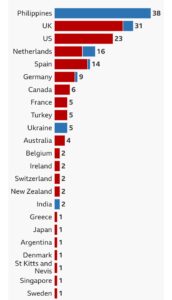
Countries with infected passengers or crew member
Health officials have identified the virus involved as the Andes strain of hantavirus, a rare but particularly concerning variant because it is the only known strain capable of spreading between humans. The strain has also been associated with higher mortality rates in previous outbreaks.
Addressing concerns over a possible wider outbreak, Maria Van Kerkhove of the WHO sought to reassure the public, stressing that the situation does not resemble the early stages of the coronavirus pandemic.
“This is not Covid, this is not influenza. It spreads very, very differently,” she said.
Unlike highly contagious illnesses such as measles, experts say the Andes strain is not easily transmissible. Human-to-human spread can occur, but usually requires prolonged or very close contact, meaning the overall risk of global transmission remains low.
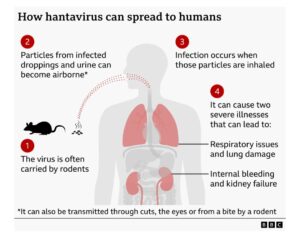
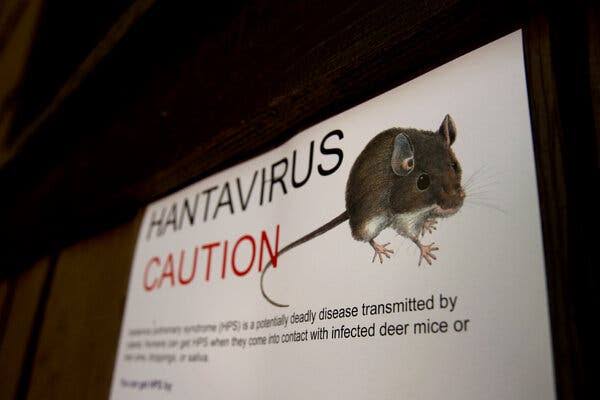
Traditionally, hantavirus infections occur through exposure to infected rodents. Humans contract the disease by inhaling virus particles found in rodent urine, saliva, or droppings. However, scientists believe some of the infections aboard the MV Hondius may have resulted from person-to-person transmission.
There is currently no specific antiviral treatment for hantavirus infections. Patients rely largely on intensive supportive care, particularly when severe respiratory complications develop. Medical experts note that early intervention can improve survival chances, although outcomes remain unpredictable because the disease can deteriorate rapidly.
Authorities across multiple countries are now tracing passengers who may have been exposed before disembarking, while investigations continue into whether environmental conditions aboard the ship may have facilitated transmission.
Despite the growing attention surrounding the outbreak, the WHO maintains that the overall public health risk remains low. However, officials acknowledge that ongoing investigations may reveal new information about the virus, its transmission patterns, or conditions that allowed the outbreak to occur.