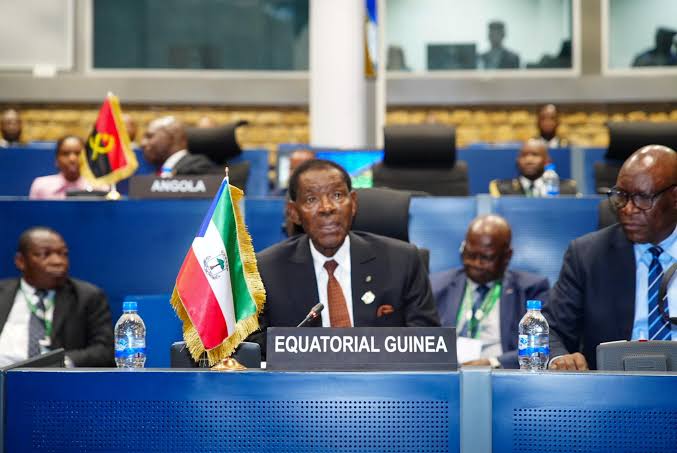

In an unusual display of political accountability on the African continent, the government of Equatorial Guinea has resigned after reportedly failing to meet most of its performance targets, with authorities admitting that barely a tenth of the administration’s objectives had been achieved.
The announcement was made recently by Vice-President Teodoro Nguema Obiang Mangue, son of President Teodoro Obiang Nguema Mbasogo, who disclosed that the cabinet had stepped down over what he described as unacceptable results despite the enormous resources placed at its disposal.
“The rule is simple: public responsibility has to come with results,” Mangue wrote in a post on X, formerly Twitter.
“The state puts significant human, material and financial resources at the disposal of the government to address the needs of the population. So the degree of execution achieved is clearly insufficient in relation to the expectations and commitments undertaken.”
While the vice-president did not specify the benchmarks used to assess the outgoing administration, his comments suggested deep dissatisfaction within the country’s leadership over the pace of economic reforms and the government’s inability to deliver on its promises.
President Teodoro Obiang, who has governed the oil-rich Central African nation since seizing power in 1979 and is the world’s longest-serving head of state, had appointed the cabinet in 2024. The administration was headed by Prime Minister Manuel Osa Nsue Nsua, a former central bank governor tasked with spearheading reforms aimed at improving living conditions for ordinary citizens.
But two years later, the country continues to grapple with economic headwinds caused by declining oil production, falling investment and global economic shocks, exposing the vulnerabilities of an economy overwhelmingly dependent on petroleum revenues.
According to the ruling Democratic Party of Equatorial Guinea (PDGE), the president had become increasingly frustrated with the government’s inability to diversify the economy, a challenge that has haunted the country despite decades of oil wealth.
Petroleum accounts for the overwhelming majority of Equatorial Guinea’s exports and government income, leaving the nation highly exposed to fluctuations in global oil markets. Analysts have long warned that the country’s dependence on crude oil poses a major threat to sustainable development and job creation.