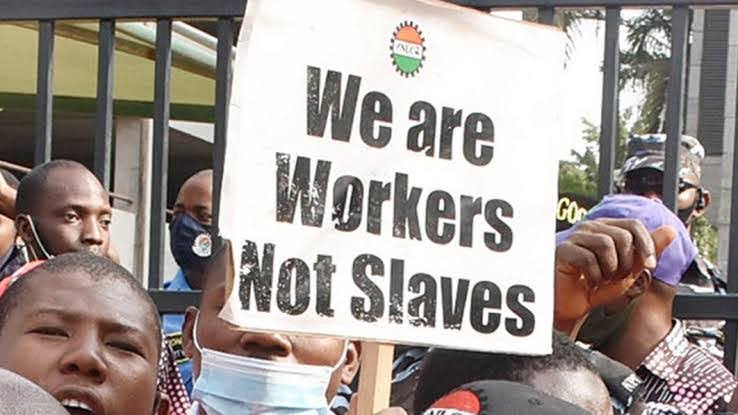

The Nigerian government has announced that private employers paying less than N70,000 a month could face jail time. This policy is not only targeted at wage inequality but also timed at improving the standard of living for low-income earners, particularly in the private sector.
In a recent statement, the Federal Ministry of Labour vowed that employers who fail to comply with the new regulation risk penalties, including imprisonment. This enforcement reflects the government’s renewed commitment to upholding labor laws and ensuring fair compensation.
Many workers, especially those in informal sectors, have long been underpaid and overworked. The government’s move comes as a welcome relief for millions struggling to meet their basic needs amid inflation and rising costs of living.
The Permanent Secretary, Ministry of Labour and Employment, Kachollom Daju, while speaking at the 13th Annual General Meeting of the Employers Association for Private Employment Agencies of Nigeria, that held in Ikeja, Lagos said, “The minimum wage is now a law, and as a result, it is a punishable crime for any employer to pay less than N70,000 to any of its workers.”
She added:
“The private employment agencies should make it compulsory in any contract they take from their principal that their workers should not earn less than the minimum wage. The least paid worker in Nigeria should earn N70,000, and I think that should be after all deductions.
“The minimum wage is a law, and you can be jailed if you fail to implement it. The Federal Government is committed to ensuring that the least paid worker goes home with N70,000.”
This policy is part of broader efforts by the government to implement the recently passed National Minimum Wage Act, which mandates the N70,000 minimum wage. However, while the law has been widely celebrated, enforcement remains a challenge.
Employers who fail to meet this requirement could face severe consequences, signaling a zero-tolerance approach to non-compliance. Labor unions have also expressed support for the policy, as they continue to push for workers’ rights and better working conditions.
The government’s latest move sends a strong message that exploitation of workers will no longer be tolerated, marking a step toward reducing poverty and promoting economic equity in Nigeria.