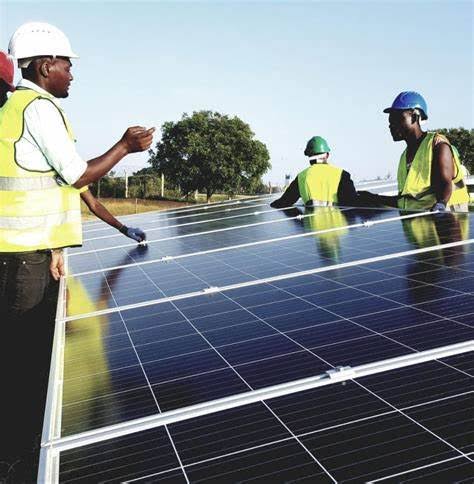

When Deborah Fadeyi launched Vector Energy in 2020, her vision was clear: to free Nigerians from unreliable power grids and noisy generators through clean, accessible solar energy.
Five years later, her company operates in over 20 states, providing solar-powered stations and lighting up off-grid communities through a nonprofit arm. But now, a federal government policy threatens to undo much of the progress she and others have made — a proposed ban on the importation of solar panels.
“It’s a dangerous gamble,” Fadeyi told TheCable in an exclusive interview. “We’re talking about an energy-starved nation. Blocking access to imported panels at this stage won’t spark growth — it’ll strangle it.”
The proposed ban is part of the government’s drive to encourage local manufacturing of solar equipment. While the intent may be to boost Nigeria’s industrial base, Fadeyi warns that the move could spike prices, drive consumers to the black market, and devastate small energy firms already operating on thin margins.
Ambitious Gamble
Nigeria’s solar ambitions are massive — the country aims to reach 10 gigawatts of installed solar capacity by 2030. But the only functional solar panel factory in the country currently produces less than 20 megawatts annually. “That’s a drop in the ocean,” Fadeyi said. “Local production can’t meet demand. Not even close.”
Meanwhile, Vector Energy’s success model is rooted in affordability, made possible through partnerships with banks offering installment-based payments over a 12-year span. If panel prices skyrocket — as they’re expected to under an import ban — those payment models will collapse, and clean energy will once again be out of reach for millions.
“There’s this myth that local content equals local prosperity,” Fadeyi insists.
. “But what good is a locally made panel if no one can afford it?” She points out that even China, the world’s solar powerhouse, keeps prices low by relying on cheap coal power — a luxury Nigeria doesn’t have.

Instead of isolationist policies, she advocates for international cooperation. “Nigeria has the minerals — silicon, lithium, and more. We should refine those domestically and strike strategic partnerships with countries like China,” she said. “Let’s trade value for value, not pretend we can build an entire solar ecosystem overnight.”
Her argument is that smart value exchange, not self-reliance, is the path to sustainable growth. “The U.S. and China don’t do everything in-house — why should Nigeria?”
There were also pointers to the lack of consultation in crafting the ban. “This policy was pushed through without input from those of us in the trenches,” she said. “Groups like the Renewable Energy Association of Nigeria weren’t consulted. That’s not how effective policy is made.”
The consequences, she warns, will be swift and painful. “Small solar businesses will shut down. Rural electrification projects will stall. Investors will flee. And the very people this policy claims to help will be left in the dark — literally.”
Worse, Fadeyi sees this as a repeat of past policy blunders. “We’ve seen it with rice, with cars, with textiles. Blanket bans don’t create growth — they create scarcity. Prices rise, black markets thrive, and local industries still struggle.”
What Nigeria needs, she argues, is strategic sufficiency — a realistic understanding of where it has competitive advantages and where it needs to collaborate. “We must stop chasing industrial dreams we’re not yet equipped to realize. It’s okay to grow into a sector — but don’t sabotage the one that’s already working.”
Her prescription is clear: pause the ban, engage stakeholders, and provide smart incentives. “Cut taxes on solar components. Enforce quality standards. Support local manufacturing gradually, not forcefully. You don’t build a house by tearing down the foundation.”
In Fadeyi’s view, clean energy is about dignity, independence, and the right to a better life. “We’re not just installing solar panels,” she said. “We’re building futures. Let’s not switch off the light now.”
Right?