
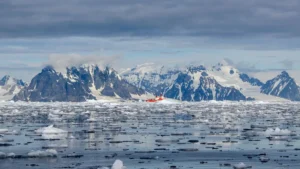
Earlier this year, an international team of scientists ventured into the harsh wilderness of the Antarctic Peninsula, enduring bone-numbing cold, icy winds, and heaving seas.
Their mission: to dig into the seabed mud and unlock centuries of hidden history buried beneath the Southern Ocean.
Armed with a giant coring drill, something like an oversized apple-corer tethered to their research ship—the team drilled up to 500 metres below the ocean floor, extracting more than 40 long tubes of sediment. Each layer of this seabed mud acts like a page in an ancient book, preserving the story of Antarctica’s marine life, climate shifts, and even humanity’s impact on one of the planet’s last great wildernesses.
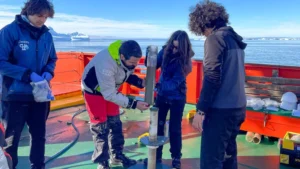
“This is like a book of history,” explained Dr. Elisenda Balleste of the University of Barcelona, who led the mission.
“What is living in the seas now, what was living in the seas in the past, and evidence of our human impact—it’s all recorded in these sediments.”
The research is part of the Convex Seascape Survey, a global effort to understand how oceans and climate are interwoven. By analysing the frozen mud, researchers hope to reconstruct ecosystems that existed centuries ago, trace the fingerprints of industrial activity, and measure the Southern Ocean’s ability to trap carbon.
Sediment cores, preserved in Antarctica’s sub-zero environment, hold not only chemical traces but also genetic material. Through a breakthrough technique known as environmental DNA analysis, scientists can now extract genetic fingerprints of organisms long vanished, essentially reconstructing ecosystems from fragments of DNA left behind in the environment.
“This material is particularly valuable,” said Claire Allen, an oceanographer from the British Antarctic Survey who has spent two decades studying Antarctic history.
A Record of Whales, Carbon, and Change
Among the questions being probed is how nearly a century of industrial whaling in the region reshaped the ocean’s ecosystems. Dr. Carlos Preckler of King Abdullah University in Saudi Arabia is leading this line of inquiry, aiming to understand whether the loss of whales also altered how the ocean cycles carbon and nutrients.
Carbon is central to the story. When released into the atmosphere as carbon dioxide, it traps heat like a blanket, driving global warming. But the ocean also has the ability to absorb and bury carbon in its sediments. By quantifying how much carbon is locked in the Antarctic seabed, researchers hope to assess the role these “blue carbon” sinks can play in slowing climate change.
Why Antarctica’s Mud Matters
The Southern Ocean is one of Antarctica’s richest habitats, home to krill, fish, seals, penguins, and once the target of industrial whaling fleets. It is also a hotspot for tourism and fishing. What happens here, scientists argue, doesn’t stay here.
Antarctica’s oceans regulate climate far beyond its icy borders, influencing global weather systems and absorbing a vast share of humanity’s carbon emissions.
The muddy cores now being studied could therefore reveal not only the region’s ecological past, but also clues to how the planet might cope with a hotter, stormier future.