

In Africa, a different kind of revolution is brewing, one driven not just by algorithms, but by imagination, storytelling, and creative expression.
Once sidelined as fringe or “extracurricular,” the arts and cultural industries are now emerging as powerful engines of economic growth and transformation across the continent.
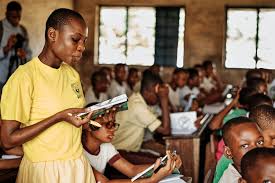
Nowhere is this shift more urgent or more promising than in Africa’s higher education systems. With over 600 million young people, Africa holds the world’s most youthful population. But while opportunity is vast, many of its young minds remain stuck in outdated academic structures, disconnected from the modern workforce.
South Africa’s Dr. Riaan Steenberg, Executive Director of the NetEd Group, has been watching this disconnect with growing concern. “More than half of our graduates are working outside the fields they studied,” he says. “And seven out of ten students didn’t even begin studying what they truly wanted.” That mismatch is more than a personal problem—it’s a systemic one, and it’s costing the continent dearly.
Yet in the midst of these challenges lies a profound opportunity. Africa has the chance not just to catch up with the world, but to redefine the future itself—by placing creativity and human potential at the heart of its development.
Rather than focusing solely on traditional disciplines, Steenberg believes African nations should be nurturing the sectors where they hold untapped power.
“We’ve been so focused on catching up with the global North in industries like IT and finance,” he says. “But what if our real advantage is in our stories, our sounds, our culture?”
He’s not alone in this thinking. A recent PwC report projects that media and entertainment industries in countries like Nigeria and Kenya will grow by 15% and 11.6% respectively—rates that far outpace the global average. These numbers hint at a bigger truth: the world is hungry for African content, and the continent’s youth are ready to create it.
Ibrahim Sagna, a leading entrepreneur and chairman of Silverback Holdings, calls African culture “an exportable asset class of critical scale.” Whether it’s Afrobeats topping global charts or Nollywood breaking streaming records, the evidence is everywhere. And yet, few universities are formally training the next generation of animators, game designers, content creators, or digital artists.
“Everyone can post a TikTok,” Steenberg quips, “but who’s teaching sustainable content creation as a career? Who’s developing the curriculum for digital storytelling, esports production, or motion design?”
This isn’t just about jobs, it’s about relevance. In an age dominated by artificial intelligence, it’s easy to assume that automation will soon outpace human ingenuity. But Steenberg sees things differently. “AI isn’t the threat,” he says. “It’s a tool. And those who can think critically and collaborate with AI will be the ones who thrive.”
Indeed, a quiet rebellion is already brewing in lecture halls. “We’re seeing students push back against the idea that AI should do the thinking for them,” Steenberg says. “They want to think for themselves. They want to create.”
It’s a sentiment echoed by Ron Carucci of Navalent, who recently wrote that people with sharpened critical thinking skills won’t just survive in an AI-powered world—they’ll lead it. In fact, the creative industries may well be the training ground for the kind of nuanced thinking and emotional intelligence that machines can’t replicate.
So what would it take to turn this potential into reality?
Part of the answer may lie in reshaping the relationship between public and private education. In South Africa, a draft policy by the Department of Higher Education proposes giving private institutions the same recognition as public universities—a move that could open doors to more agile, industry-focused education models.
But Steenberg warns that change won’t come through policy alone. Regulatory bottlenecks still choke the system, limiting the number of students in high-demand fields like psychology and nursing, even when institutions have the facilities to expand.
“We’ve got the labs. We’ve got the capacity,” he says. “But regulation is holding us back.”
Still, he remains hopeful. If institutions like Eduvos can scale their reach to 200,000 students by 2032, the potential economic impact is staggering, an estimated R11 trillion in annual value created.
That kind of vision may sound lofty, but Steenberg insists it’s grounded in logic. Each graduate trained in relevant, future-ready skills becomes not just an employee, but a multiplier, fueling growth in their communities and across borders.
At its core, the transformation Africa needs isn’t about tech versus talent, or public versus private. It’s about recognising education as a collaborative effort—one that must be both practical and imaginative.
“We’re not just training workers,” Steenberg says. “We’re shaping thinkers, creators, innovators. Every single person we educate changes the game.”
And in Africa’s next chapter, the ones who dare to dream might just be the ones who lead.