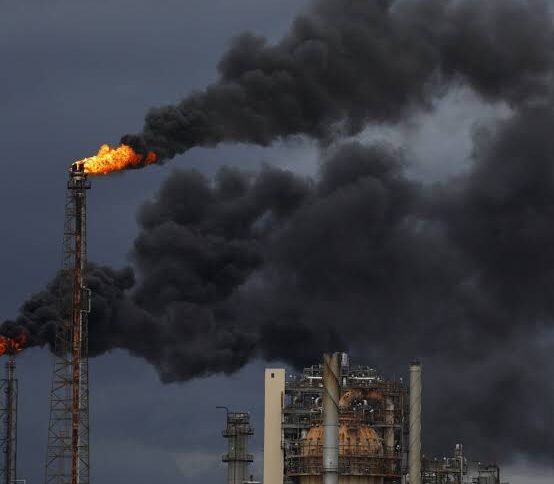

Climate change is wreaking havoc on global food systems, pushing agriculture to its limits and deepening the vulnerability of millions across the world. Rising temperatures, erratic rainfall, and increasingly frequent extreme weather events are slashing crop yields, undermining food security, and threatening livelihoods, especially in developing nations.
The World Bank Group projects that by 2030, climate change could push an additional 43 million Africans into poverty, amplifying an already dire humanitarian crisis.
Against this backdrop, United Nations Climate Change Executive Secretary Simon Stiell has issued a stark warning: without a dramatic scale-up in climate finance, global climate action could grind to a halt.
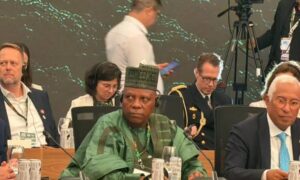
Speaking at the third High-Level Ministerial Dialogue on Climate Finance during COP30 in Belém, Brazil, Stiell urged countries to rebuild trust with vulnerable nations by providing predictable and accessible funding.
“This dialogue is not routine,” he stressed. “It is about giving clarity on the resources vulnerable countries can depend on to deliver their national climate and adaptation plans.”
According to organisers, the COP30 Action Agenda is shaped by the Global Stocktake and targets six critical areas:
– Energy, industry and transport
– Forests, oceans and biodiversity
– Agriculture and food systems
– Resilient cities, infrastructure and water
– Human and social development
– Enabling conditions—finance, technology and capacity
At the opening of the summit, UN Secretary-General António Guterres declared that COP30 “must ignite a decade of acceleration and delivery.” He reiterated that holding global warming to 1.5°C remains “a red line for humanity,” urging governments to scale solutions that can transform their economies while protecting the most vulnerable. Guterres also warned that the widening adaptation finance gap is leaving poorer nations exposed to rising seas, deadly storms, and extreme heat.
Back home, Nigeria is attempting to strengthen its climate response. President Bola Tinubu has approved the country’s national carbon market framework, the activation of the climate change fund, and the reinstatement of the National Council on Climate Change (NCCC) in the federal budget. The decisions followed a briefing by NCCC Director-General Omotenioye Majekodunmi, who argued that climate action is not only an environmental responsibility but also “an opportunity to unlock investments, jobs and innovations.”
But the government’s climate posture is facing scrutiny.
Meanwhile, a former presidential candidate Peter Obi criticised the administration for sending a 749-member delegation to COP30, an attendance figure he described as “another stunning display of misplaced priorities.” Obi contrasted Nigeria’s delegation size with China’s 789 participants, arguing that while China boasts a higher Human Development Index, Nigeria still grapples with widespread poverty and low life expectancy.
“About 150 million Nigerians live in multidimensional poverty, struggling with food insecurity, inadequate healthcare and limited basic services,” Obi said. “Yet our leaders travel in large numbers, funded by taxpayers, while the citizens they are meant to serve continue to suffer.”
He questioned whether Nigeria is taking climate action seriously or merely “playing around” at global events, despite the urgency of its own climate and development challenges.