Climate Crisis Could Deepen Global Health Emergencies Without More Funding, Experts Warn

Millions of people could face worsening health risks if governments fail to increase investments in climate resilience and adaptation, the Global Climate and Health Alliance has warned.
The alliance issued the warning as delegates gathered in Bonn, Germany, for the 64th Session of the Subsidiary Bodies of the United Nations Framework Convention on Climate Change (UNFCCC), urging countries to raise public, grant-based adaptation finance to at least $120 billion annually by 2035.
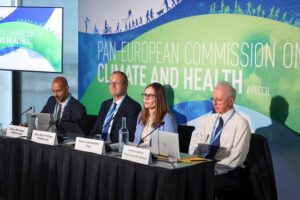
Policy Lead at the alliance, Jess Beagley, said inadequate funding could undermine efforts to protect public health, particularly in vulnerable low- and middle-income countries already grappling with climate-related disasters.
“Without adaptation finance, life-saving action to build resilience in the health sector and in health-determining sectors such as water and sanitation, disaster planning, and food systems will be impossible,” she said.
Health experts have warned that climate change is driving more frequent and intense heatwaves, floods, droughts, storms and disease outbreaks, placing increasing pressure on health systems worldwide. Nigeria and several African countries have in recent years experienced severe flooding, prolonged heatwaves, food shortages and disease outbreaks linked to climate variability.
The alliance also called on wealthy nations to accelerate the transition away from fossil fuels and expand access to affordable clean energy for households, hospitals and healthcare facilities, noting that cleaner energy sources can improve healthcare delivery, reduce pollution-related illnesses and strengthen resilience against climate shocks.
Policy Coordinator Michele Baker stressed that governments must develop stronger systems for tracking both economic and non-economic losses caused by climate change, warning that many health impacts remain poorly documented globally. She also urged greater accountability in the disbursement of funds pledged under the Loss and Damage Fund for climate-affected communities.
Meanwhile, the Lagos State Government has launched a new environmental initiative aimed at tackling climate change and rising urban temperatures. The state announced plans to plant 500 trees and formally joined the United Nations Environment Programme’s “50 Cities at 50°C” campaign, which promotes solutions to extreme urban heat.
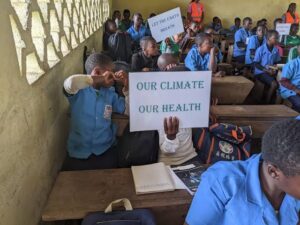
Speaking at the 2026 World Environment Day celebration in Alausa, Special Adviser to the Governor on Environment, Olalekan Rotimi-Akodu, said nature-based solutions such as tree planting, ecosystem restoration and urban greening remain among the most effective strategies for strengthening climate resilience.
He noted that Lagos faces growing threats from extreme heat, flooding and sea-level rise, warning that rising temperatures could affect public health, air quality, productivity and energy demand. To encourage public participation, the state announced a N2.5 million prize for the owner of the best-performing tree after one year.
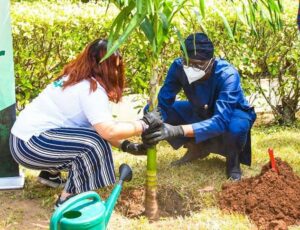
According to Akodu, Lagos has planted more than seven million trees since 2009 through partnerships involving communities, schools, businesses and government agencies. He added that the state is also investing in rail, bus and water transportation systems to reduce emissions and traffic congestion.
“Lagos is not waiting for the future; Lagos is preparing for it, adapting to it, and rising above it,” he said.