

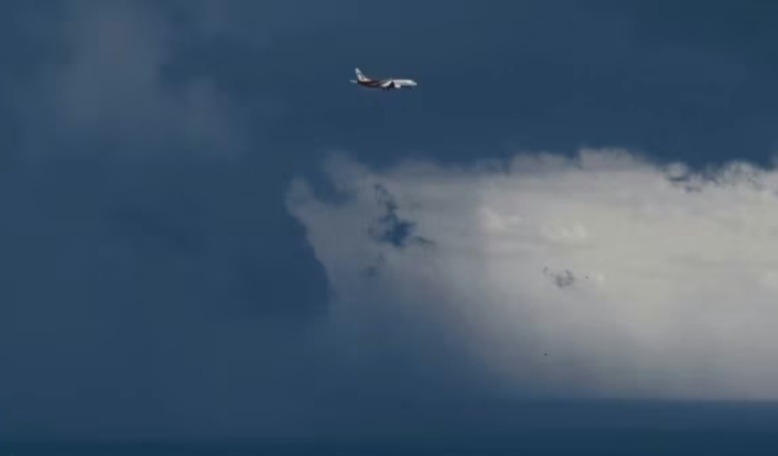

Flying may never feel the same again.
Scientists warn that turbulence, already the most common cause of in-flight injuries is becoming more frequent and intense as climate change reshapes the atmosphere.
Clear-air turbulence (CAT), the invisible kind that strikes without warning, is of particular concern. Unlike storm-driven turbulence, CAT cannot be spotted on radar, making it the most dangerous for passengers and crew.
A study led by Mohamed Foudad, an atmospheric scientist at the University of Reading, examined data from 1980 to 2021 and found a sharp rise in turbulence across key air corridors, with frequency increasing between 65 and 155 percent over regions such as the North Atlantic, North America, East Asia, and the Middle East. His colleague, Isabel Smith, found that every additional degree Celsius of near-surface warming translates to a projected nine percent increase in moderate turbulence during North Atlantic winters, and up to 14 percent in summers.
This shift is tied to a larger atmospheric imbalance. The tropics are warming faster than higher latitudes at cruising altitudes, strengthening jet streams and increasing wind shear. These conditions fuel more CAT, reinforcing the view of Professor Paul Williams, another Reading-based scientist, who predicts turbulence could double or even triple in the coming decades. “For every 10 minutes of severe turbulence experienced now, that could increase to 20 or 30 minutes,” he says.
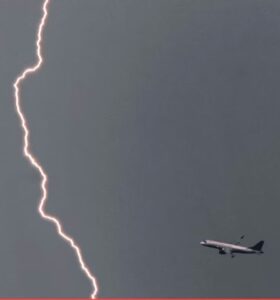
Commercial pilots are already noticing the changes. Captain Nathan Davies describes storm cells stretching 80 miles across, once a rarity, now increasingly common. “The large cumulonimbus clouds are easy to spot visually unless embedded within other clouds, so we can go around them,” he says. But CAT, being invisible, offers no such warning.
The impact is more than physical. AVTECH, a company that helps airlines track turbulence, estimates costs per airline can range between £180,000 and £1.5 million annually. These expenses cover aircraft inspections after severe jolts, compensation for diverted flights, and scheduling knock-ons when planes and crews end up in the wrong locations.
Still, aviation is looking for answers. Engineers have studied barn owls, whose wings act like suspension systems, stabilising them in gusty air. A 2020 study suggested that hinged-wing designs, tuned like those of owls, could one day help smaller aircraft reject turbulence. Meanwhile, Austrian start-up Turbulence Solutions has tested technology that reduces turbulence by as much as 80% in light aircraft by counteracting gusts with automatic wing flaps.
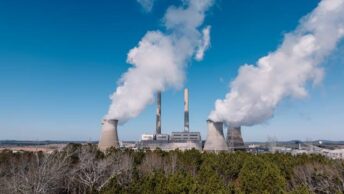
Airlines themselves are also adapting: lengthening seatbelt sign periods, redesigning flight paths, and investing in lidar technology to better detect turbulence. But experts warn these measures can only mitigate, not reverse, the long-term trend. Unless greenhouse gas emissions are drastically reduced, bumpier skies may become the new normal.
The next time your plane jolts mid-air, it may not just be an unlucky patch of rough weather — it could be climate change, shaking the very air we fly through.






It is not possible to become uncircumcised, as circumcision is a surgical procedure that removes the foreskin from the penis.