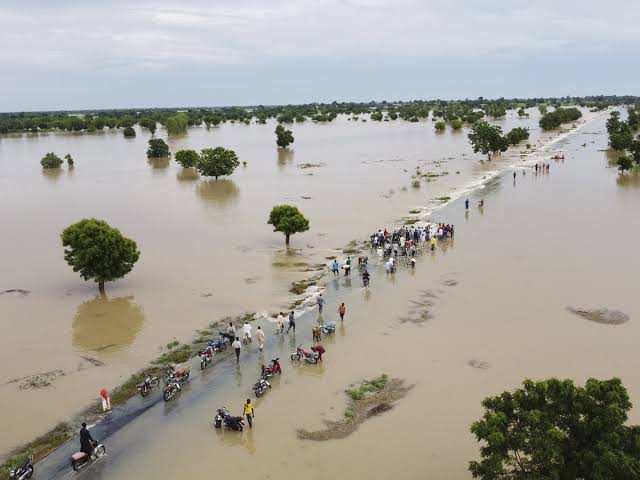

Climate Change is not messing around. Its hard kick to the gut can be felt with heavy rains and attendant flood. Who is taking notes? Perhaps the world bank as it observes this new wave of pain across Nigeria.
Climate change has led to unprecedented levels of displacement, particularly due to floods that continue to affect millions worldwide.
In Nigeria, floods caused by heavy rains and the overflow of rivers have devastated communities, displacing millions and severely impacting education systems. Between January 2022 and June 2024, over 404 million students globally faced school closures due to climate-related disasters. In Nigeria, regions like Bayelsa, Delta, Borno and Kogi have been hardest hit, with frequent floods forcing schools to shut down, disrupting learning, and increasing dropout rates.
Climatic Disruptions
Beyond the immediate disruption to education, these floods also impact livelihoods and future economic opportunities. Climate change increases the frequency of extreme weather events, which often lead to loss of property and displacement, further exacerbating poverty in vulnerable communities. In some areas, children miss over 50 school days due to flooding, jeopardizing their educational futures and widening inequality.
Climate change adaptation, particularly through education, could mitigate these challenges.

The World Bank suggests that investing in education, particularly in building green skills, will not only help address learning loss but will also empower younger generations to contribute to climate action. Governments should prioritize creating resilient school infrastructure and improving STEM education to prepare youth for climate challenges.
Educational reforms, alongside climate funding, are crucial to tackling the adverse impacts of climate change on displaced populations. As millions are forced from their homes and schools by floods, the need for proactive climate strategies becomes ever more urgent. Without adequate climate adaptation measures, the cycle of displacement and educational disruption will likely worsen, further increasing the economic and human cost of climate change.
By focusing on green jobs and fostering innovation in tertiary education, countries can build the skills needed to support climate action. Also, equipping students with the right knowledge can lead to a more sustainable future, especially in low-income nations disproportionately affected by extreme weather.