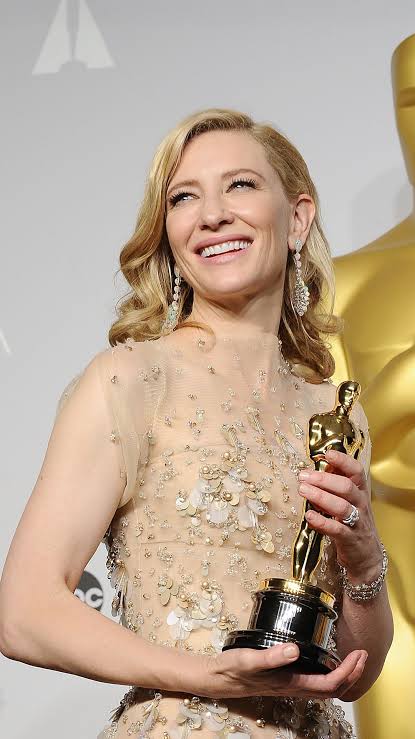

Cate Blanchett, the Oscar-winning actress known for her commanding performances on screen, has taken on a quieter but equally profound role; that of a guardian of the world’s plant life.
Her latest project has nothing to do with Hollywood scripts or red carpets, but everything to do with the future of life on Earth.
The acclaimed actress has joined forces with King Charles III to champion one of the planet’s most vital yet understated conservation initiatives — the Millennium Seed Bank, run by the Royal Botanic Gardens, Kew. Their collaboration, featured in a special episode of Kew’s podcast Unearthed, casts light on a mission that could determine how humanity sustains itself in the face of climate change and biodiversity loss.

For Blanchett, the journey began close to home. Living near Wakehurst, the botanic garden in Sussex that houses the Millennium Seed Bank, she recalls how a casual visit turned into a life-changing discovery.
“I stumbled upon Wakehurst,” she says. “I was just in awe of the landscape and always feel regenerated by being in the natural world. Then I discovered the seed bank, and I literally had my mind blown by the work that goes on here.”
The Millennium Seed Bank (MSB) is often described as the world’s insurance policy against plant extinction. It holds more than 2.5 billion seeds from around 40,000 wild plant species across the globe — each one a small capsule of hope for the future.

These seeds are stored under optimal conditions to preserve genetic diversity and ensure that even if a species disappears from its natural habitat, it can someday be revived.
When it first opened 25 years ago, the MSB was regarded as a kind of “doomsday vault,” a final safeguard against ecological collapse. But its purpose has evolved.
Today, the seed bank plays an active role in restoring ecosystems, helping to replant forests, grasslands, and wetlands devastated by human activity or climate change. As Dr. Tim Breman of Kew explains, “We’ve been to every kind of habitat, from sea level to about 5,000 metres, and from pole to pole—literally. And we’re helping people put those plants back in place.”
Blanchett’s involvement brings a touch of humanity and art to this world of science.
As an ambassador for Wakehurst, she doesn’t just lend her name, she’s rolled up her sleeves to help sort seeds and tend to the gardens. Laughing, she calls it her attempt to “turn my brown thumbs green.”
Her participation brings to mind how storytelling and celebrity influence can merge with environmental science to reach broader audiences.
Her admiration for the seed bank runs deep. “The Millennium Seed Bank is, in many ways, the UK’s best-kept secret,” she says. “But I believe that over the next 25 years, its work will only grow more important.”
The bank’s ambitions are indeed bold. It aims to safeguard 75% of the world’s threatened flora by 2030, a monumental task in an age where deforestation, urbanization, and climate change are erasing habitats faster than scientists can document them.