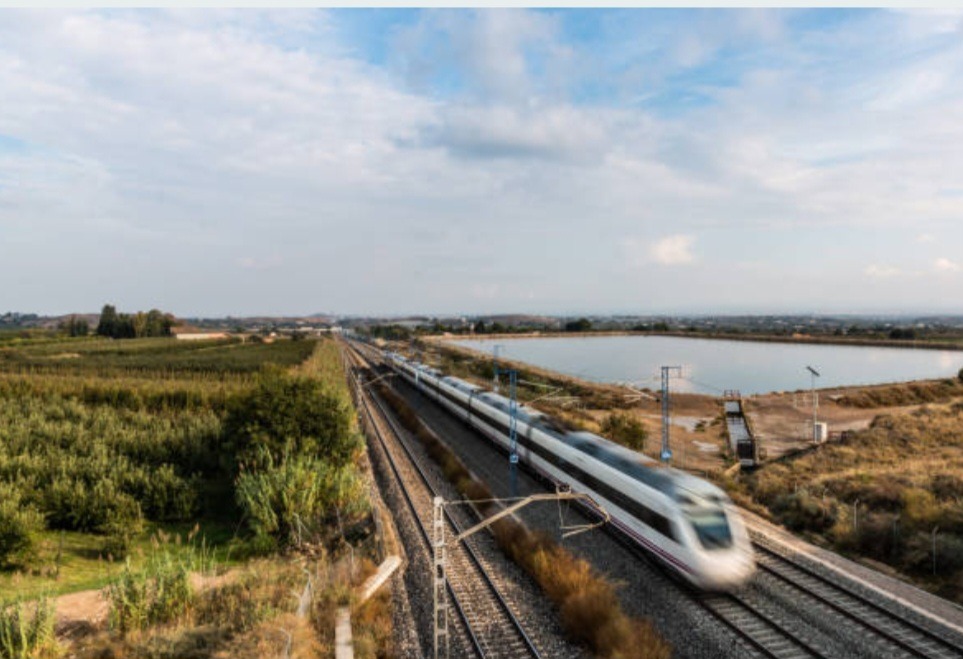

Imagine being in Abuja under 3 hours from Lagos without taking a flight. Only high-end infrastructure can make that a reality!

Nigeria is on the brink of a transportation revolution as the Lagos-Abuja High-Speed Bullet Train project gains momentum. This ambitious initiative is intended to slash travel time between the two cities from a grueling 12 hours to just 2–3 hours.
The man mulling this plan is the director of Operations at Geofocus Consortium, Engineer Yinka Idris. He described the project as a milestone in Nigeria’s development.
In a statement made available to journalists oon February 18, he applauded President Bola Tinubu’s administration for prioritizing infrastructure and fostering Public-Private Partnerships (PPP) to drive economic growth.
According to Idris, the bullet train will provide a faster, safer, and more efficient alternative to road travel, reducing traffic congestion and improving productivity. He emphasized that the initiative aligns with Tinubu’s vision of leveraging private sector expertise to deliver world-class infrastructure without overburdening public finances.
“Currently, travelers between Lagos and Abuja face long hours in traffic, safety concerns, and reduced productivity,” Idris noted.
“This project will significantly ease movement, enhance trade, and improve the overall business environment.”
As part of the development, ten smart cities, each with 10,000 housing units, will be built along the rail corridor. Additionally, an independent power plant will be constructed to support the train and its surrounding infrastructure.
Employment Opportunities Are Inherent
The Lagos-Abuja bullet train is expected to generate thousands of jobs both during and after construction. Idris highlighted that the project aligns with Tinubu’s commitment to reducing unemployment and fostering economic prosperity through major infrastructure investments.
With feasibility studies completed and proof of funds secured, the project now awaits approvals from the Infrastructure Concession Regulatory Commission (ICRC) and the Federal Executive Council (FEC) before construction can begin. The construction phase is projected to last between 48 and 52 months.
Beyond transforming transportation, the bullet train will reduce road congestion, lower carbon emissions, and extend the lifespan of highways. It represents a major step toward sustainable and environmentally friendly infrastructure development, setting a benchmark for transport projects across Africa.
Let’s do it!