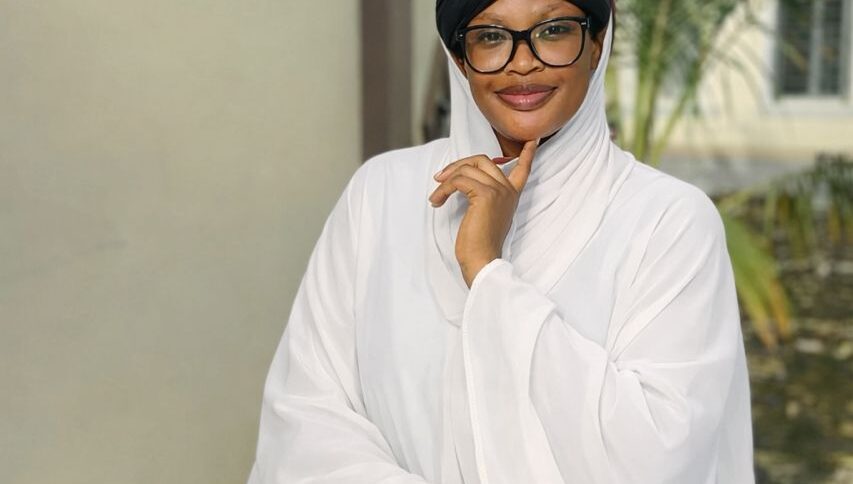

Child and women’s rights advocate, Nafisat Shuaib, has said that while Nigerian women are increasingly educated, skilled and eager to contribute to national development, systemic barriers and cultural expectations still slow their rise in leadership and political spaces.
Speaking on Adamimogo 105.1FM’s current affairs programme Inside Scoop, the educator reflected on the realities confronting women as they attempt to balance personal responsibilities with professional and civic ambitions.
According to her, the modern Nigerian woman is caught between growing opportunities and long-standing societal expectations that often limit her participation in leadership.
Shuaib explained that women are making remarkable progress across sectors such as business, education, healthcare and civil society. Yet the structures governing many institutions were historically designed without women’s full participation in mind.
“The Nigerian woman today is capable and ready,” she said. “But the systems we operate in were not originally structured to accommodate women equally.”
One of the most pressing challenges, she noted, is the weight of multiple responsibilities women are expected to shoulder simultaneously.
From managing professional careers to caring for families and fulfilling community expectations, many women find themselves navigating several roles at once.
These overlapping obligations, she said, can restrict the time and energy women have to pursue leadership positions or political aspirations.
“The typical Nigerian woman is expected to succeed at work, raise children, manage the home and still contribute to society,” Shuaib said. “All these responsibilities can make it harder to step into leadership roles.”
She added that the absence of strong support systems often compounds the problem.
Shuaib pointed out that her own ability to remain active in advocacy and professional development has been strengthened by a supportive family environment, particularly a husband willing to share responsibilities at home.
Such partnerships, she suggested, can significantly ease the burden many women carry.
Beyond family responsibilities, the advocate highlighted structural inequalities within the political space, especially limited access to financial resources and political networks.
She explained that politics in Nigeria remains heavily influenced by money, making it difficult for many women to compete with male counterparts who often have stronger financial backing.
“Political participation here requires enormous resources,” she said. “Without funding or strong networks, even the most capable candidates may struggle to gain visibility.”
Shuaib also addressed the lingering influence of patriarchy in shaping public attitudes toward women’s leadership.
In many communities, she noted, cultural norms have historically encouraged women to remain silent or deferential in the presence of men.
She recalled growing up in an environment where girls were taught not to maintain eye contact with men during conversations and to keep their voices subdued.
Although such traditions are gradually fading, she said they still influence how women view their roles in public life.
However, Shuaib believes that a new generation of women is challenging those norms.
She credited social media with helping to expand women’s confidence and participation in public discussions.
“Seeing other women speak boldly online inspires many to realise they too can share their ideas,” she said.
While Nigerian laws guarantee women the right to express themselves and participate in politics, Shuaib argued that social attitudes sometimes undermine those rights in practice.
According to her, men who speak firmly in political spaces are often praised as strong leaders, while women who display the same level of confidence may be criticised or labelled negatively.
She also noted that women who express strong opinions on social or political issues frequently face personal attacks, particularly on digital platforms.
“These reactions can discourage women from speaking out,” she said. “The criticism sometimes focuses on the person rather than the message.”
Another concern raised by Shuaib is the limited representation of women in Nigeria’s political institutions.
She attributed this not only to financial barriers but also to lingering doubts about women’s leadership capabilities.
In some cases, she said, certain voters openly admit they would not support a female candidate for high political office.
Such attitudes, she observed, reinforce the perception that politics is primarily a male domain.
Interestingly, Shuaib also acknowledged that women themselves do not always rally behind female candidates, sometimes due to deeply ingrained societal beliefs about leadership.
Nevertheless, she remains optimistic that greater awareness and engagement will gradually change the narrative.
To strengthen women’s influence in national conversations, she encouraged women to actively participate in platforms where public policies and societal issues are debated
These spaces, she said, include civic organisations, academic institutions, professional associations and media platforms.
Equally important, she added, is ensuring that women’s contributions to public discourse are informed and solution-driven.
“When women speak, it should not only be about expressing frustration,” she said. “It should also present ideas and solutions that move society forward.”
Shuaib concluded that empowering women to speak up more boldly will benefit the entire society.
According to her, silencing women ultimately deprives the nation of valuable perspectives and innovations.
“A society that listens to women becomes stronger,” she said. “When women contribute their ideas and experiences, everyone benefits.”