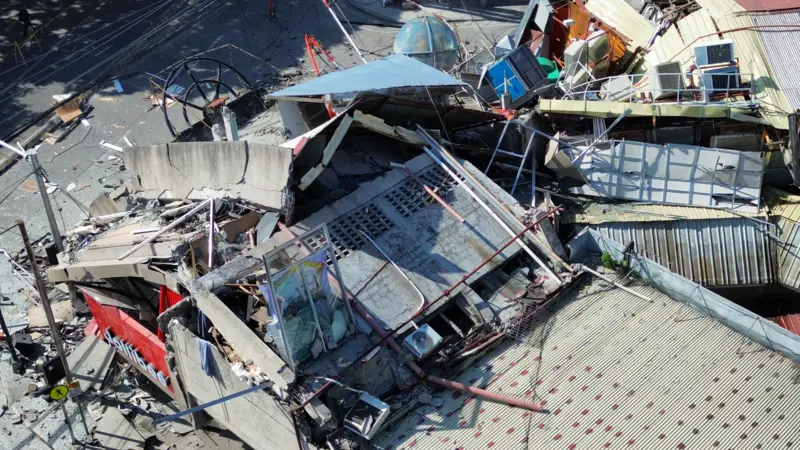

The death toll is increasing in the Philippines after a powerful 7.8-magnitude earthquake struck the southern Philippines, triggering tsunami warnings across parts of the Asia-Pacific region and prompting emergency evacuations.
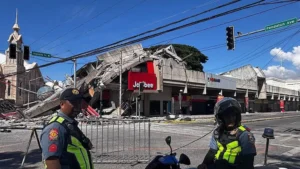
Three persons have been confirmed killed while several others are injured.
The quake struck off the coast of General Santos City on the island of Mindanao at approximately 7:37 a.m. local time (23:37 GMT), according to Philippine authorities.
The Philippine Institute of Volcanology and Seismology (PHIVOLCS) said the earthquake occurred at a relatively shallow depth of 10 kilometres, a factor that often increases the potential for ground shaking and tsunami generation.
The powerful tremor was felt across several provinces in southern Philippines, causing panic among residents and prompting authorities to activate emergency response measures.
Initial reports from police indicated that at least three people lost their lives while five others sustained injuries as a result of the disaster. Officials warned that casualty figures could rise as damage assessments continue in affected communities.
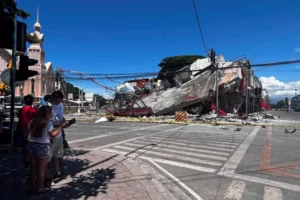
The earthquake also triggered tsunami alerts across several countries bordering the Pacific Ocean, including the Philippines, Indonesia and Japan. While most of those warnings have since been lifted, Philippine authorities have maintained a tsunami advisory after instruments continued to detect unusual sea-level activity.
According to Winchelle Ian Sevilla, a science research specialist with the country’s state volcanology agency, tsunami waves were still being recorded hours after the earthquake.
“We will not yet lift the tsunami warning as our instruments are still recording tsunami waves. There were also sea-level disturbances that were recorded,” Sevilla said.
Authorities reported that the waves measured only a few centimetres in height, but experts cautioned that changing ocean conditions required continued monitoring.
In response to the emergency, Philippine President Ferdinand Marcos Jr. directed government agencies to mobilise immediately and coordinate relief efforts.
“I have directed all relevant government agencies to act immediately,” the president said, urging residents in vulnerable coastal areas to move to higher ground and comply with evacuation directives.
Emergency responders have been deployed to assess infrastructure damage, assist affected communities and monitor aftershocks, which often follow major seismic events.
The Philippines is one of the world’s most disaster-prone countries due to its location along the Pacific Ring of Fire, a vast zone of intense seismic and volcanic activity that experiences frequent earthquakes and volcanic eruptions.
The region has witnessed several devastating earthquakes and tsunamis over the decades, making disaster preparedness a critical component of national policy.
As rescue and assessment operations continue, authorities are urging residents to remain vigilant, particularly in coastal communities where tsunami advisories remain in effect.