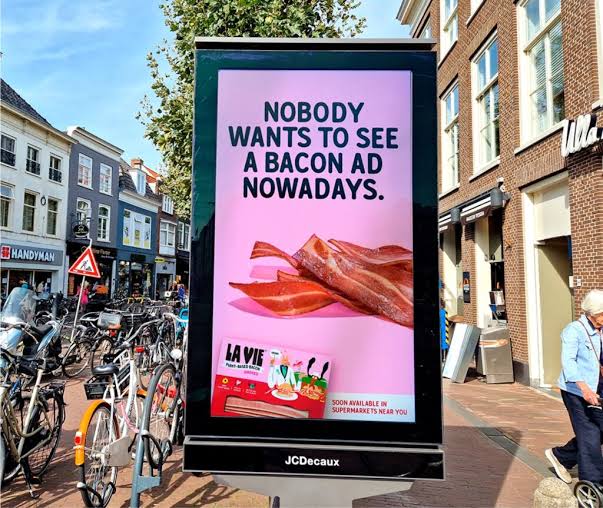

The idea is to halt impulse or subconcious buying.
Amsterdam has become the first capital city in the world to ban public advertisements promoting both meat products and fossil fuel consumption, in a sweeping policy aimed at aligning its urban landscape with climate goals.
Since May 1, adverts for burgers, petrol-powered cars and airlines have been removed from billboards, tram shelters and metro stations across the Dutch capital. In their place are promotions for cultural institutions such as the Rijksmuseum and local events, marking a visible shift in the city’s messaging.
City officials say the decision is part of a broader strategy to reinforce environmental targets, including plans to make Amsterdam carbon neutral by 2050 and to encourage residents to cut meat consumption by half over the same period.
“The climate crisis is very urgent,” said Anneke Veenhoff of the GreenLeft Party. She questioned the contradiction of promoting carbon-intensive products in public spaces while pursuing aggressive climate policies.

“Most people don’t understand why the municipality should make money from renting public space for advertising that runs counter to its own environmental goals,” she said.
Advocates of the policy argue that removing such adverts does more than clean up the streetscape, it also reduces the subtle influence of marketing on consumer behaviour. By eliminating what Veenhoff described as a “constant visual nudge,” the city hopes to discourage impulse purchases and reshape perceptions of what constitutes an aspirational lifestyle.
While meat advertising accounted for only a small fraction of Amsterdam’s outdoor advertising market, estimated at about 0.1 per cent, fossil fuel-related promotions made up a more significant share, roughly 4 per cent. The sector had otherwise been dominated by clothing brands, film promotions and mobile technology.
Despite its limited economic footprint, the ban carries symbolic weight. By grouping meat consumption alongside high-emission activities such as air travel, cruises and petrol or diesel vehicle use, the policy reframes dietary choices as part of the broader climate challenge rather than purely personal decisions.
The move positions Amsterdam at the forefront of cities experimenting with regulatory approaches to influence both consumption patterns and public awareness, as governments worldwide grapple with how to meet increasingly urgent climate targets.