AI Could Deepen Inequality in Africa Without Inclusive Policies, Says Nigerian Professor

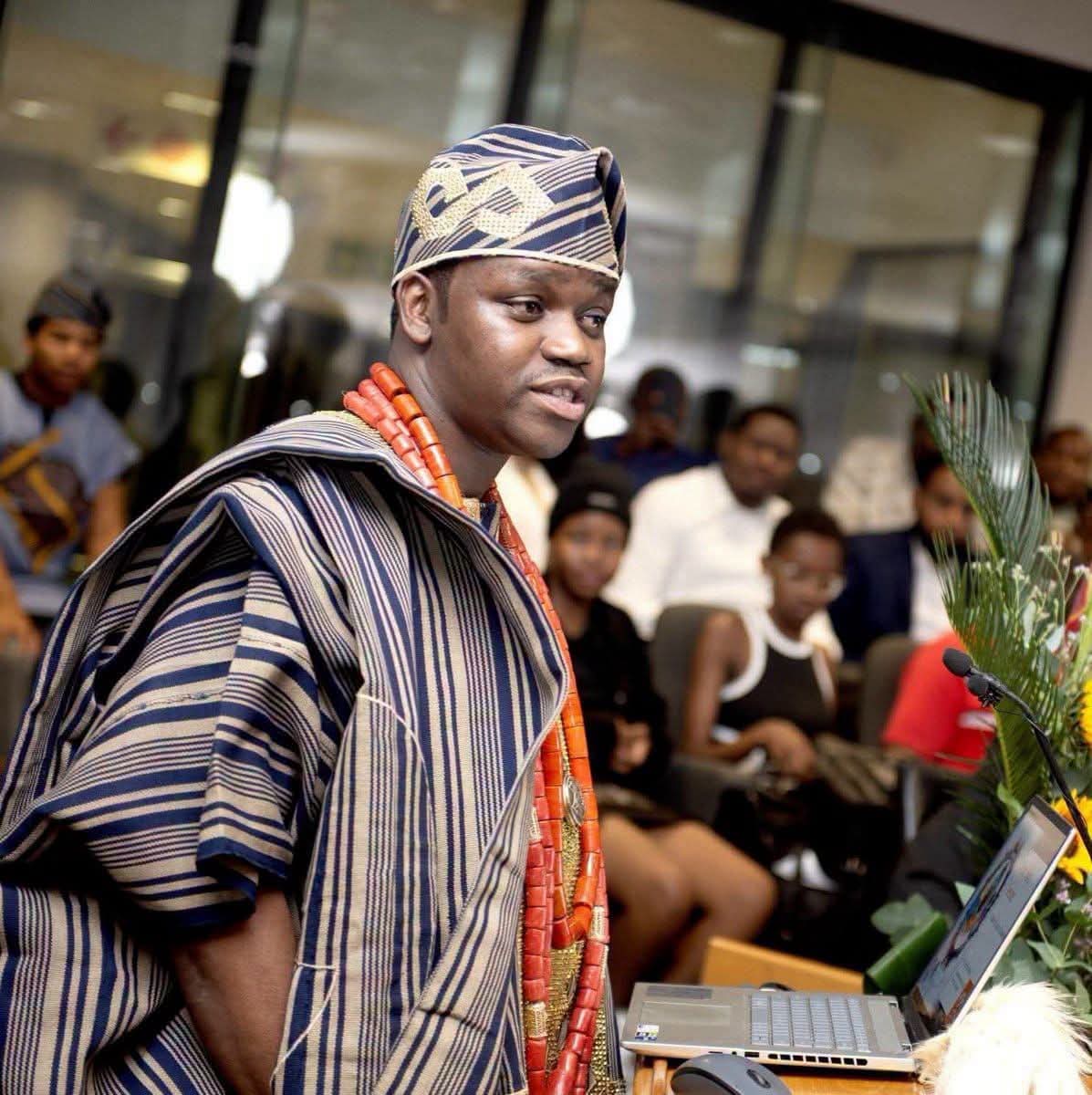
He is an AI Professor at 36, a milestone far from the reach of many within his age grade.
Abejide Ade-Ibijola, a leading Nigerian artificial intelligence expert is not mincing words as he shuffles his cards. He has warned that while artificial intelligence (AI) has the potential to transform Africa’s economy, healthcare, education and agriculture, the technology could also deepen existing inequalities if governments fail to prioritise infrastructure, affordability and inclusive policies.
Ade-Ibijola, a professor of Artificial Intelligence and Applications at the Johannesburg Business School, University of Johannesburg, South Africa, made the remarks in an interview with TechCabal, stressing that Africa’s AI future must be built around accessibility, ethical standards and locally relevant data.
Although Africa currently accounts for only about 2.5 per cent of the global AI market, the continent is projected to contribute as much as $2.9 trillion to the global economy through AI by 2030. Countries including Nigeria, Kenya and South Africa are already deploying AI to solve local challenges ranging from indigenous language processing to improved agricultural productivity.
Despite this progress, the professor cautioned that AI adoption could create what he described as a “two-tiered reality,” where urban populations benefit from cutting-edge innovations while rural communities remain excluded due to poor infrastructure.
“People living in cities such as Johannesburg and Kigali will enjoy AI-powered technologies, virtual reality and other digital innovations, while many rural communities without reliable electricity or internet access risk being left behind,” he said.
According to him, AI has enormous potential to transform healthcare through more accurate diagnoses, precision surgeries and intelligent medical support systems. However, he warned that the high cost of advanced AI-driven healthcare could further widen the gap between wealthy and low-income populations if access is not expanded.
He also highlighted AI’s growing role in agriculture, where drones, automated irrigation systems and robotics can improve crop management, increase yields and reduce dependence on pesticides and manual labour. In education, he said AI-powered learning platforms can personalise instruction, provide language translation and support self-paced learning, with intelligent robotic teaching assistants likely to become more common in the future.
While acknowledging the efficiency gains AI offers in manufacturing and service industries, Ade-Ibijola expressed concern over the impact of automation on employment. He noted that increasing automation in retail outlets, petrol stations, hotels and restaurants could significantly reduce human jobs unless governments prepare workers for new opportunities.
On the cultural dimensions of AI, the professor urged African countries to develop technologies rooted in local realities and values. He argued that AI solutions must extend beyond urban centres and reach underserved communities where millions still lack electricity, internet connectivity and access to modern technology.
He suggested that AI-powered mobile health applications operating in indigenous languages could provide preliminary medical advice in remote villages, provided governments invest in affordable smartphones, solar energy and other supporting infrastructure.
“We must intentionally bring technology to underserved communities. AI should improve the lives of everyone, not only those living in cities,” he said.
Ade-Ibijola further stressed the importance of building African datasets that accurately represent the continent’s languages, cultures, traditional knowledge and medicinal practices. Without such datasets, he warned, AI systems developed elsewhere would continue to overlook African realities and reinforce global technological inequalities.
Speaking on ethical AI, he explained that AI systems inevitably reflect the quality and biases of the data used to train them. He therefore called for careful data curation, responsible training practices and safeguards that prevent discriminatory or harmful outcomes.
He noted that African developers should create repositories of indigenous knowledge, cultural artefacts, local languages and historical experiences to ensure AI systems are capable of recognising and responding appropriately to African contexts.
On regulation, Ade-Ibijola advised governments to avoid both excessive restrictions and weak oversight. He recommended collaborative policymaking involving governments, researchers, technology companies and industry experts to develop balanced regulatory frameworks that encourage innovation while protecting citizens from misuse of AI.
According to him, AI policies should also be communicated clearly to the public, helping citizens understand both the opportunities and risks associated with the rapidly evolving technology.
Addressing Africa’s place in global AI research, the professor said the continent should first focus on strengthening its technological foundations rather than seeking immediate global leadership. He called for greater investment in digital infrastructure, computing capacity, research funding and practical technology education beginning at the primary school level.
He also advocated using technology education as a rehabilitation tool within correctional facilities, arguing that teaching inmates programming and digital skills could improve reintegration while contributing to technological development.
Ade-Ibijola, an Ekiti State-born scholar, became a full professor at the University of Johannesburg at the age of 36 after being promoted to associate professor at 34. He is regarded as one of Nigeria’s youngest professors and remains an advocate for developing AI systems that reflect Africa’s needs, values and aspirations.